Houthis Strike Aden, Killing 5 as Yemen Conflict Reignites
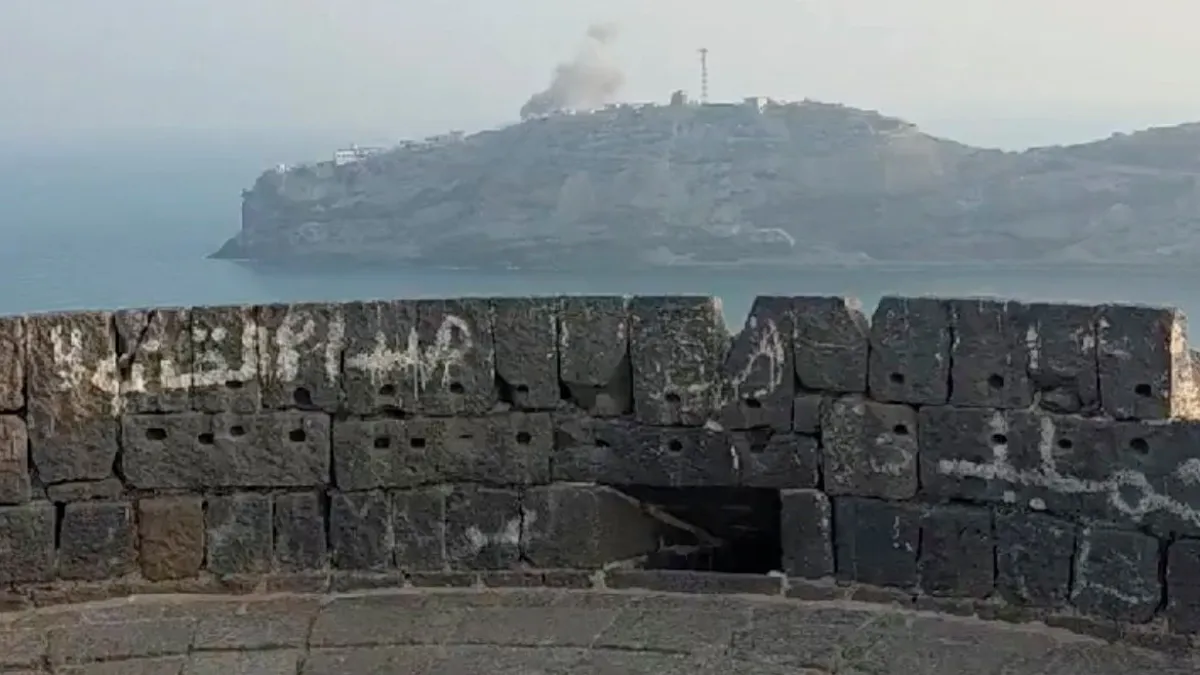
The Houthis have struck the heart of Yemen's internationally recognized government, hitting Aden and its airport as conflict spreads through the region.
This armed group, also known as Ansar Allah or Supporters of God, fired missiles at the presidential palace in southern Aden on Thursday. Five people died and 16 were wounded in the attack.
On Friday, two more missiles landed near Aden International Airport just as a passenger plane prepared for takeoff to Cairo.
The internationally recognized government fled to Aden after Houthis seized the capital of Sanaa in 2014. They moved there with support from a Saudi-led coalition of Arab nations.
Yemen's war had largely frozen under a truce signed in 2022, but fighting has reignited and turned into another front in the wider regional conflict involving Iran.
Here is what happened at Maashiq Palace.
Information Minister Moammar al-Eryani stated that Houthis hit Al-Maashiq Presidential Palace with five missiles. Health Minister Qasem Buhaibeh said the dead and wounded included guards and civilian employees. The government confirmed Prime Minister Shaya al-Zindani and other officials are safe, though two of his bodyguards were killed.
Houthi military spokesman Yahya Saree claimed the group struck what he called a "Saudi military operations headquarters" in Aden.
Two missiles landed on the airport grounds on Friday according to the Aden Security Department which blamed the Houthis for the strike. This marks the second attack on the facility in less than a week. Yemenia Flight 612 to Cairo was preparing for takeoff when this occurred. Al-Eryani said the missiles landed about 500 meters or 1,600 feet from the aircraft. No casualties were reported at the airport site.
Al-Eryani called the strike a direct threat to the lives of passengers and aviation crews. The Houthi-run Saba agency claimed the group was targeting a military headquarters and weapons depots inside Badr Camp, a military site next to the airport.
Aden serves as the interim capital of Yemen. The government moved there after Houthis took control of the capital, Sanaa, by force in 2014 and later imposed their own government. Al-Maashiq Palace is the headquarters for the internationally recognized government and its seat of power.
Houthis currently control much of the country's north and west. Fighting between Houthis and a Saudi coalition supporting the government had largely ended following a 2022 ceasefire. In September, however, Houthis launched a lightning offensive along the Red Sea coast. They seized territory overlooking the strategic Bab al-Mandeb strait at the entrance to the Red Sea. Nearly two weeks ago, government forces launched a counteroffensive dubbed Operation Dawn of Yemen with Saudi air support, but they have so far failed to reverse those gains.
Saree said Houthi attacks on Aden were part of the group's declared policy of targeting Saudi reinforcements wherever they are located. The city has been hit before. In December 2020, an attack on Aden airport as a new cabinet arrived from Saudi Arabia killed at least 22 people. A second attack hit the palace where ministers had been taken to safety. The coalition blamed Houthis who denied responsibility for that earlier incident.
Saudi Arabia's deputy minister for public diplomacy Rayed Krimly responded on Thursday by blaming Iran for encouraging escalation. He said Iran-backed Houthis rejected an offer to meet for talks in Oman when the latest round of hostilities began. Tehran denied this claim on Friday.
Iranian Foreign Ministry spokesman Esmaeil Baghaei stated that the Islamic Republic firmly rejects any claim linking Tehran to Yemeni operations. He insisted Iran has always been ready to use its good offices to help end the hostilities, offering again to mediate a peace deal. Meanwhile, Canada's embassy in Saudi Arabia condemned the palace attack and called for an immediate de-escalation of hostilities. The Canadian mission posted on X that it stands in solidarity with the internationally recognised Government of Yemen and the Yemeni people.
On Thursday, the United Nations Security Council condemned escalating Houthi attacks on Saudi Arabia, specifically noting those affecting civil aviation and energy infrastructure. The governing council of the UN's International Civil Aviation Organization also condemned recent attacks on civilian airports and aircraft in Saudi Arabia. Hans Grundberg, the UN special envoy for Yemen, told the UNSC on October 9 that the country had slid back into full-scale war. This marks a sharp reversal after fighting resumed in July, effectively ending the truce established in 2022.
Last month, the Houthis took control of the Bab al-Mandeb strait, one of the world's most important waterways. Since the Strait of Hormuz was closed by Iran in March amid US strikes, Saudi Arabia has increasingly relied on sending oil exports to the Red Sea via its East-West pipeline instead. The Houthis announced a blockade on Saudi ships there earlier in the year. On October 4, Rashad al-Alimi, president of the Presidential Leadership Council, announced Operation Dawn of Yemen to retake Houthi-held territory, including Sanaa.
The Saudi-led coalition said 100 fighter jets took part in this effort, marking its first acknowledgement since 2022 that it had resumed air attacks on the Houthis. In turn, the Houthis have repeatedly fired missiles and drones at Saudi airports, oil facilities, and other infrastructure. On Friday, the coalition reported intercepting a ballistic missile headed for Yanbu, a Red Sea oil hub which Saudi Arabia has been using to export crude.
On the ground, fighting has intensified in Taiz governorate, where the Houthis have been holding the city of Taiz under siege, and which borders the Red Sea. State-run Saba media outlet, citing the Taiz Axis military command, reported that 168 Houthi fighters had been killed and 210 wounded there. In Houthi-held areas, the Houthi-run Health Ministry said 124 civilians had been killed and 327 wounded in what it called Saudi aggression since September 3. Early on Saturday, Houthi-affiliated media reported attacks east of Saada, with the coalition saying it had destroyed two ballistic missile launchers there.
Photos