Himalayan Floods: Over 1,100 Dead and Nearly 4,000 Missing
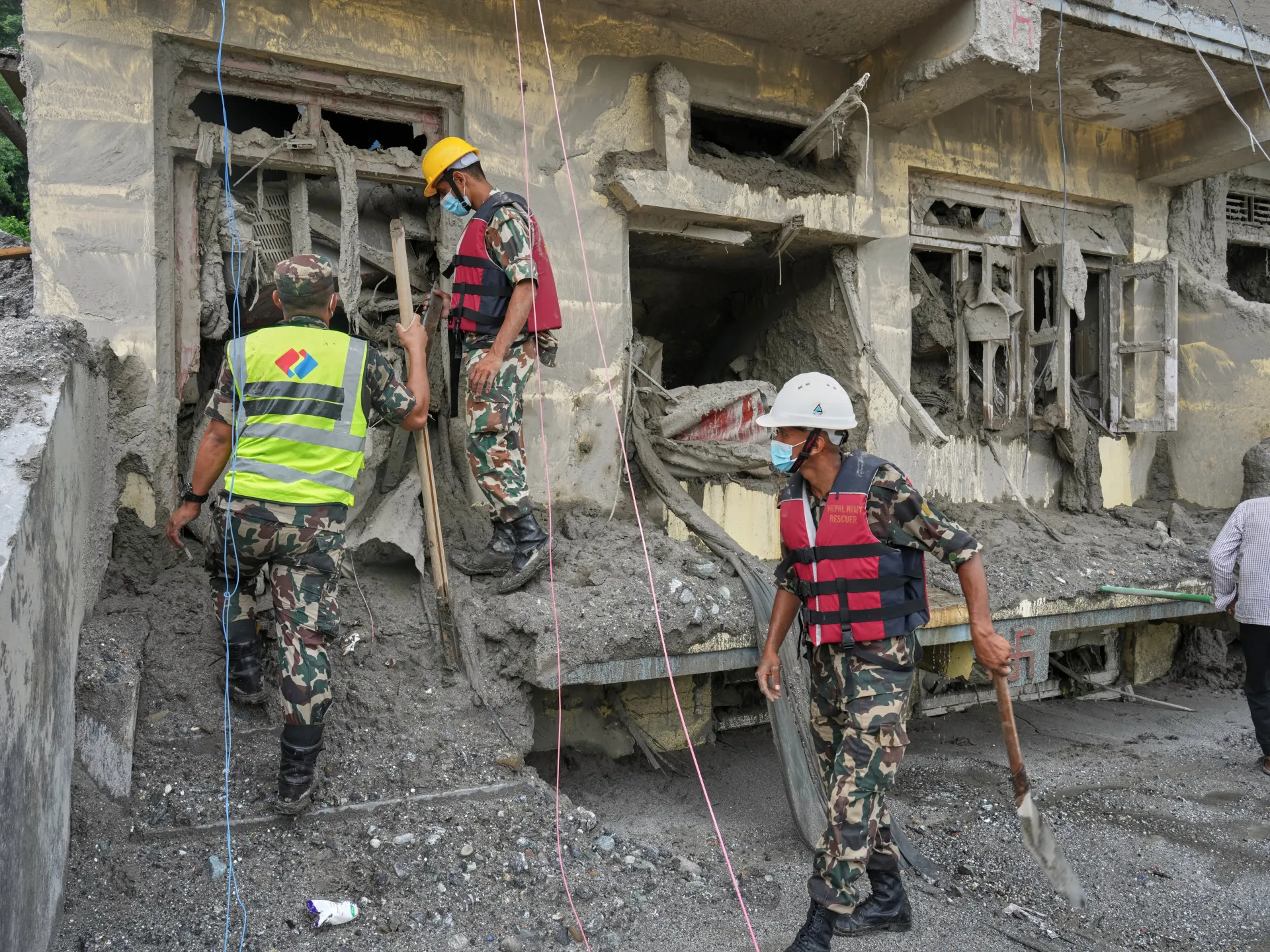
A week has passed since flash floods tore through the Himalayas and claimed more than 1,100 lives. Nearly 4,000 people remain unaccounted for as search teams keep working. The United Nations Development Programme issued a preliminary estimate stating that at least 2.2 million tonnes of debris now litter the landscape.
On August 26, a wall of water, mud, and rocks rolled through communities in Nepal and China's autonomous Tibet region following a glacial collapse. Reuters reports the death toll in Nepal has reached 1,114. In nearby Tibet, Chinese officials say 16 people died and 546 are still missing.
The disaster stopped operations at 11 hydropower stations and one solar plant in affected areas of Nepal. Another 15 projects under construction suffered damage. These sites were planned to produce a total capacity of 470 megawatts. Al Jazeera's Barnaby Lo, reporting from Kathmandu, notes that specialized equipment is being airlifted in. The focus is on roughly 600 workers, some possibly trapped deep inside tunnels beneath the hydropower stations.
Prime Minister Balendra Shah's office told Al Jazeera that more than 270 workers were successfully rescued from these tunnel sites. "Still, search and rescue operations are continuing," Lo said. "The Nepali army is drilling, digging and trying to reach those people." Chinese and Indian experts have been on the ground for several days helping with the effort. Soon, a team of foreign specialists from South Korea will join them.
Forensic teams from China and Singapore are expected to arrive soon. Their job involves managing and identifying remains, a task made difficult by the high death toll and the condition of decomposing bodies. "Families here have held funerals saying they need to do it even if they don't have the bodies of their missing relatives to free their spirits," Lo explained.
A United Nations study from 2020 flagged 47 potentially dangerous glacial lakes across Nepal, India, and China. Of those locations, 31 fell into Rank I, the highest risk category for outburst. The rest were classified as Rank II or III. Researchers urged closer monitoring of these lakes and the implementation of early warning systems to protect downstream communities.
Rising temperatures are changing the Himalayan landscape. As glaciers retreat and break apart, new glacial lakes can form while existing ones expand. This increases the risk of glacial lake outburst floods, which suddenly release massive volumes of water that sweep through valleys below. "These same experts are saying that it is becoming more dangerous and that the risk could be long-term," Lo added. "This means that people living in these villages might not be able to go back to rebuild their lives there."
Foreign Minister Shishir Khanal spoke with The Kathmandu Post, demanding compensation from large greenhouse gas emitters. "Nepal's greenhouse gas emissions are virtually negligible," he stated. "Yet, we are paying the ultimate price for a global crisis we did not create.
Khanal stated that glaciers are melting fast and catastrophic mountain tsunamis are occurring because global climate change drives these disasters. He argued that major industrial polluters like China, which emits the most greenhouse gases globally, along with the United States in second place and India third, must pay for their past emissions. These wealthy nations hold a historical duty to help vulnerable countries such as Nepal deal with the damage. The country's Ministry of Finance has already sent an official climate compensation claim letter to international partners to make this demand clear. Khanal did not name specific recipients when he confirmed that this formal request is now being processed by officials.
Photos