Hasan Piker's Controversial Rhetoric and the Fracturing of the Democratic Party

Hasan Piker, a far-left Twitch streamer with 3.1 million followers, has become a polarizing figure in American politics. His daily broadcasts, which often blend pop culture commentary with progressive activism, have drawn both admiration and condemnation. Piker's rise from online influencer to political provocateur has created fissures within the Democratic Party, as some lawmakers embrace his rhetoric while others warn of the risks of associating with him. His controversial statements—ranging from antisemitic slurs to praise for Hamas—have sparked intense debate over the boundaries of free speech, the role of social media in politics, and the Democratic Party's alignment with radical left-wing figures.
Piker's most infamous remarks include calling religious Jews "inbred" and defending Hamas as "a thousand times better than the fascist settler colonial apartheid state." He has also dismissed reports of mass sexual assault during Hamas' Oct. 7 attack on Israel, telling The Times of Israel that such crimes "don't change the dynamic for me." These comments have drawn sharp criticism from Jewish advocacy groups and Democratic lawmakers, who argue they normalize terrorism and endanger Jewish communities. Piker, who was raised Muslim, has repeatedly denied being antisemitic, claiming he uses his platform to combat antisemitism despite critics' objections. In a 2019 interview with Cenk Uygur, he admitted his statement that "America deserved 9/11" was "inappropriate," though he framed it as a critique of U.S. foreign policy rather than an endorsement of the attacks.
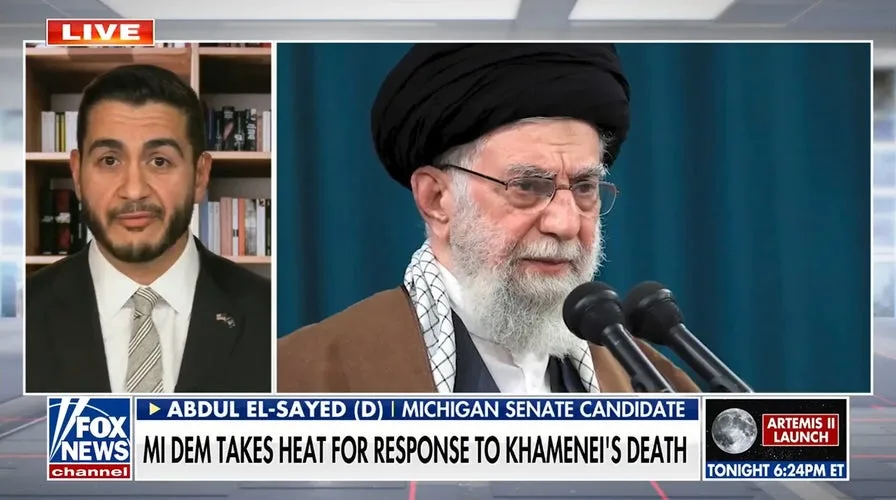
The Anti-Defamation League (ADL) has condemned Piker's rhetoric as part of a broader trend of "extreme anti-Zionism" gaining traction in mainstream spaces. ADL CEO Jonathan Greenblatt accused Piker of "routinely using his platform to spread anti-Jewish tropes and amplify propaganda from designated terrorist groups." This criticism has intensified since Piker's recent appearances on CNN, where he boasted about hosting a guest who had previously faced scrutiny for antisemitic remarks. Meanwhile, Democratic candidates like Dr. Abdul El-Sayed, running for Senate in Michigan, have defended their decision to campaign with Piker, arguing it is necessary to engage voters alienated by traditional politics. El-Sayed acknowledged disagreements with Piker on some issues but cited shared stances on Iran policy, opposition to AIPAC's influence, and support for healthcare reform as reasons for the alliance.
Progressive lawmakers such as Alexandria Ocasio-Cortez and Ilhan Omar have appeared on Piker's show, further entrenching his presence in Democratic circles. However, this association has not been without backlash. Effie Phillips-Staley, a candidate in New York's 17th Congressional District—a region with a significant Jewish population—faces scrutiny over her ties to Piker. Critics argue that aligning with him risks alienating Jewish voters and legitimizing harmful rhetoric. The controversy underscores a growing tension within the party: while some see Piker as a voice for marginalized groups, others warn that his inflammatory language could undermine the Democratic Party's credibility and safety for Jewish constituents.
Public health experts and community leaders have raised concerns about the normalization of antisemitism in political discourse, citing data from the ADL showing a 35% increase in antisemitic incidents in the U.S. since 2020. They argue that figures like Piker contribute to an environment where hate speech is amplified, potentially escalating violence against Jewish communities. At the same time, progressive allies of Piker emphasize the need for political engagement with disaffected voters, claiming his platform gives a voice to those excluded from mainstream media and policy debates. The debate over Piker's role in politics reflects broader questions about the Democratic Party's identity: how to balance radical activism with the need to protect vulnerable communities and maintain electoral viability.

The air in New York's political circles has grown thick with tension as a Democratic hopeful's remarks on a late-night Twitch streamer have ignited a firestorm of condemnation. On March 28, during an appearance on Hasan Piker's show, the candidate accused Israel of genocide and labeled the nation an apartheid state, according to the Jewish Telegraphic Agency (JTA). The statement, which echoed rhetoric long associated with extremist circles, has since become a flashpoint for a growing rift within the Democratic Party.
Democratic committees across several New York counties swiftly moved to distance themselves from the controversy, issuing a joint statement that condemned Piker's platform and expressed "deep disappointment" in the candidate. "Her decision represents a dangerous and unacceptable step toward legitimizing rhetoric that has no place in this district, in mainstream Democratic politics or in any serious political discourse," the statement declared. The words carry weight, as they signal a rare moment of unity among moderates and progressives alike, who see the candidate's alignment with Piker as a betrayal of the party's values.
Yet the candidate, facing mounting pressure, insisted she did not "align with every word Hasan Piker has ever said." She defended her choice, emphasizing the platform's role in engaging millions of young voters. "It's important to recognize the massive value of a platform that engages millions of young people in the democratic process," she said. But her words rang hollow to many, who see the streamer's history of antisemitic and anti-American rhetoric as a red flag.
Rep. Ritchie Torres, D-N.Y., wasted no time in condemning Piker, sending a blistering letter to Twitch CEO Daniel Clancy and others. "Hasan Piker has emerged as the poster child for the post-October 7th outbreak of antisemitism in America," Torres wrote. His language was unflinching, accusing Piker of being an apologist not only for the Hamas attack on October 7 but also for 9/11. The dual accusation—antisemitism and anti-Americanism—has become a weapon wielded by critics to paint Piker as a threat to both Jewish communities and national unity.
The backlash did not stop there. Rep. Brad Schneider, D-Ill., called Piker "an unapologetic antisemite" and warned fellow Democrats against associating with him. "Democrats risk losing our credibility to condemn those on the right who traffic in bigotry, antisemitism, & hate when our own Members of Congress & candidates are celebrating or, worse yet, platforming those who espouse hate of any kind," Schneider wrote on X. His words struck a nerve, highlighting a deeper fear: that the party's credibility could crumble if it fails to distance itself from figures like Piker.
Adding fuel to the fire, Jonathan Cowan, co-founder of the Democratic think tank Third Way, co-authored a Wall Street Journal opinion piece that painted Piker as a pariah. "Mr. Piker is anti-American, antiwomen, anti-Western and antisemitic. No Democrat should engage with him. All should seek to push him to the fringe, where he belongs," the article declared. The piece, while harsh, reflected a growing consensus among party moderates that Piker's influence must be curtailed before it becomes a liability.
The controversy has exposed a fault line within the Democratic Party. On one side, progressive allies argue that Piker's platform offers a vital voice to young voters, even if his rhetoric is polarizing. On the other, moderates and Jewish Democrats see his presence as a poison to the party's broader appeal. The stakes are high: as midterm elections loom, the party must navigate a perilous balancing act. How can Democrats court progressive voters without alienating moderates? How can they condemn hate speech without appearing to double down on it?
For now, the answer remains elusive. The backlash against Piker has only intensified, with calls for his removal from Democratic spaces growing louder. But the question lingers: can the party reconcile its ideals with the realities of a fractured political landscape? The answer may determine not just Piker's fate, but the future of the party itself.
Fox News Digital has reached out to Piker's team for comment, but as of now, the streamer remains silent. The silence, however, has not quelled the storm. If anything, it has deepened the divide, leaving Democrats to grapple with a choice that could define their next chapter: stand firm against hate, or risk being consumed by it.
Photos