Groundbreaking Study Challenges Skepticism with Four Pillars of Evidence for Jesus' Resurrection

A groundbreaking study has reignited one of history's most profound debates: the resurrection of Jesus Christ. For centuries, the resurrection has stood at the crossroads of faith and skepticism, with scholars, theologians, and scientists grappling over whether the event was a historical fact or a symbolic narrative. Now, a report by Pearl Bipin, an engineer at India's National Institute of Technology, challenges conventional skepticism by presenting four pillars of evidence that, according to the study, undermine theories like hallucination, conspiracy, and mistaken burial. These pillars include the empty tomb, post-crucifixion sightings of Jesus, the abrupt transformation of his followers, and the conversion of skeptics like Paul the Apostle. Bipin's analysis, which blends historical research with philosophical reasoning and probability modeling, argues that these phenomena cannot be fully explained by naturalistic theories alone. Instead, the report suggests that the resurrection hypothesis, when contextualized within a theistic framework, offers the most coherent explanation for the rise of early Christianity.
The study's methodology begins with a "secular foundation," a term used to describe historical facts about Jesus that come from non-religious sources. Among the most notable is the Roman historian Tacitus, who in the early second century wrote that a man named Christus was executed under Pontius Pilate during Emperor Tiberius's reign. This account, the report emphasizes, is significant because it originates from a pagan source with no theological agenda. Similarly, the writings of Flavius Josephus, a Jewish historian, mention Jesus in the context of the execution of his brother James. These references, along with other ancient texts, form what Bipin calls a "framework of certainty" that Jesus lived, was crucified, and that his death sparked a movement that persisted long after his death. The report highlights that these non-Christian sources are critical because they were written decades after the crucifixion by individuals who were not followers of Jesus, lending them an air of objectivity that religious texts lack.
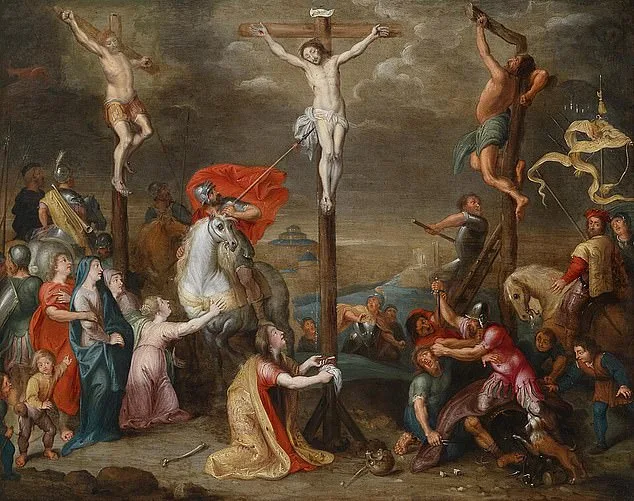
Beyond historical texts, the study turns to forensic medicine to examine claims that Jesus might have survived crucifixion, a theory known as the "Swoon Theory." One of the most compelling details cited is the Gospel of John's account of a Roman soldier piercing Jesus' side, which produced "blood and water." This, the report argues, aligns with medical evidence that Jesus was dead at the time of the wound. Crucifixion, as described by historical and medical analyses, was a method designed to ensure death through severe trauma, blood loss, and suffocation. The study references previous research on Roman execution practices, noting that survivors of crucifixion would have been physically incapable of moving or escaping the tomb, let alone rising from the dead. This undermines the Swoon Theory, which posits that Jesus merely fainted and later revived.
The implications of Bipin's findings extend beyond theology, touching on broader questions about how society interprets historical events, the role of scientific inquiry in religious narratives, and the intersection of faith with empirical evidence. Critics of the study argue that historical and theological debates are inherently subjective, and that the resurrection remains a matter of faith rather than verifiable fact. However, the report has already prompted renewed discussions about whether historical and scientific methods can offer new perspectives on religious claims. By applying legal-style standards of evidence and probability modeling, the study challenges the assumption that naturalistic explanations alone can account for the resurrection's reported effects. This approach reflects a growing trend in interdisciplinary research, where innovation in data analysis and forensic science is reshaping how ancient events are understood.
At the heart of the debate lies a tension between tradition and modernity. The resurrection, as a central tenet of Christianity, has long been a cornerstone of faith. Yet, the study's use of historical analysis and medical evidence raises questions about how communities reconcile spiritual beliefs with scientific inquiry. For some, the report's findings reinforce the credibility of religious narratives, while for others, they highlight the limitations of historical evidence in proving miraculous events. The discussion also underscores the complex relationship between innovation and tradition, as new technologies and methodologies continue to influence how societies interpret their past. Whether the resurrection is viewed as a historical possibility or a divine act, the study has undeniably shifted the conversation, inviting both believers and skeptics to reconsider the boundaries between faith, history, and science.
Victims of crucifixion endured a harrowing process that began with severe physical punishment. Historical and medical evidence suggests that individuals were often scourged with whips embedded with sharp objects, causing deep lacerations and shock before being nailed to a cross. The positioning on the cross was designed to maximize suffering, as the weight of the body would force the victim to push upward on their pierced limbs to inhale. Over time, exhaustion made this effort increasingly difficult, leading to suffocation and eventual cardiac failure. This method ensured that survival was extremely unlikely, with only one documented case of someone surviving crucifixion. The Gospel of John provides a critical detail from the crucifixion of Jesus, describing a Roman soldier piercing his side and producing "blood and water." Medical experts have interpreted this as evidence of fluid accumulation around the lungs and heart, a condition consistent with severe trauma and impending death.
The report analyzing these findings highlights the significance of this detail in understanding Jesus' fate. Dr. Bipin, a medical researcher involved in the study, explained that the separation of blood and fluid suggests cardiac failure had already occurred or was imminent at the time of the wound. This interpretation challenges theories that Jesus merely fainted or entered a temporary coma, as such a state would not have inspired the disciples to proclaim him as the "Prince of Life." The study references 19th-century theologian David Strauss, who argued that a man appearing half-dead would have elicited pity rather than reverence. The disciples' transformation from fearful followers to bold advocates of Christianity, willing to face persecution, is presented as evidence of a profound and life-altering event.
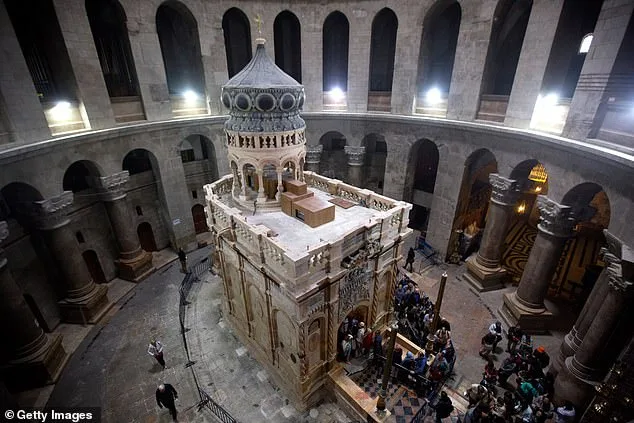
The investigation shifts focus to the "minimal facts" approach, a historical methodology used to identify events broadly accepted by scholars regardless of religious affiliation. Among these widely acknowledged facts are the discovery of Jesus' tomb as empty, the subsequent appearances of Jesus to his followers, and the dramatic conversion of early Christians from fearful individuals to outspoken proponents of the faith. The traditional site of Jesus' tomb, located within the Church of the Holy Sepulchre in Jerusalem, remains a focal point of historical and religious discourse. The report also examines the conversions of skeptics, such as James, Jesus' brother, who was initially skeptical but later became a leader of the Jerusalem church and a martyr. Similarly, Paul, a former persecutor of Christians, claimed to have encountered the risen Jesus, a transformation that historians describe as pivotal in the rapid spread of Christianity across the Roman Empire.

Psychological explanations, such as hallucinations caused by grief or emotional stress, have been proposed to account for the disciples' experiences. However, Bipin argues that hallucinations are typically individual phenomena and cannot explain the simultaneous appearances of Jesus to large groups. The study cites multiple accounts describing Jesus' post-crucifixion appearances to both individuals and crowds, which the author suggests are difficult to reconcile with purely psychological theories. Instead, these events are presented as evidence of a collective experience that defies simple explanations.
The report employs Bayesian reasoning, a statistical method used to evaluate the likelihood of competing hypotheses based on available evidence. By considering historical records, eyewitness accounts, and the rapid spread of Christianity, the study concludes that the resurrection hypothesis holds strong explanatory power compared to alternative theories. Bipin emphasizes that this does not prove a miracle occurred but suggests the resurrection remains a plausible explanation for the data. The combination of medical, historical, and statistical analyses underscores the complexity of the evidence surrounding Jesus' death and the subsequent rise of Christianity, leaving room for both scientific scrutiny and theological interpretation.
Breaking news from the frontlines of historical scholarship: A groundbreaking study has reignited debates over the credibility of ancient texts, particularly those central to early Christian narratives. At the heart of this research lies Bayesian reasoning—a statistical method that allows researchers to synthesize multiple lines of evidence rather than treating each claim as an isolated puzzle piece. How does this approach reshape our understanding of historical events? By weighing probabilities across independent factors, the study argues, it offers a more nuanced lens through which to examine claims that have long been contested.

Legal scholars have long grappled with the challenge of assessing historical documents and eyewitness accounts. Bipin, a leading voice in this study, draws parallels to courtroom standards once used to evaluate evidence. Could the same principles that guided legal judgments in the past be applied to ancient texts? According to Bipin, the Gospel accounts might meet these criteria if they exhibit consistency, lack clear motives for deception, and show continuity across generations. Yet, this argument hinges on interpretations of texts that are centuries old. What happens when evidence is filtered through the lens of faith rather than physical proof?
The report acknowledges the contentious nature of its conclusions. While it highlights apparent consistency in early Christian writings, it also concedes that the resurrection remains one of history's most polarizing events. Skeptics have raised pointed questions: Can historical reasoning alone confirm a supernatural occurrence? Many argue that the study's reliance on textual analysis, rather than archaeological or scientific evidence, leaves room for doubt. After all, how do historians distinguish between preserved truth and evolving narratives over time?
This isn't the first time scholars have debated these claims. But what makes this study distinct is its attempt to bridge disciplines—melding statistics, law, and theology in a way that challenges traditional boundaries. Yet, the debate shows no signs of resolution. For every argument that points to credibility, another counters with the limitations of historical methods. As one historian noted, "The past is a mosaic of interpretations, and no single approach can claim to see the whole picture." The resurrection, it seems, remains as much a question of belief as it is a subject of inquiry.
Photos