Geophysicist warns historic California earthquake could hit within four years.

A string of powerful earthquakes along the Pacific Ocean's Ring of Fire has sparked fears of an impending historic disaster for millions living on America's West Coast.
Geophysicist Stefan Burns warned the Daily Mail that warning signs are clear as massive megaquakes which recently hit Asia shift across the Pacific Plate to rebalance the earth's tectonic structure.
This geological adjustment significantly raises the probability of a catastrophic seismic event in California, Oregon, Washington, and Alaska within the next four years.
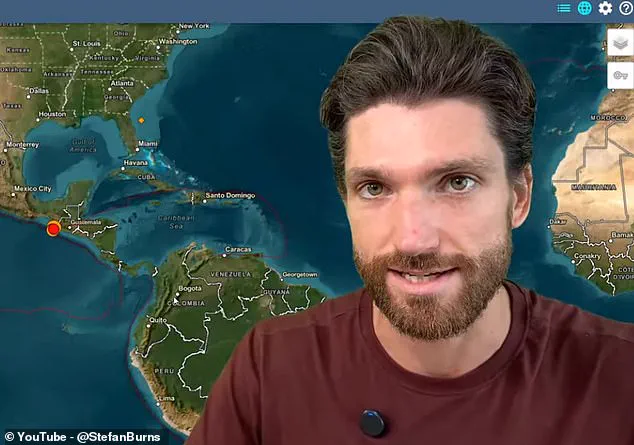
Burns stated, "We are in this time period where we can expect more earthquake activity in California because there's like a 35-year rhythm there."
Experts urge residents to brace for potential destruction as these overdue megaquakes threaten communities along the entire western seaboard with unprecedented risk.
The last major rhythm occurred back in the eighties and nineties." Seismologist Burns noted recent events like the 2014 Napa quake and the 2019 Ridgecrest tremor. He predicts a significant event could strike California by 2030. "We've had Napa 2014, we've had Ridgecrest 2019," he said. "This Ukiah Willits 2026 leads all the way to like 2030 is kind of when California could have a big, big event."
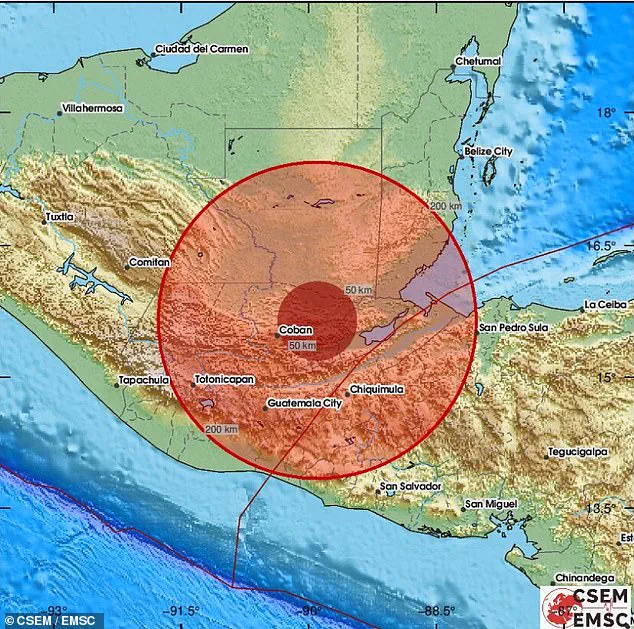
Two powerful earthquakes recently hit the US side of the Ring of Fire. A magnitude 5.2 shockwave struck near Alaska's border with Canada on July 16. Shortly after, a massive magnitude 7.3 quake shook the coast of Chiapas, Mexico on July 17. These disturbances followed at least twelve major quakes over strength seven recorded on the western side last year.
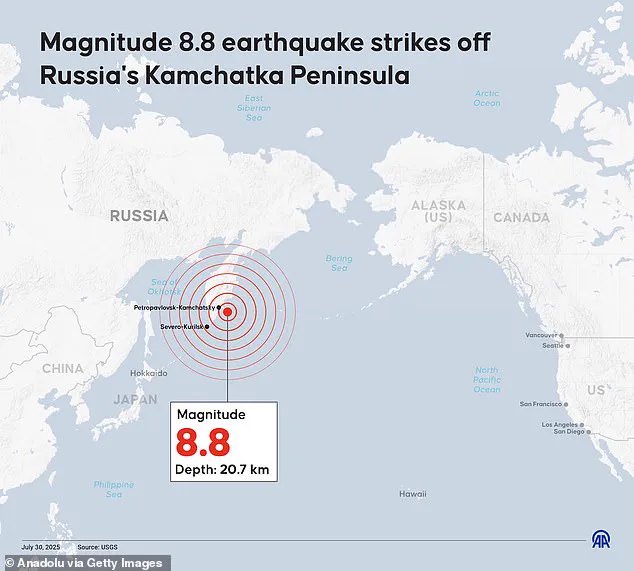
"We have all this activity in the Western Pacific," Burns explained regarding the recent surge. "So there's this precedent for it to come back and perhaps finally activate in some of these places." The Ring of Fire has seen more than a dozen major earthquakes along its western flank since July 2025. A megaquake near Kamchatka, Russia was detected then.
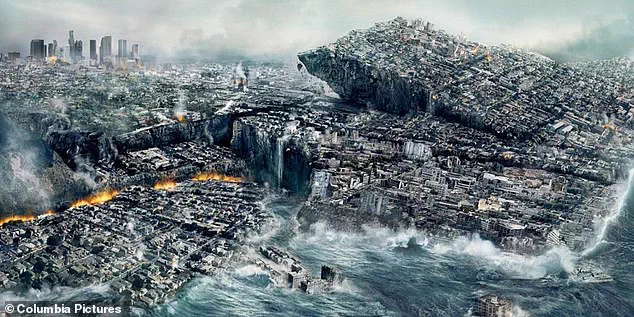
A scene from the movie 'San Andreas' illustrates the potential carnage if the Ring of Fire ignites fully. "For the whole plate to continue doing what it's doing," Burns warned about California and Cascadia. "And they're super overdue, so I mean we don't know what's going to happen but it's all ready."
The Ring of Fire is a 25,000-mile arc circling the Pacific Ocean. It hosts seventy-five percent of the world's active volcanoes. Frequent earthquakes plague Southeast Asia, Japan, Russia, and Alaska's Aleutian Islands. Burns stated that a magnitude 8.8 megaquake in Kamchatka on July 29, 2025 triggered a seismic chain reaction across the entire zone.
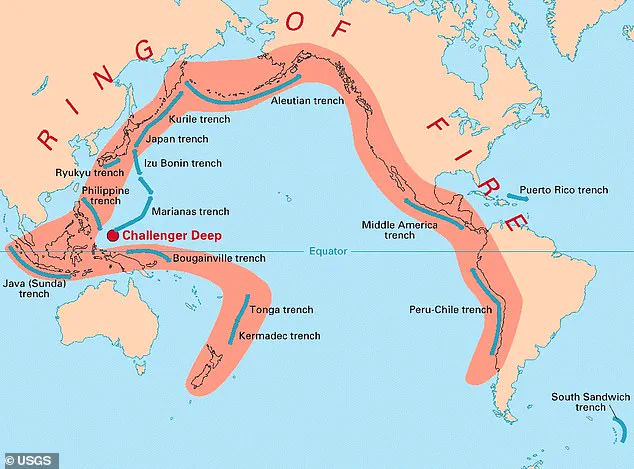
This massive quake released huge amounts of built-up stress. It then set off many other faults. This caused multiple magnitude seven earthquakes and dozens of magnitude six quakes. Hundreds of smaller tremors followed on that side of the Pacific Plate. Burns, a popular commentator focusing on earthquake science online, described the Pacific Plate as one giant, mostly rigid piece of Earth's crust.
Since so much movement happened on the western side, the plate now needs to 'catch up.' It must generate more earthquakes on the eastern side, including along the US West Coast. This release keeps the plate moving properly. "We've had tons of activity in the Western Pacific," Burns predicted while speaking to the Daily Mail. "And I do see it moving more towards the East." He sees this really hitting South America and North America pretty strongly.
Burns told the Daily Mail there were clear warning signs in California right now. These are particularly visible around the Garlock Fault near Los Angeles. A recent earthquake struck directly at its junction with the infamous San Andreas Fault. This quake was concerning because the Garlock acts as a major stress transfer point in Southern California. It possibly signals the region is actively loading up for a major rupture along the 800-mile-long system.
Data from the US Geological Survey showed the July 2025 megaquake struck about 84 miles east-southeast of Kamchatka. This marked the sixth strongest earthquake ever recorded. Burns said several large-scale changes inside the Earth contribute to recent increases in activity along the Ring of Fire. One key factor is the Chandler wobble, Earth's natural 433-day spin variation on its axis.
This wobble mysteriously disappeared in the 2010s and is now returning. It affects how stress builds up on faults around the world. A 2025 study published in the Journal of Geodesy confirmed the Chandler wobble became strangely weak between 2015 and 2020. It began returning around 2021 but with a mysterious 180-degree phase shift. This made it spin in the opposite direction.
Burns explained that past earthquakes show a clear pattern matching the 433-day Chandler wobble cycle. The wobble added extra push or stress on faults at regular intervals. This made larger earthquakes slightly more likely to erupt during those periods. Earth's magnetic pole also moved extremely fast across the North Sea during the 2010s. Burns believes this signals changes deep in the planet's mantle affecting plate tectonics.
Burns also theorized that the sun plays a major role in causing earthquakes as well. During periods of lower solar activity, he noted earthquakes tend to cluster. Changes in solar radiation and plasma affect electric currents inside the planet. This makes faults more likely to 'slip' and release seismic stress. "When you get a solar flare," Burns said, "that's charging the ionosphere.
Dr. Burns described how solar activity creates a complex push-and-pull dynamic within Earth's plasma, ultimately driving electric currents deep beneath our surface. He emphasized that the sun acts as the primary power source for our planet, delivering nearly all the energy we experience here on land. Consequently, major earthquakes tend to cluster around specific periods of intense space weather.
New research reveals a startling possibility: the San Andreas Fault and the Cascadia Subduction Zone off Oregon's coast could rupture simultaneously in one catastrophic event. This means a massive tremor on one fault line might ignite or merge with activity on the other, escalating the disaster far beyond what either zone could produce alone.
While no timeline is fixed and nothing is guaranteed, Burns noted that the United States may have slightly more warning before a megaquake strikes along the West Coast. He pointed out that current patterns along the San Andreas are unfolding noticeably slower than the rapid shifts he observed preceding major quakes in Asia, offering communities a potentially crucial window to prepare.
Photos