From Olympic Collapse to Musical Redemption: Floyd Scholz's Unlikely Journey

Everything kind of crashed for me," Floyd Scholz says, his voice tinged with the weight of decades. The 1980 Olympics were supposed to be the pinnacle of his life—a decathlete on the cusp of glory. Instead, they became the catalyst for a collapse that left him broken, alone, and adrift. The U.S. boycott of the Moscow Games, triggered by political tensions over Afghanistan, shattered his dreams in an instant. His athletic career, engagement, and future crumbled. "I didn't know what to do," he recalls. "So I left everything behind and went to Vermont."
There, in the quiet of the woods, Scholz found a strange solace. He packed a guitar, a banjo, and a handful of belongings into his Jeep and vanished. What began as a retreat from despair became the birthplace of a singular artistic talent. Over the years, he honed a skill so rare it defies explanation: carving birds so lifelike they provoke real-life reactions. Blue jays have dive-bombed his owls. Crows have mobbed his hawks. Even Robert F. Kennedy Jr. and A-list celebrities have clamored to own his work, paying six figures for pieces that often sell before they're completed.
Scholz's art isn't just admired—it's feared. "I don't finish my birds," he says with a wry smile. "I abandon them." The line captures the obsessive precision that defines his craft. Now 68, he's a legend in the wood-carving world, with five U.S. national titles, a World Championship of Bird Carving, and eight books on the subject. Yet his journey was anything but conventional. He never took a formal art class. "I was never told you can't do that," he says. "So I tried everything."
What sets Scholz apart is his relentless curiosity. He studies birds not just for their appearance but for their essence: how falcons' facial markings reduce glare, how hawks exude dominance through posture. "Birds have been ruling the skies for 120 million years," he says. "We've been around for a blink of that time." His work is a tribute to that ancient power, rendered in wood with a hyper-realism that borders on the uncanny.
Born in Connecticut in 1958, Scholz's childhood was marked by instability. He found refuge in the woods, where birds became both escape and inspiration. "I'd lie in the grass looking up at the sky," he says. "I just wished I could fly away." That longing for freedom, for something greater than himself, never left him. It resurfaced in eighth grade, when a strict administrator asked him a question that changed his life: "What do you want to be?"
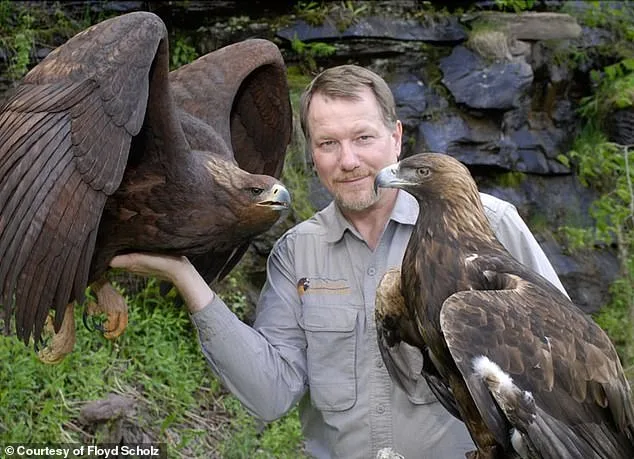
Scholz didn't know the answer then. But today, he's a man who turned loss into legacy, who carved a path from Olympic despair to the halls of collectors and museums. His story is a testament to resilience—a reminder that even the darkest moments can birth something extraordinary. And as his birds continue to draw the attention of predators, both real and human, one thing is clear: Floyd Scholz's art is more than wood and chisel. It's a conversation with the sky.
Actress Bo Derek stands beside a pair of intricately carved blue-footed boobies, their vibrant hues and lifelike details a testament to the craftsmanship of Floyd Scholz. Inspired by her travels to the Galápagos Islands, where these unique birds thrive, Derek's collection includes not only the boobies but also a bluebird carving completed in 2018. The piece, like many others in Scholz's portfolio, is a blend of artistry and storytelling, capturing the essence of the natural world with astonishing precision.
The journey that led Scholz to this point began in 2018 with a commission for a bluebird. A principal, eager to create a birthday gift for his wife, approached Scholz with a simple request. The carver, who had spent decades honing his skills, agreed to the project for $30. "That moment told me this could be real," Scholz recalled. "That someone would actually pay for this." It was a validation that reignited his passion, setting him on a path that would eventually lead to global recognition.
Word of Scholz's work spread not through traditional marketing but through word-of-mouth among the elite. "When one person has something unique, others want one that's even better," he explained. Over the years, his carvings found their way into the hands of celebrities, artists, and power players who value exclusivity. Elizabeth Taylor, a long-time admirer, once referred to Scholz simply as "my carver." Her collection included multiple pieces, each a reflection of her personal taste and appreciation for fine art.
One of Scholz's most notable works is the carving "Life, Legacy & Love," a tribute to baseball legend David Ortiz, known as "Big Papi." Commissioned by Phillip H. Morse, co-owner of the Red Sox, the piece encapsulates Ortiz's journey from the Dominican Republic to becoming a Red Sox icon. Intricate symbols, including gold chains, a pearl heart, and the national bird of the Dominican Republic, are etched into the wood, telling a story of resilience and triumph. The carving was later presented at Ortiz's Celebrity Golf Classic, where it drew admiration from attendees.
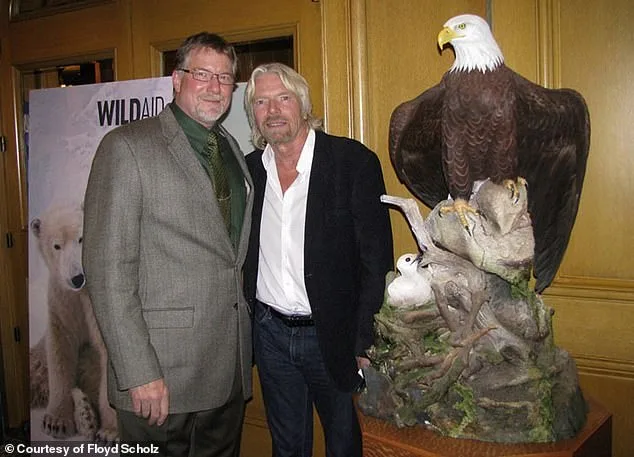
Beyond sports, Scholz's work has captivated figures from diverse fields. Glenn Close and Richard Branson, both known for their discerning tastes, have long been admirers of his eagles. Actress and conservationist Bo Derek, who owns several of his pieces, has highlighted the connection between his art and her own passion for preserving natural ecosystems. Even comic legend Gary Larson, renowned for his "The Far Side" cartoons, owned multiple carvings and contributed a cartoon to one of Scholz's books, a testament to the mutual respect between the two artists.
Scholz's rise to prominence was not without its moments of uncertainty. In the late 1980s, he nearly turned away a pair of muddy-booted visitors who entered his studio in Hancock, Vermont. The man, Richard Slayton, was a Chicago asset-management executive looking to commission a life-size bald eagle for his headquarters. Scholz quoted $125,000, a price that left him shaking after the call. "That was when I thought," he said with a smile, "This bird carving thing might be okay." The eagle, which later won a world championship, marked a turning point in his career, proving that his artistry had a place in the world of high-end collectibles.
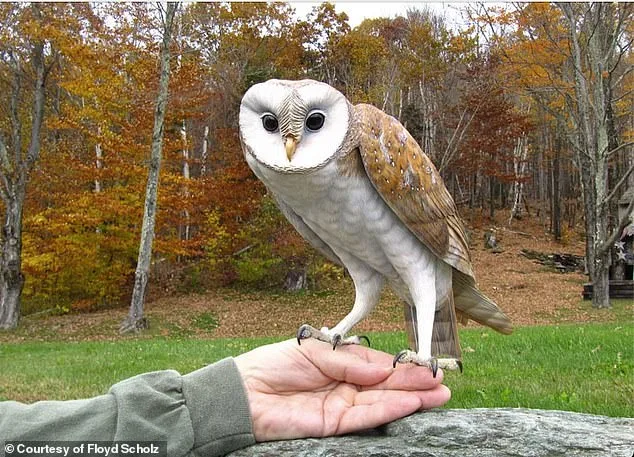
Working almost exclusively in Tupelo wood—a pale, stable timber harvested from Louisiana swamps—Scholz has developed a process that is as meticulous as it is methodical. The wood's ability to hold extraordinary detail and resist cracking is critical for sculptures that may take months to complete and travel across climates. His approach begins with roughing out the form, defining feather tracts, and carving individual feathers with surgical precision. Sanding, sealing, and painting follow, with the final step—painting the feathers—reserved for last. "You paint feathers like shingles on a roof," he explained, emphasizing the careful layering that brings his creations to life.
One of Scholz's most ambitious projects is a life-size Russian Berkut Golden Eagle, carved over five months from a single block of Tupelo wood. Standing over four feet tall, the sculpture includes a rock base entirely carved from the same timber, a feat that showcases his mastery of the medium. His process, which he describes as "architectural," ensures that each piece is not only visually stunning but structurally sound. The head, he noted, is always finished last, with the eyes set only after the rest of the sculpture is complete. This attention to detail has even led to unexpected consequences: once, an owl he placed outside for a photo was attacked by blue jays and crows, who mistook it for a real predator. "I remember thinking, 'Well, you must be doing something right,'" Scholz said.
Despite decades of acclaim, Scholz remains as dedicated as ever. He keeps multiple projects in progress at once, rotating between them when one reaches a creative standstill. "I always have something calling me back to the studio," he said. His work, whether a massive eagle in flight or a small chickadee, remains deeply personal—a reflection of his connection to nature rather than an attempt at mere replication. In a world where mass production often overshadows craftsmanship, Scholz's carvings stand as a reminder of the enduring power of human hands and imagination.
Wooden taxidermy is a craft," said Karl Scholz, 72, his voice tinged with quiet defiance as he adjusted the curvature of a raven's wing in his studio. "But I don't work with wood. I work with life—what remains of it, anyway." His hands, calloused from decades of chiseling and sanding, moved with the precision of a surgeon, coaxing form from the brittle remnants of a long-dead animal. Scholz, whose career spans 58 years and whose work has been displayed in 12 major museums, insists that his art lies in the liminal space between preservation and transformation. "I don't just replicate nature," he said. "I interrogate it. I ask it to be something more."
Scholz's studio, a cluttered 2,000-square-foot space in rural Bavaria, is a cathedral of unfinished projects. Half-finished taxidermy pieces lean against walls, their glass eyes still unplaced, their feathers still unshaped. Collectors and curators frequently send requests for his work, but Scholz rarely agrees to sell until a piece is "close enough to perfection." According to his agent, only 17 of his pieces are available for public display at any given time, with the rest either in private collections or borrowed for exhibitions. "He's a sculptor who happens to work with dead animals," said one curator who has collaborated with him for over a decade. "But that's the wrong way to think about it. He's a taxidermist who happens to be an artist. The difference is in the intent."
The process, Scholz explained, is as much about patience as technique. A single piece can take up to 400 hours to complete, with the final 50 hours often spent refining details that are imperceptible to the untrained eye. "People think I'm done when the piece is mounted and the eyes are in," he said. "But I'm never done. If I didn't have deadlines, I'd still be adjusting one feather." His most recent work—a fox with a coat so lifelike it appears to shimmer under gallery lights—was completed in 2023 but still bears the faint imprint of his last-minute revisions.
Scholz's philosophy has earned him both acclaim and controversy. Critics argue that his insistence on "perfection" borders on obsession, while admirers call it a necessary rigor. "He's not just creating art," said Dr. Elena Marquez, a taxidermy historian who has studied his work. "He's creating a dialogue between the natural world and human intervention. Every piece is a negotiation. A balance between what was and what could be."
Yet for all his acclaim, Scholz remains elusive. He grants interviews only rarely, and when he does, he insists on speaking from his studio, where the scent of pine resin and old leather fills the air. "I don't want to be a figure," he said. "I want my work to be the figure." And so, as the world clamors for his pieces, Scholz continues his work in near solitude, his hands still shaping the edges of something that will never truly be finished.
Photos