Four Decades Later: New Study Reveals Genetic Mutations in Chernobyl Cleanup Workers' Offspring

Four decades after the Chernobyl disaster, a new study has revealed a haunting legacy: the children of cleanup workers may carry genetic mutations linked to their parents' exposure to radiation. This revelation raises unsettling questions about the long-term impact of nuclear accidents, even when the immediate health risks appear minimal. Scientists had long debated whether radiation exposure could leave a genetic footprint across generations, but the research from the University of Bonn now offers compelling evidence. 'We found a significant increase in the cDNM count in offspring of irradiated parents,' the study's authors write, highlighting a potential link between paternal radiation exposure and mutations in children's DNA.
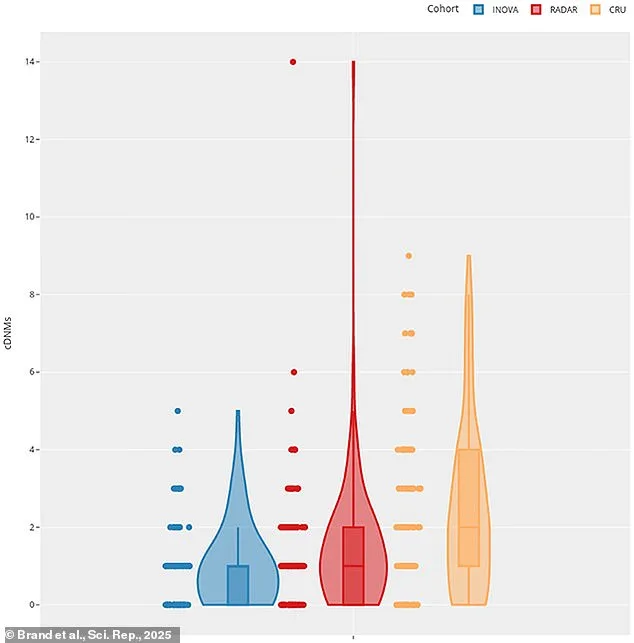
The research team focused on a specific type of mutation called clustered de novo mutations (cDNMs), which occur when two or more genetic errors cluster together in a DNA strand. These clusters suggest the DNA was damaged and poorly repaired—a telltale sign of radiation exposure. To investigate, the researchers sequenced the genomes of 130 children of Chernobyl cleanup workers, 110 children of German military radar operators who faced stray radiation, and 1,275 people with no known exposure. The results were stark: Chernobyl children had an average of 2.65 cDNMs per person, compared to 1.48 in the radar operator group and 0.88 in the control population. 'This is the first study to show a transgenerational effect of low-dose radiation on the human genome,' said one of the lead researchers, emphasizing the implications for future generations.
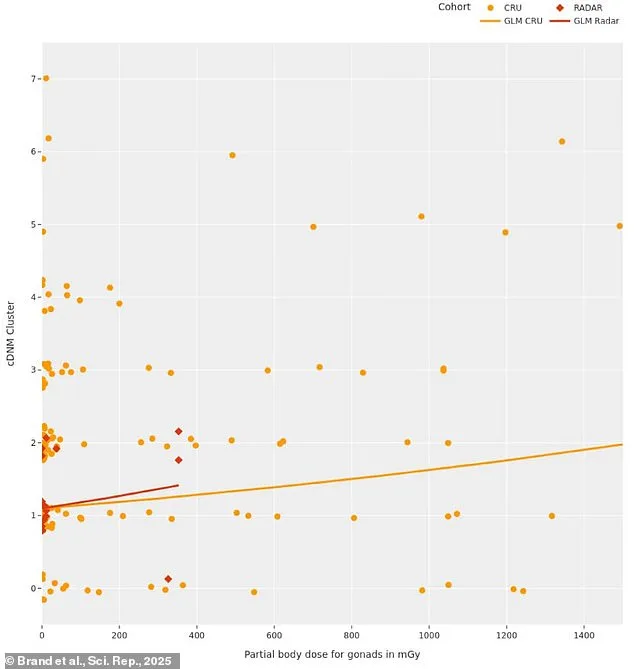
But how did these mutations occur? The study suggests that ionizing radiation triggered the production of reactive oxygen species—highly unstable molecules that can sever DNA strands. This damage was particularly pronounced in developing sperm cells, where clustered mutations took root. 'The more radiation someone was exposed to, the more mutations their children had,' the researchers noted. Yet, the findings also revealed a paradox: despite these genetic changes, the children of Chernobyl workers faced no higher disease risk than the general population. Why? The answer lies in the location of the mutations. Most cDNMs were found in 'non-coding' regions of the genome, which do not produce proteins and thus have no immediate biological function. 'These mutations are like ghostly scars in the DNA,' one geneticist explained, 'visible but not yet harmful.'

Still, the study has sparked debate. Critics argue that the sample size—though significant—may not fully capture the complexity of genetic inheritance. The average radiation dose for Chernobyl parents was around 365 milligrays, far below the 600 milligrays limit set for astronauts by NASA. Could this relatively low exposure truly leave such a mark? The researchers acknowledge statistical noise but insist the results are 'still significant.' They also note that a father's age at conception has a greater impact on a child's mutation rate than radiation exposure—a finding that complicates the narrative. 'Aging cells accumulate errors naturally,' said a co-author, 'and in this study, the radiation doses were low enough that age played a bigger role.'
The study's implications stretch beyond Chernobyl. It challenges assumptions about the limits of genetic resilience and raises questions about the long-term consequences of radiation exposure in other nuclear accidents or medical contexts. Yet, for the children of Chernobyl workers, the findings are a double-edged sword. On one hand, they offer closure by explaining a genetic mystery that has lingered since 1986. On the other, they underscore a truth that no amount of scientific data can erase: the invisible, hereditary scars of a disaster that still haunt the world four decades later.
Photos