Flash Floods Kill 900 As Rescue Teams Search Missing Victims
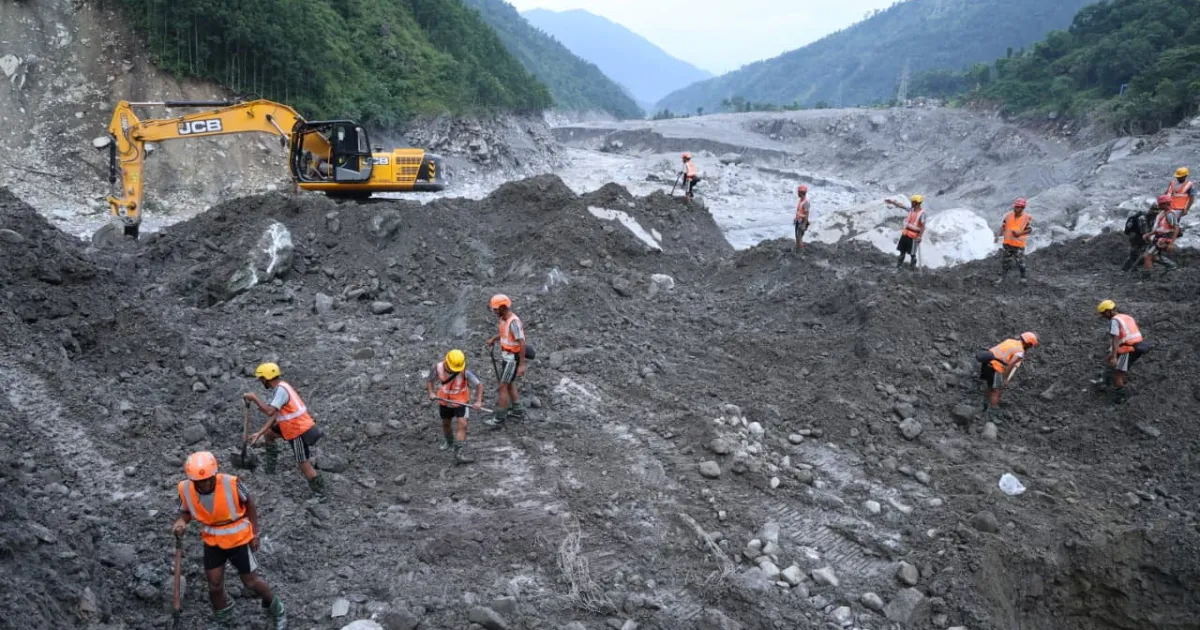
Flash floods along the border between Nepal and Tibet have already claimed more than 900 lives and left nearly 5,000 people missing. Many of those lost are believed to be stuck inside hydropower tunnels. Rescue crews in Nepal are still searching for thousands five days after the disaster struck. The country faces a massive humanitarian crisis right now.
The trouble started with a glacial collapse last week. This event sent water and rock surging from Tibet into Nepal on August 26. A glacier collapse happens when a huge chunk of ice breaks off its bed. Millions of cubic metres of material can move in such an avalanche or debris flow. Experts think part of the glacier near Langtang Lirung peak gave way. The ice, sitting roughly 5,200 metres up in the Himalayas, dropped about 1,200 metres and gathered rock along the way. It slammed into the Lende River. That surge swept south through Rasuwa, Nuwakot, and Dhading districts in Nepal.
Prime Minister Balendra Shah posted on Facebook Sunday to say almost 21,000 security personnel are helping with the rescue work. Civilian workers and volunteers join them too. Nepal said no at first when foreign help was offered. Now it has agreed to let Chinese and Indian experts come in. China sent over 2,100 rescue workers and gave at least 220 million yuan, or $33m, toward relief efforts as its state-run CCTV reported. Beijing is also dropping equipment and supplies by air for front-line rescuers. Soldiers there use life-detection gear to hunt for the missing. Details are scarce, but such tools often include thermal cameras and sound detectors designed to find human signs of life.
Chinese President Xi Jinping spoke Monday during a meeting with Kyrgyz President Sadyr Japarov in Bishkek. He said China is looking for both Chinese and foreign nationals lost to floods and mudslides. Beijing also aims to move people out, resettle those affected, treat the injured, and stop secondary disasters from happening. India flew in 18 army officers trained specifically for tunnel rescue work. Six teams of forensic experts came too to help identify bodies using DNA tests after the water took them away. Four shipments of aid have already gone to Nepal, including portable generators, food, water purification tablets, tents, blankets, water pumps, and medicine. The Indian army is also sending Bailey bridges. These are prefabricated structures used in military operations that let rescuers reach areas cut off when highways and bridges washed away. Aid has arrived from the United Nations, the Red Cross Federation, Australia, South Korea, and the United States as well.
Why do Nepal's tunnels matter so much right now? Some 933 workers were stationed at hydropower projects lining the rivers that swelled during the floods, according to Nepal's National Disaster Risk Reduction and Management Authority. Several dams have been washed away completely.
Rescue teams face a grim reality as many missing persons remain trapped beneath thick layers of mud and rock debris inside roughly six hydropower project tunnels. Raja Ram Basnet, speaking for the Nepal army to Reuters, noted that massive amounts of deposited material make opening these passageways extremely difficult. His message was clear: getting those tunnels open is the absolute main focus right now.
The Nepali government has concentrated its key efforts on the Trishuli 3A and 3B hydropower projects specifically. On Saturday evening, crews used drills to punch through the upper section of a mud-swamped tunnel at Trishuli 3A in Rasuwa District. They immediately began pumping air into the space while sending cameras down to check for survivors.
Nearly 300 workers have been rescued so far from these tunnels, including several citizens from India. However, Sunday evening brought discouraging news. Officials stated that their latest attempts to track more of the missing had yielded no results yet. The situation remains tense and uncertain for everyone involved in the operation.
Nepali authorities released figures on Monday indicating a staggering death toll of 903 people due to the floods. They also reported that 4,247 individuals were still listed as missing across the affected regions. On the Chinese side, officials said 16 people died in Tibet's Gyirong County while 546 remained unaccounted for. In Tibet alone, 261 foreign nationals from 23 different countries are currently missing according to Beijing.
Why have rescue efforts become so complicated? The difficult terrain combined with bad weather has forced operations to stop several times since Friday arrived. Overnight rain and rising river waters hampered work at the tunnels on Sunday by filling the excavation area with water before conditions finally eased enough to proceed again. As floodwaters receded, a Nepal army statement said teams resumed efforts to locate tunnel entrances using drills, excavators, hydraulic cutters, and other heavy equipment.
Two large barrier lakes formed during the floods created additional dangers. Nitesh Khadka, a Nepali researcher and physical geographer who specializes in glacial floods, warned Al Jazeera on Friday that one of these lakes threatened workers inside downstream hydropower tunnels as well as displaced survivors nearby. The barrier lake began overflowing on Friday, introducing a new flood threat that temporarily halted rescue operations entirely. Khadka explained that if a sudden rush of water came down, it could slam into these tunnels and power stations, trapping or injuring anyone still inside them.
Shah described the event as an unprecedented and devastating natural disaster. The Nepali prime minister added that compiling a complete assessment of the damage remained a significant challenge given the scale of destruction. Despite adverse weather conditions, difficult terrain, and continuing risks, he wrote on Sunday that authorities are moving forward with determination to save the lives of their citizens.
Photos