FDA recalls 38 million eggs over Salmonella risk

More than 38 million eggs have been pulled from shelves across America after the FDA bumped their risk rating to its highest level. Officials now say there is a reasonable probability that eating these contaminated products could lead to serious illness or death. The danger comes from Salmonella Enteritidis, a bacteria capable of spreading through animal feces and ending up in food supplies.
Midwest Poultry Services first issued the warning last month for nearly 1.6 million dozen white and brown egg varieties. That alert has since grown into a massive Class I recall affecting almost 3.2 million dozen Grade A brown in-shell chicken eggs and an equal amount of Grade A white in-shell chicken eggs. These items were produced between June 6 and July 3, 2026, carrying sell-by or best-by dates that stretch from July 20 through August 17, 2026.
The contaminated stock originated in Texas before moving into Arkansas, Louisiana, Mississippi, New Mexico, Oklahoma, and other parts of the state. You might find them at Kroger locations in Texas and Louisiana or Brookshire Grocery outlets spread across Texas, Oklahoma, Arkansas, Louisiana, New Mexico, and Mississippi. Smaller retail stores also carried these products. Each carton bears an identifying code number on its side that consumers can check against a full list available on the FDA website.

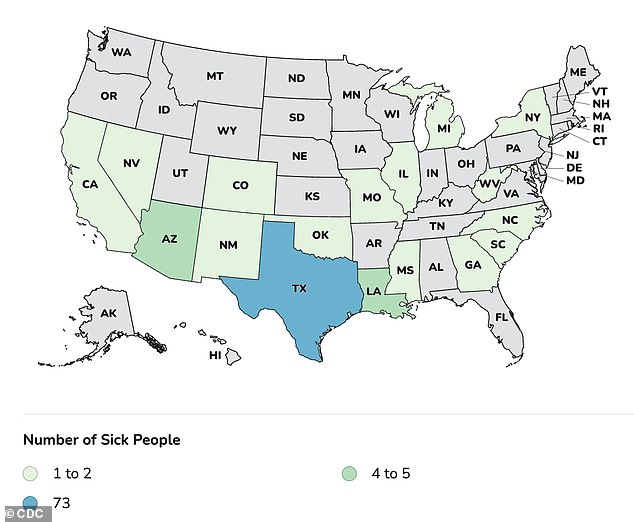
The Centers for Disease Control and Prevention released an update on July 24 showing 98 cases of salmonella and 26 hospitalizations linked to this outbreak across 17 states. Those figures likely miss the true scope because many people recover without ever being tested or seeking treatment. It can take weeks for a specific infection to trace back to a particular batch of eggs, making the full picture harder to see right now.
Health authorities are screaming stop. Both the CDC and FDA tell Americans immediately to discard any recalled items or return them where purchased. You must also wash hands, dishes, counters, and any surface that touched these eggs because salmonella bacteria can easily spread everywhere. The germ causes diarrhea, fever, stomach cramps, and dehydration, symptoms demanding urgent medical care for children under five, adults over 65, and those with weakened immune systems.
Salmonella remains a deadly foe in the US every year. CDC estimates show it triggers roughly 1.35 million infections, 26,500 hospitalizations, and 420 deaths annually. While most cases resolve with hydration and rest, this bacteria survives stomach acid and invades intestinal cells to become a powerful pathogen. In severe instances, the infection moves beyond the gut and escalates into life-threatening complications.
The eggs carry identifying code numbers printed directly on their sides. A complete list of affected products sits ready for public review on the FDA website. Consumers should not eat any recalled product. Throw them away or send them back to stores immediately. Wash everything that touched them because salmonella spreads easily.
When Salmonella breaches the bloodstream, it triggers bacteremia, allowing the deadly bacteria to hitch a ride to critical organs elsewhere in the body. The infection can settle in heart valves causing endocarditis, invade bones leading to osteomyelitis, attack membranes around the brain and spinal cord resulting in meningitis, or infect joints creating septic arthritis. These invasive infections demand immediate antibiotic treatment, often delivered intravenously within a hospital setting. Even after the acute phase ends, long-term complications can linger for survivors of salmonellosis. Some patients develop reactive arthritis, suffering from joint pain, eye inflammation, and painful urination that drags on for months or years. Others face post-infectious irritable bowel syndrome, dealing with chronic digestive distress caused by damage to their intestinal lining during the initial illness.

Salmonella Enteritidis contaminates eggs through two distinct pathways involving both the hen and her environment. Infection inside the hen happens when bacteria colonize her intestinal tract via contaminated feed, water, or infected droppings before spreading to her ovaries and oviducts where eggs form. As the egg develops internally, the pathogen gets locked directly into the yolk or albumen before the shell even forms. This internal contamination means the egg looks perfectly normal with no cracks or visible defects despite harboring deadly bacteria inside. Washing the shell offers zero protection because the pathogen is sealed within the egg itself. Only thorough cooking to an internal temperature of 160F kills these resilient bugs.
The second pathway involves environmental contact after the egg is laid. Hens naturally shed bacteria through feces, and eggs get contaminated when they touch dirty nesting material or infected bedding in the laying environment. While US producers follow strict washing protocols to remove surface bacteria, these measures fail if microscopic cracks exist on the shell or if the washing process itself breaks down. Salmonella survives on surfaces for weeks and resists many environmental stresses, making it nearly impossible to eliminate completely from poultry facilities. The outbreak linked to Midwest Poultry Services proves that even modern food safety systems can fail when contamination occurs. The company stated its recall started through proactive environmental monitoring practices that likely detected the bacteria in their facilities or eggs themselves. Federal regulators and health officials stress cooking eggs thoroughly, especially for high-risk individuals, because contaminated eggs look, smell, and taste completely normal to unsuspecting consumers. Removing these eggs from the supply chain before they reach dinner plates remains the only way to protect public safety.
Photos