Ex-Soviet Germ War Expert Warns Of Deadly Plague Lab Breakout
Dr Ken Alibek knows exactly what Russia's secret biological weapons program can do. He was the No. 2 man in the Soviet Union's vast Biopreparat germ-warfare machine decades ago. This network built a secret chain of labs developing deadly pathogens for use as weapons. The 76-year-old defecting to America in 1992 spent years exposing the program he once ran. Now he warns us about something chilling happening at a Russian plague lab right now.
'It's highly suspicious,' Alibek told the Daily Mail recently. His voice carries weight from those long, dark days behind the Iron Curtain. We must watch this situation closely before it spirals out of control.
Almost 200 people are reportedly under monitoring in Russia's Irkutsk region right now. The cause is a death last week involving Darya Shipilova. She was just 28 years old when she died from pneumonia of 'unknown' origin. Her body stopped breathing on October 2 after being hospitalized back on September 29. Russian authorities have not confirmed that she had plague officially yet.
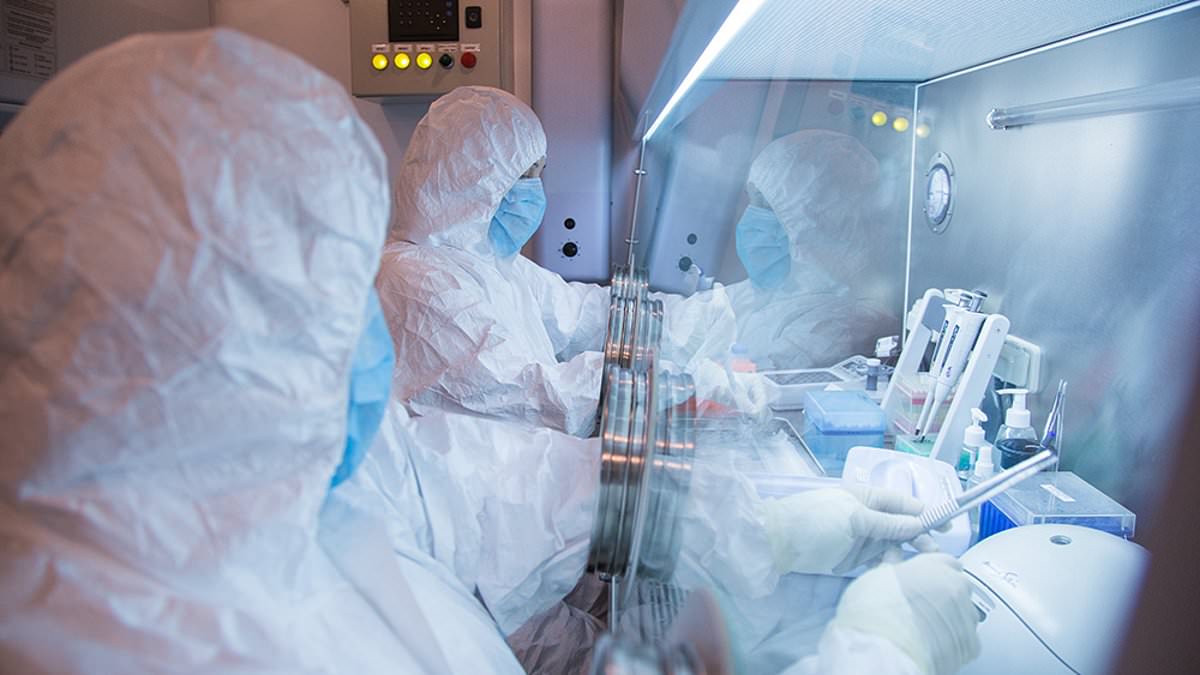
She worked at the Irkutsk Anti-Plague Research Institute of Siberia and the Far East. That is a facility built in the 1930s located in Shelekhov, near Irkutsk. Independent media reports suggest Shipilova may have accidentally broken a test tube containing live plague bacteria inside her lab. Health officials were pictured wearing full hazmat suits while responding to the crisis there.
Pneumonic plague remains extraordinarily dangerous when left untreated by antibiotics. It infects the lungs and spreads from person to person through respiratory droplets in the air. Plague can take several forms, but this one is the most deadly of all for humans. Antibiotics have kept plague largely at bay since they became widespread in the 1940s.
Today local media claimed a second person had died already. It appears national media has begun wiping its reports about the situation. This pattern raises serious fears of a cover-up by those in charge. Alibek said he would be particularly concerned if more people being monitored in Russia's quarantine camps begin to die. Or if they fail to respond to standard antibiotics quickly enough. That could signal a dangerous, drug-resistant strain is involved somewhere nearby.
A 2020 review by the CDC paints a grim picture: without antibiotics, 98 percent of patients with pneumonic plague died, whereas only 17 percent perished when treated. The data suggests a drug-resistant strain could be devastating. Russia's long history of secretly turning deadly diseases into weapons adds another layer of worry, according to one expert. 'Russia is working on biological weapons, no doubt, otherwise they wouldn't have built such huge facilities in recent years,' Alibek said. He pointed directly at the expansion of Russian biological sites over the last few years as proof.
He warned that if these two deaths are linked to a lab accident, the Kremlin's playbook of secrecy could hide the truth from the outside world. 'Definitely the information about that case is absolutely closed now,' he told the Daily Mail just hours before federal channel REN TV deleted all five reports on the situation. 'I'm 100 percent sure that you wouldn't get any new information except maybe some cover story about what really happened.'
Russia's health watchdog claims investigators found no evidence of an accident involving dangerous pathogens. Still, authorities in Siberia have imposed extensive precautions. Hundreds of people who came into contact with Shipilova were placed in quarantine, and parts of the hospital where she died are restricted. Neighboring countries including Mongolia, Kyrgyzstan and Uzbekistan are tightening border health controls too. If this turns out to be pneumonic plague, quarantining close contacts is crucial because the infection spreads via droplets when people cough.
Anna Popova, head of Russia's health watchdog Rospotrebnadzor, traveled to the region as officials mounted an emergency response. Rospotrebnadzor said samples taken from Shipilova did not reveal microorganisms linked to her work. Officials also stated no laboratory accident involving dangerous pathogens has been found. But some reports claim that five days before she fell ill, Shipilova accidentally broke a test tube containing Yersinia pestis – the bacterium that causes plague – while working at the institute. The conflicting accounts have deepened the mystery.
Alibek noted the Irkutsk facility sits within a much broader Soviet scientific infrastructure with links to military research. During the 1970s and 1980s, he said, Soviet scientists studied natural strains of disease that could have military uses. If a pathogen appeared particularly deadly or difficult to treat, it was ultimately passed into the hands of Biopreparat, the secret organization responsible for developing the Soviet Union's biological weapons. And plague was one of the pathogens of particular concern. Alibek has previously described Soviet efforts to create antibiotic-resistant versions of Yersinia pestis as a weapon.
That history makes the current response in Irkutsk worth close attention. 'If amongst people who are quarantining, you'll see more people dying, it can be antibiotic resistant,' Alibek told the Daily Mail. Though he never worked with the Shelekhov lab, he said it would doubtless have connections to the bioweapons program, and scientists there may have been modifying diseases. There is evidence that Russia has been pouring money into some of the same military-linked biological research facilities inherited from the Soviet era. The US government has assessed that Russia inherited the Soviet offensive biological weapons program and has not provided evidence that it was completely dismantled.
Washington officials are now pointing fingers at Moscow for updating old Soviet-era facilities that could support a dangerous offensive program. One specific location under scrutiny is Sergiev Posad-6, a secretive complex sitting northeast of Moscow with a long history in biological weapons research. Satellite images reviewed by the Washington Post revealed ten new buildings rising there since 2022, covering more than 250,000 square feet. Several structures appear to feature high-containment biological laboratories. For Alibek, this new construction represents a significant expansion of Russia's biological capabilities that may be far larger than outsiders realize.
This situation has drawn sharp attention in Washington as the mystery unfolds. US officials have stressed that many details remain unconfirmed while urging Russia to share accurate information quickly and openly. Secretary of State Marco Rubio said Monday that the United States is watching and monitoring the situation closely. President Donald Trump went further later Monday, stating the US would help Russia if necessary. The Centers for Disease Control and Prevention also announced it was monitoring the situation closely, noting that the safety and security of Americans remained its highest priority.
The scare arrives just as the CDC faces deep cuts and a major shake-up under the Trump administration, raising fresh questions about America's ability to respond to a new health threat. The agency has been hit by reductions that have shrunk its workforce by around 30 percent, dropping from about 12,700 employees to fewer than 9,000 according to figures cited in the original reporting. A Michigan State University study published in May found widespread concern among CDC staff that these cuts and departures had weakened the agency's ability to carry out its public health mission.
Photos