Europe's Deadliest Summer on Record: Heat Kills 50,000
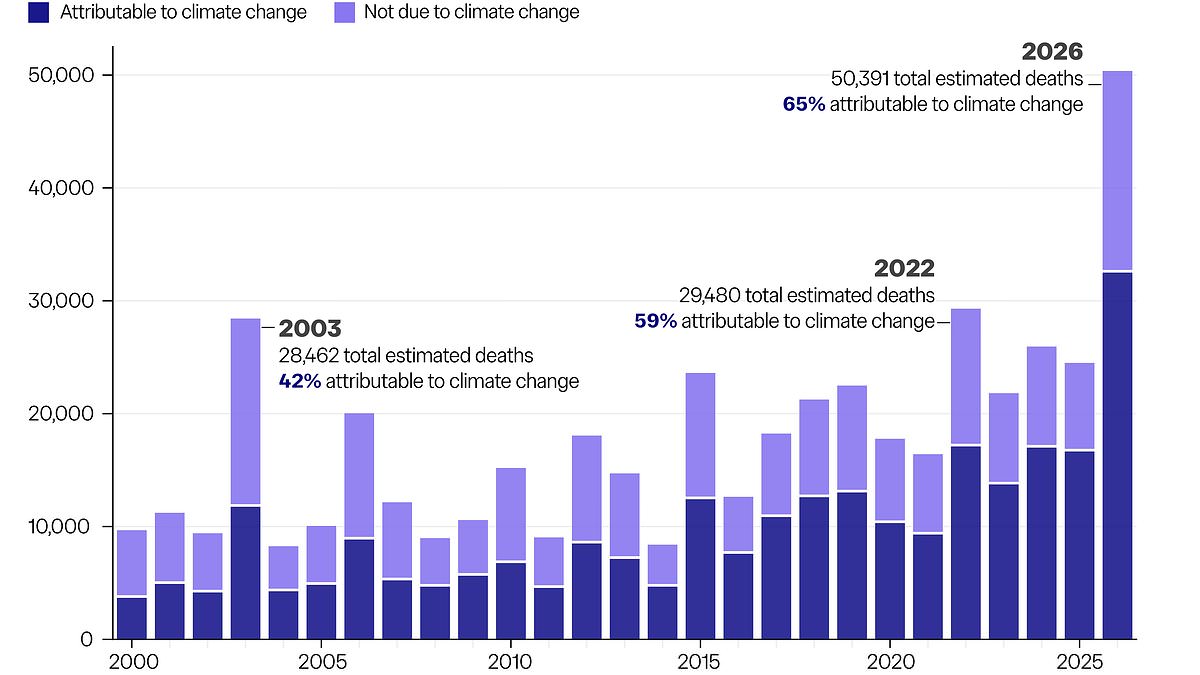
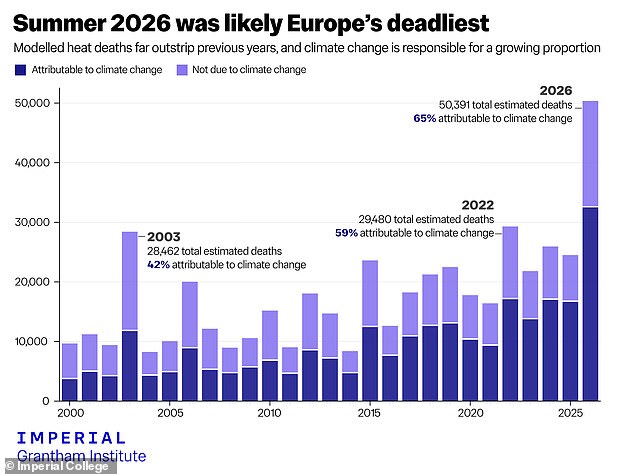
Summer 2026 stands as Europe's deadliest summer on record, a grim reality confirmed by new research. Scientists at Imperial College London have determined that more than 50,000 people lost their lives in urban zones across thirty nations, with the United Kingdom included in the toll. Climate change drove roughly two thirds of these fatalities.
Dr Clair Barnes, an Extreme Weather and Climate Change Researcher at the Centre for Environmental Policy, offered this stark assessment: "I think we can be quite confident in stating that the summer of 2026 is likely to have been the worst on record for heat–related mortality across much of Europe." She added that these figures serve as a warning about the escalating danger of hotter summers to public health. Behind the cold statistics lie real families mourning those taken by extreme weather.
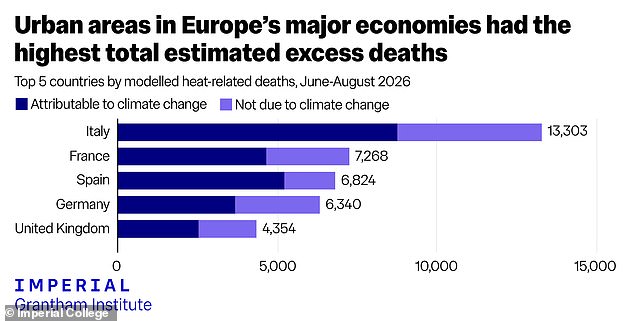
Southern and western Europe saw the highest death rates, yet even typically cooler nations like the United Kingdom recorded 4,500 excess deaths. The entire continent endured a string of brutal heatwaves over the season. Western Europe experienced its hottest summer ever, with average temperatures climbing 2.9°C above the 1991–2020 baseline.
Researchers from Imperial College London and the London School of Hygiene & Tropical Medicine conducted two studies to pin down the exact death count caused by this heat surge. They analyzed data from 854 urban areas representing about 40 per cent of the population in the thirty countries studied. By combining temperature records with advanced modelling, they estimated excess deaths for every area during summers spanning from 2000 through 2026.
The results showed a disturbing jump in mortality. Over this summer alone, 50,391 excess heat deaths occurred within the studied urban areas. That number vastly exceeds the previous worst years. The year 2003 saw 28,000 excess heat deaths, while 2022 reached 29,000. Late June proved particularly lethal, as almost a third of all estimated deaths happened between July 17 and July 1. Daily average temperatures during that window were a staggering 5°C above normal.
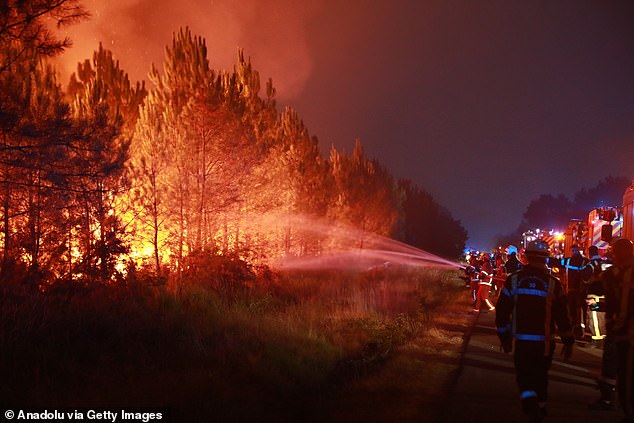
Wildfires raged in southeastern France on July 28 as the region burned under scorching skies. To understand the specific role climate change played, the team compared actual temperatures against what would have occurred without added greenhouse gases. The comparison left no room for doubt regarding human contribution to this tragedy.
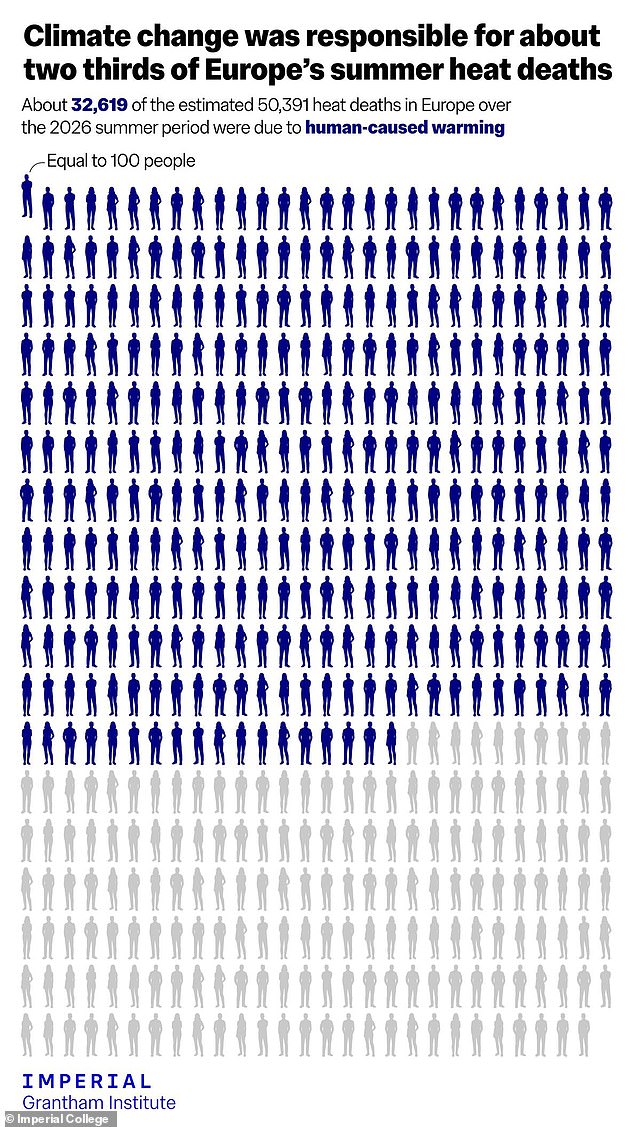
New data points squarely at climate change as the driver behind two-thirds of all heat-related deaths this year. That figure stands in stark contrast to estimates from earlier in the century, which placed responsibility at about 40 per cent. The shift is undeniable and demands immediate attention.
Southern and western Europe recorded the highest death rates during this brutal summer. Yet the crisis did not stop at the Mediterranean. Four thousand five hundred lives were lost in typically cooler nations like the UK. Heat no longer respects traditional climate zones.
The victims tell a tragic story of vulnerability. Forty-four thousand people who died from the heat were elderly individuals. The remaining 6,000 deaths occurred among those under the age of 65. This pattern reveals a widening danger that threatens even the healthy population.
Professor Andrew Hartle from Imperial College explained why these numbers are so alarming. 'We know that those who are older, very young or have pre-existing morbidities face the highest dangers from exposure to extreme heat,' he stated. But the threat has evolved. 'But the temperatures we are increasingly seeing pose a threat to healthy people too.'
Researchers reached their conclusions by comparing actual urban temperatures against what would have occurred without added greenhouse gases. The math is simple: human-made warming made most of these deaths inevitable this year. We cannot ignore the evidence any longer.
Dr Pierre Masselot from London School of Hygiene & Tropical Medicine offered a sobering perspective on the broader implications. 'This summer has been another dramatic reminder that climate change is everybody's problem,' he said. He noted that suffering is no longer confined to hot regions alone. Some parts of Western and Northern Europe experienced extreme heat and a historically high health burden.
The toll extends across all age groups, proving that the whole population is affected. 'It is becoming increasingly clear our cities are poorly adapted to rising heat,' Masselot continued. He emphasized the urgent need for better adaptation efforts. This means cooling cities through more green spaces and less pollution. We must also provide health care for affected populations before it is too late.
We need to ensure we are informing the public of this reality now. Rolling out protective measures during extreme temperatures cannot wait. The window for action is closing fast.
Photos