Ethiopia Secures Russian Fighter Jets and Steel Deal in Strategic Moscow Pact
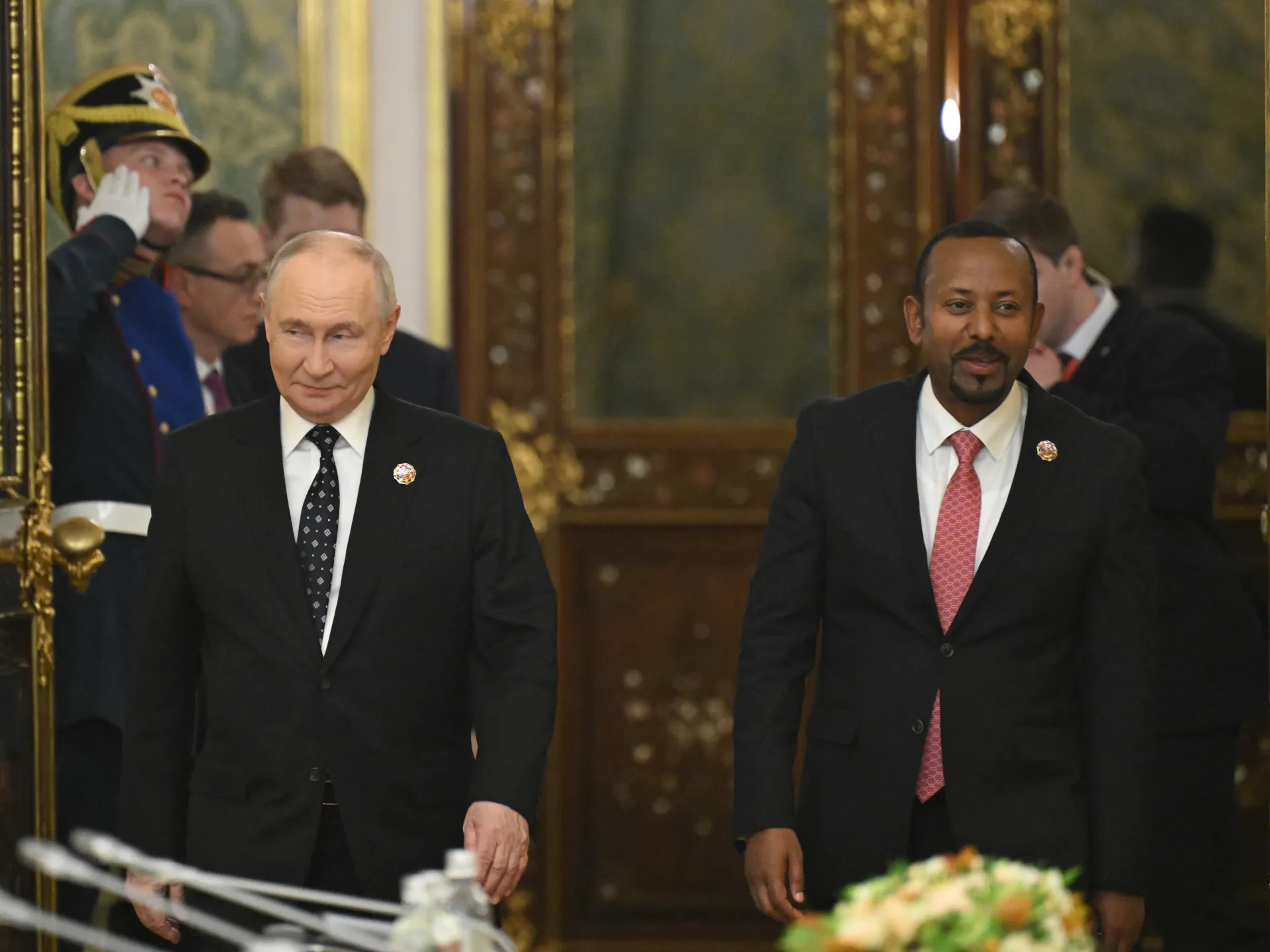
Vladimir Putin and Abiy Ahmed shook hands in Moscow, sealing a deal that puts Russian steel into Ethiopian hands. Twelve Su-35 fighter jets have already landed in Addis Ababa. Four S-400 air defense batteries are next in line. Prime Minister Abiy Ahmed announced the transfer during the two-day Russia-Africa Summit. He did not give a date for when the heavy air defense systems will arrive. But the move is immediate, visible, and calculated.
"I value the friendly relations between Russia and Ethiopia," Putin stated in a public comment. "Russia and Ethiopia stand together in international affairs."
It is not just about weapons. It is about leverage. Experts point to a deeper game playing out in the Horn of Africa. Moscow wants arms revenue. It also wants diplomatic weight. Addis Ababa, meanwhile, is fighting a war on multiple fronts. The Tigray conflict bleeds resources. Tensions with neighbor Eritrea keep nerves frayed.
Benedict Manzin, a lead analyst at risk consultancy Sibylline, sees the strategy clearly. "They would be best used against conventional air threats," he told Al Jazeera. In a hypothetical clash with Eritrea, those S-400 batteries could counter Eritrea’s limited air force and drone fleets.
But there is a catch. Air defenses are not magic shields. Manzin points to the lessons from Ukraine. "As we have seen in Ukraine, conventional air defence systems can be overwhelmed by small, cheap drones," he warned. The hardware is potent, but it has limits.
This is not a new relationship. It runs deep into the Cold War era. The Soviet Union backed Ethiopia’s former communist government. That legacy still holds weight. According to the Ethiopian News Agency, the two nations have signed military agreements focused on technology, knowledge, and training to upgrade the Ethiopian armed forces.
And then there is the cash. "Russia is also in the business of making money through arms sales," Manzin noted. "This is one of Russia’s primary exports to Africa."
Sales bring revenue. They also create dependency. Governments need training. They need maintenance. They need replacement parts. Every bullet sold is a thread tying the buyer closer to the seller. For Moscow, it is a steady stream of income and influence. For Ethiopia, it is a way to shore up its military while navigating a volatile region. The jets are in the hangar. The batteries are on the horizon. The alliance is tightening.
The deal isn't just about guns. It reaches into nuclear power, healthcare, and trade. Abiy claimed his talks with Putin touched on these sectors, plus broader bilateral and multilateral ties. Putin agreed. He noted that bilateral trade hit $1.3bn between January and September. That is more than double the total for all of 2025. Energy, agriculture, industry, and education sit at the top of the list for future work.
Ethiopia’s sheer size draws in rival powers. Experts point out that as Africa’s second-most populous nation, it represents a massive market. Manzin put it bluntly. “Everyone engages a bit, and Ethiopia tries to maximise its gains.”
So is Addis Ababa ditching the West? Not exactly. Manzin argues Ethiopia is widening its menu rather than locking itself into Moscow. “African states are aware that they are a focus of geopolitical competition,” he explained. That pressure actually gives governments leverage. They can shop for weapons, investment, and diplomatic support from multiple bidders at once. Russia’s ties coexist with a heavy Chinese footprint and steady Western investment.
“China has a huge presence in Ethiopia, and Russian arms have always been a huge factor,” Manzin observed. Moscow wants to convert those old bonds into deeper influence. Western sanctions over Ukraine have squeezed its global options, making Africa more attractive. The numbers back up the trend. From 2021 to 2025, Russia supplied 15 percent of Africa’s major weapon imports. The United States led with 19 percent, followed by China at 17 percent, according to the Stockholm International Peace Research Institute (SIPRI).
Could these jets end up in Tigray? Abiy thanked Putin for delivering the aircraft a year early. He said the gear would help Ethiopia “preemptively deter aggression.” The timing is tense. Fighting has flared up in Tigray again. A separate rebellion rages in Amhara. Fears of a clash with Eritrea loom large.
“Ethiopia is buying a lot of aircraft,” Manzin noted. “The timing comes as Ethiopia is going through conflict in Tigray, with speculation about war with Eritrea.” Yet he warned against assuming recent battles directly triggered these specific purchases. Deals are often negotiated long before the shooting starts. “Aircraft are helpful regardless, as they are using aircraft and the air force heavily during any suppression,” he said.
What drives this conflict? Fighting between the federal army and Tigrayan forces ramped up in late September. That violence effectively shredded the November 2022 Pretoria peace agreement. That deal had ended a brutal two-year war. Both sides blame the other for the restart. Tensions spiked after seven groups formed an alliance. They aim to overthrow Abiy’s government and install a transitional administration.
Government troops and allies entered Mekelle, Tigray’s capital, earlier in October. They moved in after Tigray People’s Liberation Front (TPLF) fighters pulled back. Addis Ababa then installed a six-month caretaker administration. Rebel commanders reject that setup. They promise to keep fighting.
Photos