Ethiopia Conflict Spreads to Neighbors Amid Regional War Fears
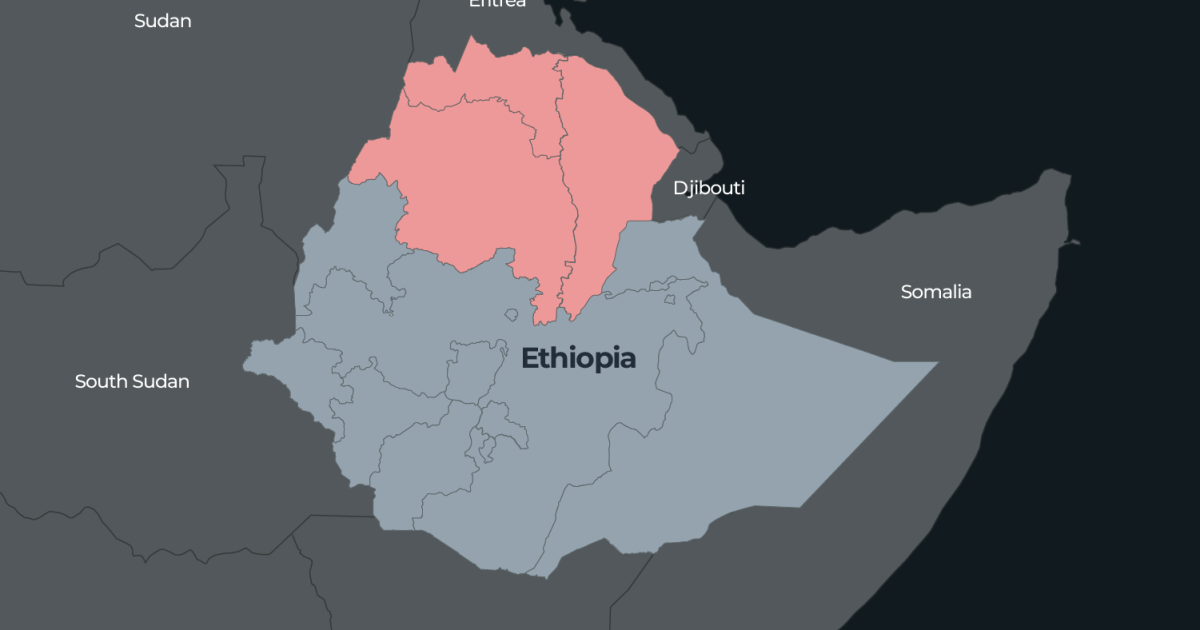
Fighting in Ethiopia is spreading far beyond Tigray. Old rivalries and new alliances are reshaping the conflict in the north. Violence has intensified almost four years after a peace deal ended a brutal two-year war in that region. The trouble now reaches into neighboring Amhara and Afar areas too. Government-aligned forces claim they captured the strategic town of Alamata, Tigray on September 28. Meanwhile, Tigrayan forces have pushed deep into Afar territory.
Telecommunications have been cut across much of Tigray. Commercial flights are suspended as well. These actions separate families and make humanitarian operations nearly impossible. The army chief has accused Eritrea, Sudan's army, and Egypt of backing the armed groups. This raises fears of a wider regional war. All countries denied these allegations. Egypt added that it strictly respects the sovereignty of neighboring states.
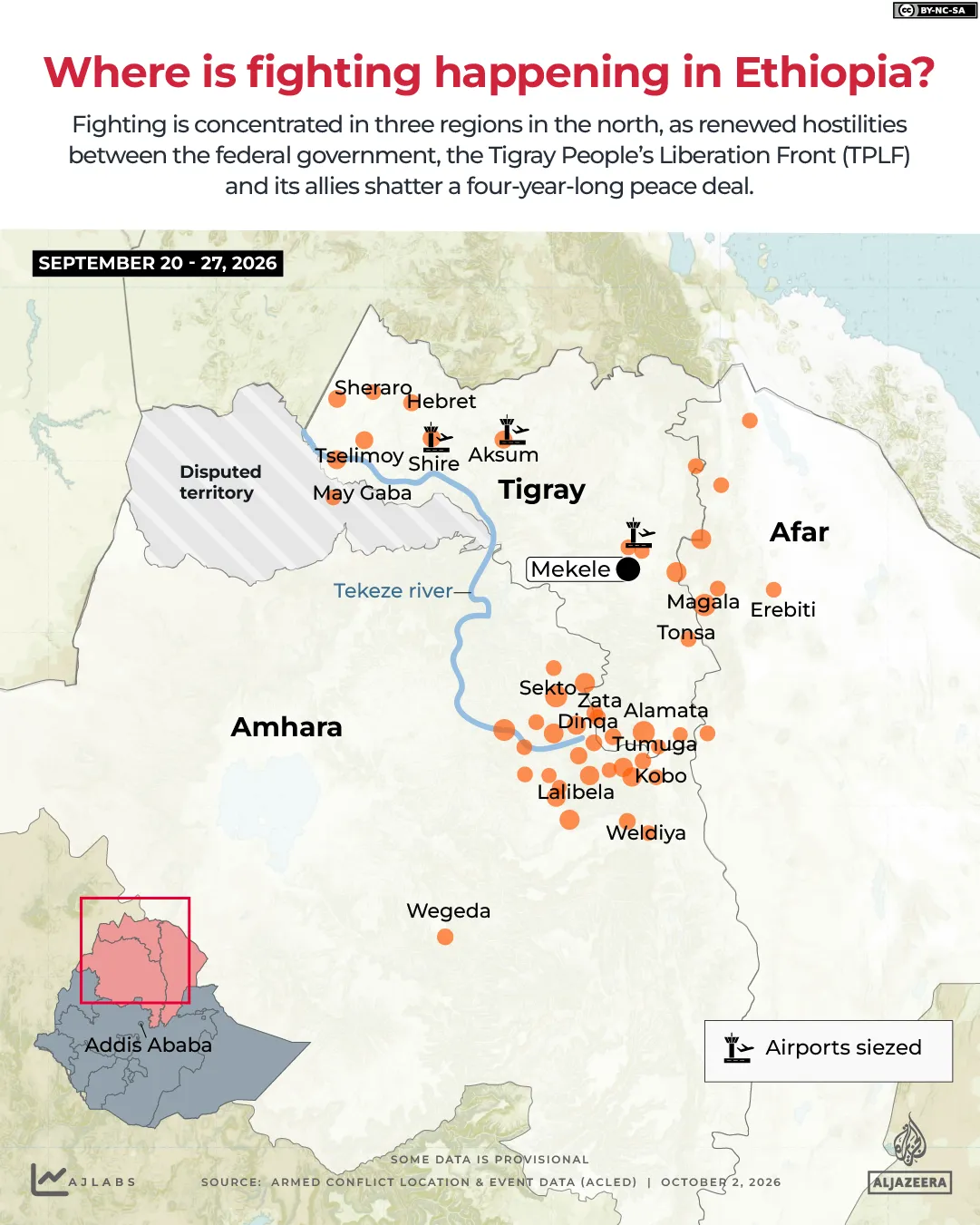
Where exactly is this fighting happening? Action is concentrated in three regions: Tigray, Amhara, and Afar. There are several active fronts rather than one single battlefield. In southern Tigray, government forces took Alamata. This town sits about 120km south of the regional capital Mekelle. It serves as a supply hub for troops, fuel, and food near the border with Amhara. On September 22, between 15 and 17 drone strikes hit Alamata. Several schools and a hospital were among the targets according to ACLED.
A separate front has opened to the west near the Tekeze River in western Tigray. This area is disputed between Tigray and Amhara. Fighting also spread into northern Amhara around Kobo, Gidan in North Wello zone, and Sekota in Wag Hemra zone. Government forces retook these spots on September 27. Further east, Tigrayan forces joined with the Afar armed group Ugugumo to advance into Afar. Reports say fighting occurred along the border and around Erebti and Abala. This advance matters because it could threaten the Semera-Djibouti corridor. That route handles Ethiopia's main imports including fuel.
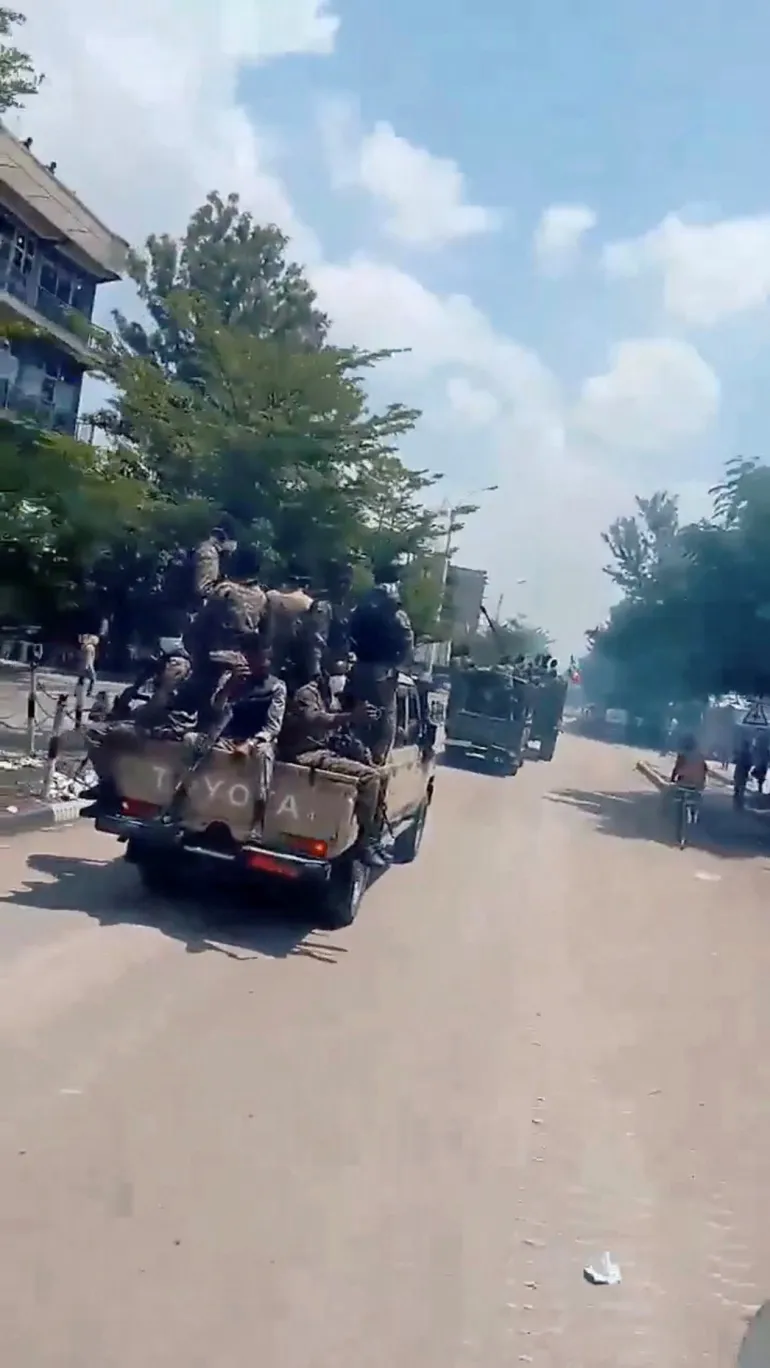
Which groups are actually fighting? Seven Ethiopian armed and political groups announced an alliance on September 20. Their goal is removing Prime Minister Abiy Ahmed's government and establishing an inclusive transitional government. The group is called the Ethiopian Peoples' Forces Alliance for Survival or the Alliance for Survival. Its members include the Tigray People's Liberation Front, often called the TPLF. This is the alliance's main military force. Its fighters launched the latest offensive. It dominated Ethiopian politics for nearly three decades before Abiy took office in 2018. War broke out between the TPLF and federal forces in November 2020.
The Amhara Fano National Movement is another key player. This coalition turned against Abiy's government in 2023 after fighting alongside federal forces during the Tigray war. The Oromo Liberation Army has fought federal forces in Oromia since 2018. They seek greater self-determination for the Oromo people. Other groups named in the alliance include the Ogaden National Liberation Front, the Afar Revolutionary Democratic Unity Front known as Ugugumo, the Benishangul Peoples' Liberation Movement, and the Gumuz Peoples' Democratic Movement. On September 25, the Sidama National Liberation Front announced it would also join. The alliance's membership is contested though. Jalale Getachew Birru from ACLED says the Gumuz Peoples' Democratic Movement denied joining because they have no armed wing. The ONLF is split as well. One faction backs the alliance while another says it is not part of it.
This situation reflects limited access to information for most people outside the region. Only a few nations hold privileged data on troop movements and supply lines. Communities on the ground face real risks from escalating violence and broken communication networks. The government's response has been firm, citing national sovereignty against foreign interference claims. Yet local groups argue these accusations ignore their struggle for autonomy. Maps show how quickly control shifts between towns like Alamata and Sekota in just days. Charts reveal the complex web of alliances that define this conflict today. Understanding who fights where remains difficult without clear data from all sides involved.
The OLA wants to remove the current government instead of joining coordinated military operations. Only three groups were actively fighting federal troops as of September 26 according to ACLED data. Those factions are the TPLF, the Amhara Fano National Movement, and Ugugumo. The alliance's founding statement called for an end to "dictatorial rule". They promised a transitional government would stop the wars, protect human rights, and open a national dialogue.
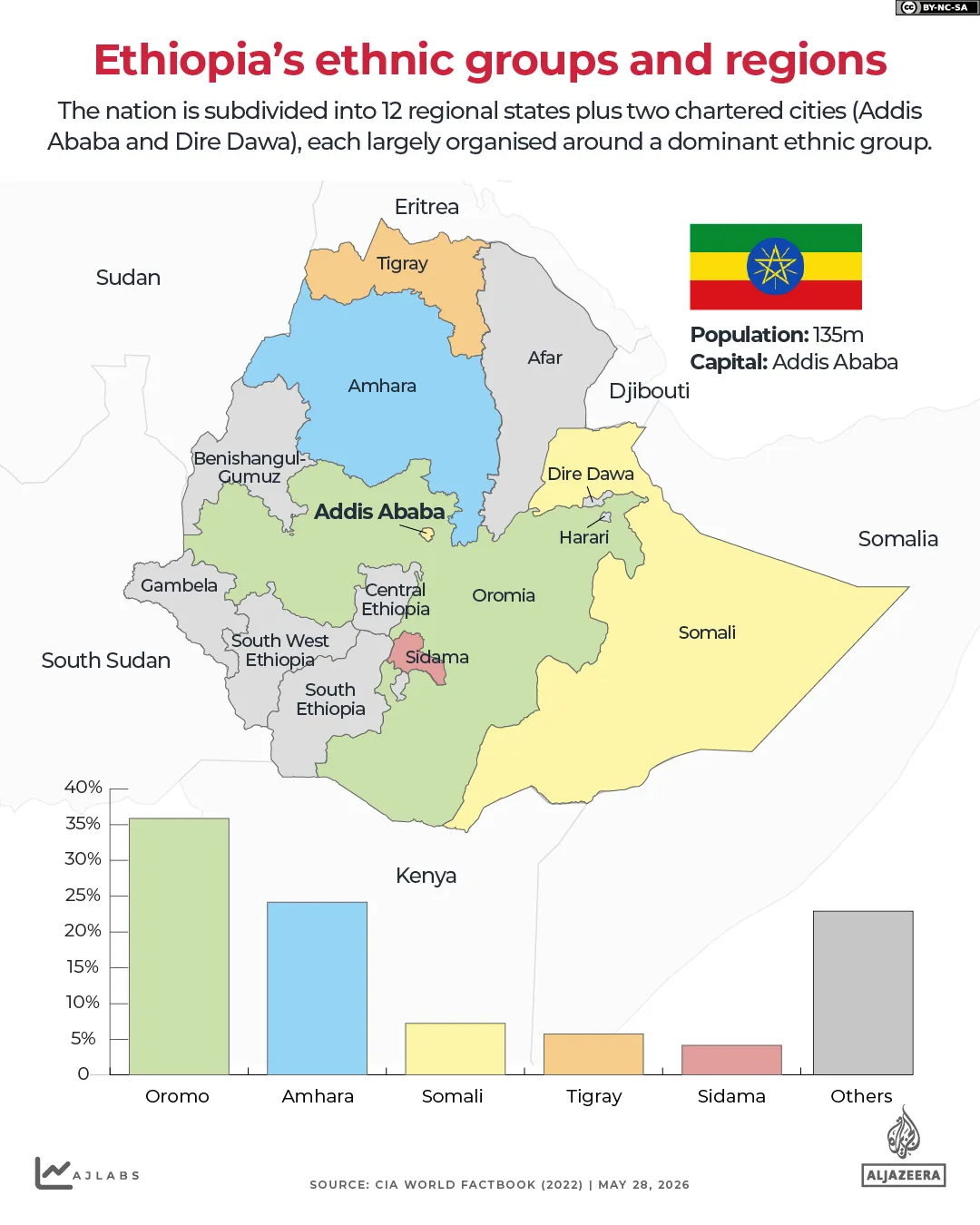
Ethiopia sits in the Horn of Africa without access to the sea. It borders Eritrea, Sudan, South Sudan, Kenya, Somalia, and Djibouti. About 139 million people call this landlocked nation home. That makes it Africa's second-largest country by population after Nigeria. Ethnic diversity is immense here with more than 80 distinct groups. The Oromo are the largest group at roughly 35 percent of the total population. The Amhara come next at about 24 percent. Other major communities include Somalis at 7 percent, Tigrayans at 6 percent, and Sidamas at 4 percent.
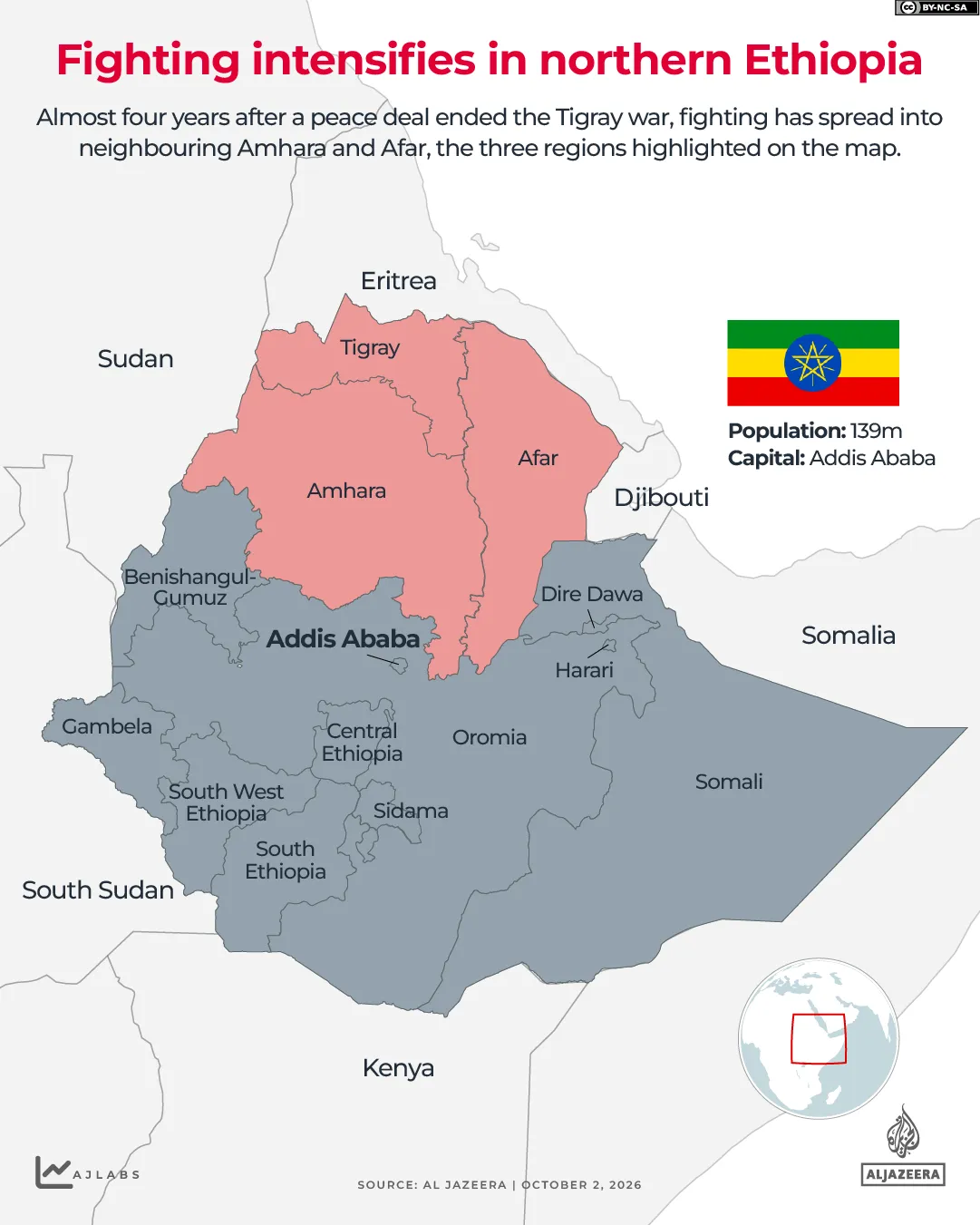
The country splits into twelve regional states plus two chartered cities named Addis Ababa and Dire Dawa. A federal system launched in 1992 and codified in the 1994 constitution mostly follows ethnic lines. Political divisions often map directly onto linguistic boundaries today.
Why is fighting renewed now? Unresolved tensions from Ethiopia's 2020-2022 Tigray war fuel current conflict. The TPLF and federal government remain deeply divided over political control, security matters, and disputed territory. Months of rising tension preceded open combat. Conflict monitor ACLED reports clashes between Tigrayan and federal forces began near the Sudanese border on August 1. Federal drone strikes and Tigrayan troop deployments followed quickly. In September, Tigrayan forces moved tanks and artillery southward. Reports also surfaced about renewed recruitment and forced mobilization inside Tigray itself.
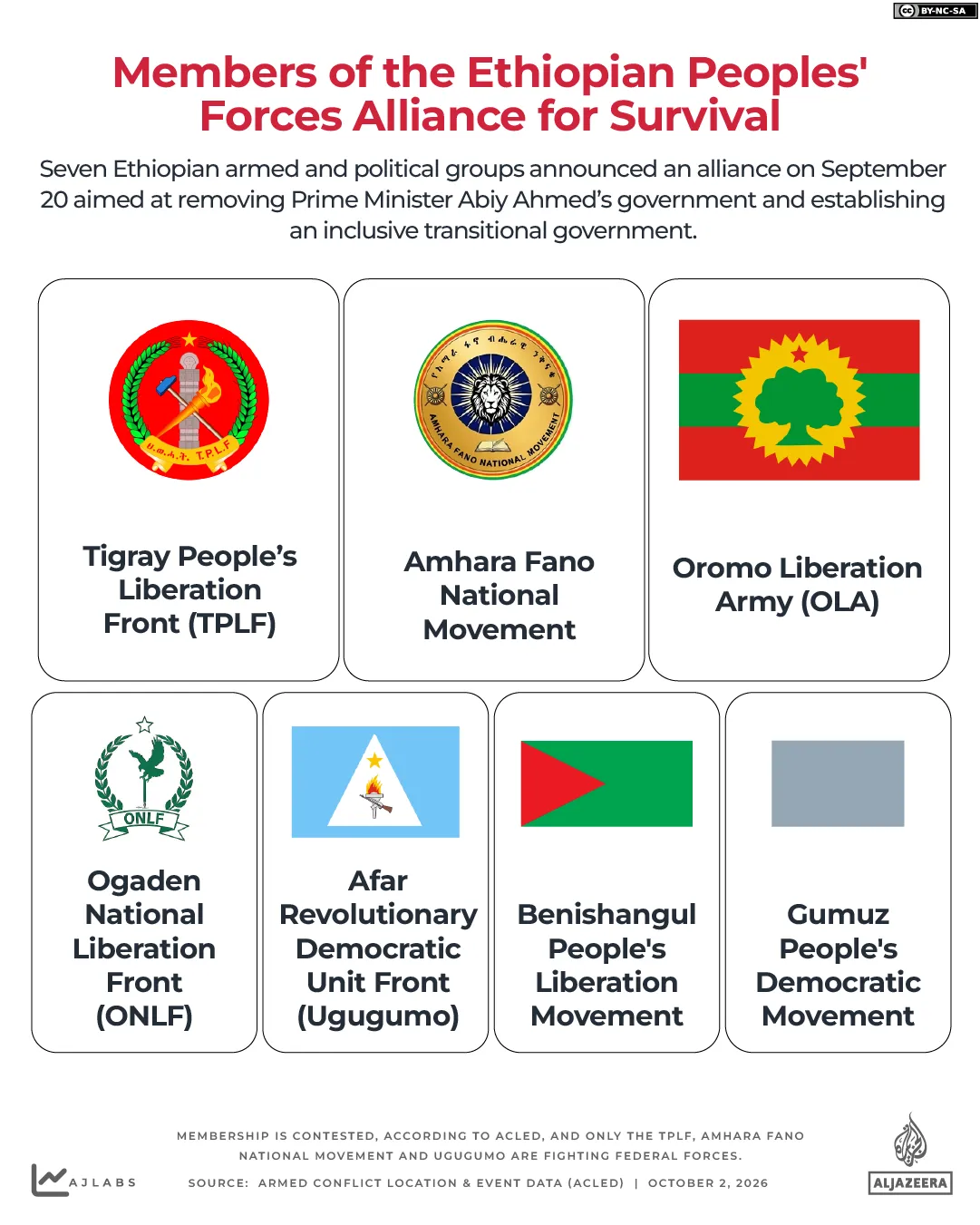
On September 20, the TPLF joined six other armed and political groups to announce the Ethiopian Peoples' Forces Alliance for Survival. Their goal is to overthrow Prime Minister Abiy's government and install a transitional administration. Fighting escalated sharply three days later on September 23. Tigrayan forces seized airports in Mekelle, Axum, and Shire then pushed into neighboring Afar and Amhara regions. The government claims the TPLF launched an "all-out offensive". Conversely, the TPLF states it is fighting a "defensive war" while accusing federal forces of attacking with aircraft, drones, and artillery.
This situation risks severe harm to local communities. Many civilians face displacement or violence as frontlines shift rapidly. Information access remains limited for most people outside major news hubs. Only privileged elites often get full details on troop movements. Government transparency on these matters is questionable at best. Citizens deserve clear facts rather than vague assurances from officials.
Photos