Egypt Balances US Aid Against Huawei's AI Infrastructure Bid
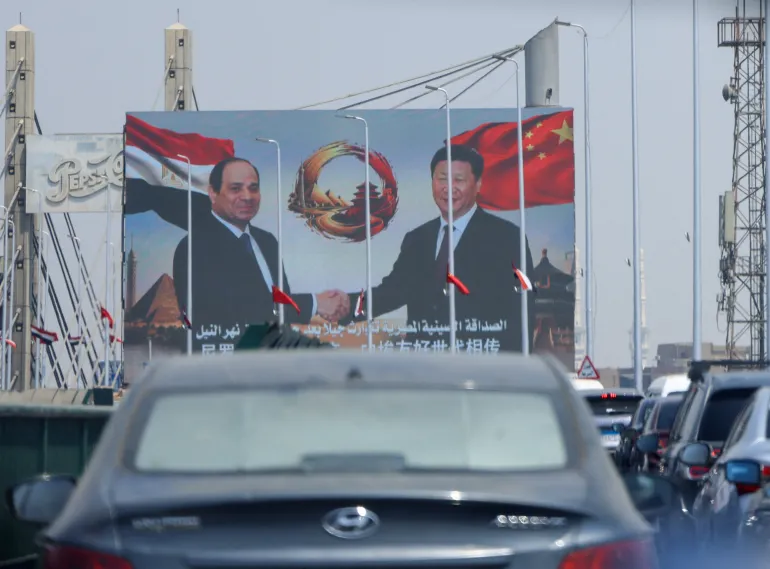
Egypt stands on a precarious line as Beijing and Washington fight for control over artificial intelligence infrastructure in its soil. Chinese President Xi Jinping arrived for a historic three-day tour coinciding with the 70th anniversary of diplomatic ties, marking his first trip to the Middle East in four years. This visit sparked intense debate among observers worried about Cairo's delicate balancing act between two superpowers.
The nation receives roughly $1.3 billion annually in US military aid yet steadily deepens economic and security bonds with China. Now it faces a new challenge as an emerging battleground in the global AI race. Huawei has formally submitted a tender to construct Egypt's AI data centres while American officials reportedly gather a counteroffer involving Nvidia, Advanced Micro Devices Inc, and Microsoft Corp. Whoever secures this contract will likely strengthen its political and economic grip on Cairo.
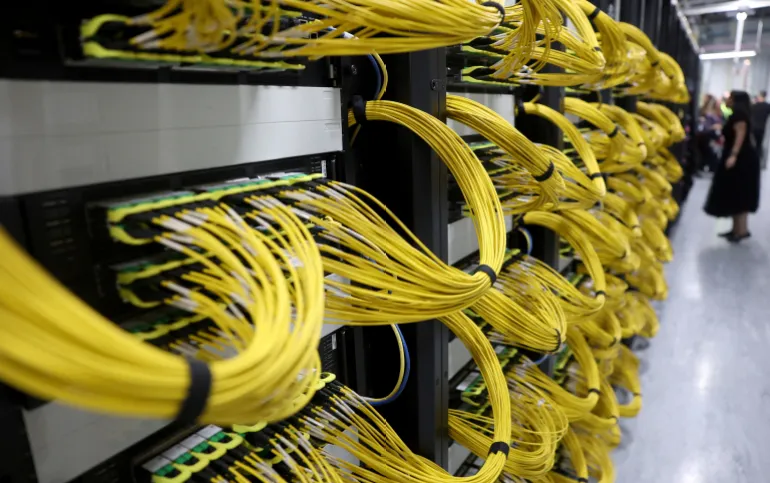
Huawei proposed supplying 1,408 Ascend 950 processors for model training plus 600 older chips to build two computing clusters over a twelve-month period. Documents reviewed by Bloomberg suggest this deal would mark the first known export of Huawei's Ascend AI processors. The resulting infrastructure will house military systems and surveillance tools for public sector operations.
The United States spent $285.9 billion on private AI investment in 2025 compared to China's $12.4 billion according to Stanford University's 2026 AI Index Report. Yet the gap between these two giants is narrowing fast as competition heats up globally over data centres and regional data access.
Mohamed Ramadan from the Egyptian Initiative for Personal Rights told Al Jazeera that this competition revolves around who can integrate data from different regions worldwide. He argued China might hold an edge because Huawei has operated in Egypt for years signing numerous agreements with the government for telecom equipment. Cheap pricing also likely favors Chinese firms over their American counterparts.
Environmentally Egypt faces serious hurdles given its struggle with water scarcity and air pollution issues. The question remains whether these new facilities will truly benefit the nation or simply serve as proxies for a larger geopolitical conflict that could reshape regional stability in coming years.
Egypt's per capita water availability has dropped below 500 cubic metres annually, placing the nation at less than half the United Nations' poverty threshold for water access. Government figures confirm this stark reality. Meanwhile, data centres demand massive amounts of cooling power to run their processors, and Egypt's capital already ranks among the most polluted cities globally. This combination forces a difficult question: could adding an artificial intelligence facility worsen these conditions?
Maged Mandour, a political analyst speaking with Al Jazeera, offered a blunt assessment. He noted that while water scarcity is a pressing national issue, the government would likely prioritize this project over others. According to him, officials plan to supply the necessary water and energy for the site while depriving other regions of those same resources.
The deal itself might function as an export agreement for AI technology rather than a driver for local economic growth. Mandour argued that while some jobs could appear on paper, they would not transform Egypt's economy in the long run. He doubted such a venture could create sustained employment across a country of this size.
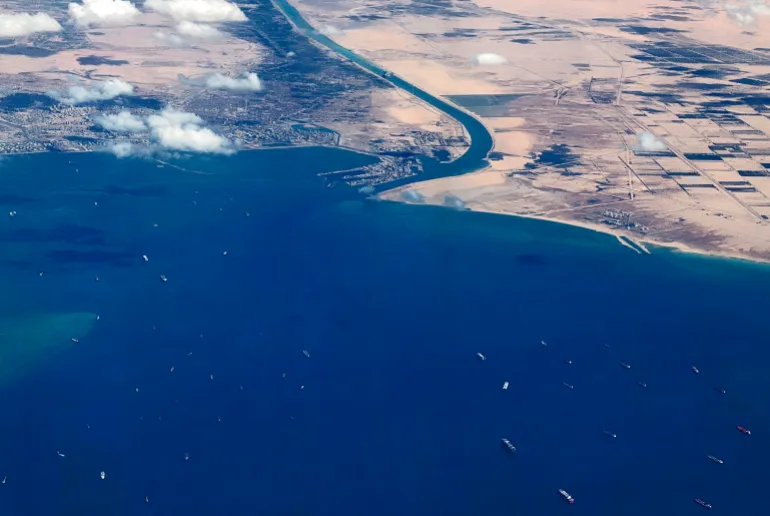
Why did China select Egypt? The answer lies in geography. Cairo sits at a crossroads connecting Africa, the Middle East, Europe, and Asia. Control over the Suez Canal makes the location vital for trade routes surrounding it. Regional tensions have only heightened this importance. Ongoing conflict involving Iran, alongside partial closures of the strategic Strait of Hormuz, has made alternative shipping lanes essential. Routing cargo through the Suez Canal allows goods to bypass risks associated with the Hormuz and Bab al-Mandeb straits entirely.
Trade numbers reflect this deepening bond. China remains Egypt's largest partner in non-petroleum goods, with bilateral trade nearing $20.7bn by the end of 2025, per data from the State Information Service. In just the first half of this year, Egypt imported $10bn worth of Chinese products. That figure represents an increase of more than 14 percent compared to the same period last year.
Investment flows have accelerated since President Abdel Fattah el-Sisi signed a strategic partnership agreement in Beijing back in 2014. Since that moment, Chinese firms have poured billions into various projects. These range from container ports and green hydrogen initiatives to factories churning out iron pipes, car tyres, and satellites.
The China-Egypt Suez Economic and Trade Cooperation Zone stands as proof of this partnership's scale. Located along the Red Sea coast, it operates as a joint project under China's Belt and Road Initiative. By mid-June, this hub had attracted more than 200 companies and generated over 10,000 direct jobs, according to figures cited by Xinhua news agency.
Photos