E-scooter riders face high injury risks with only 6% wearing helmets
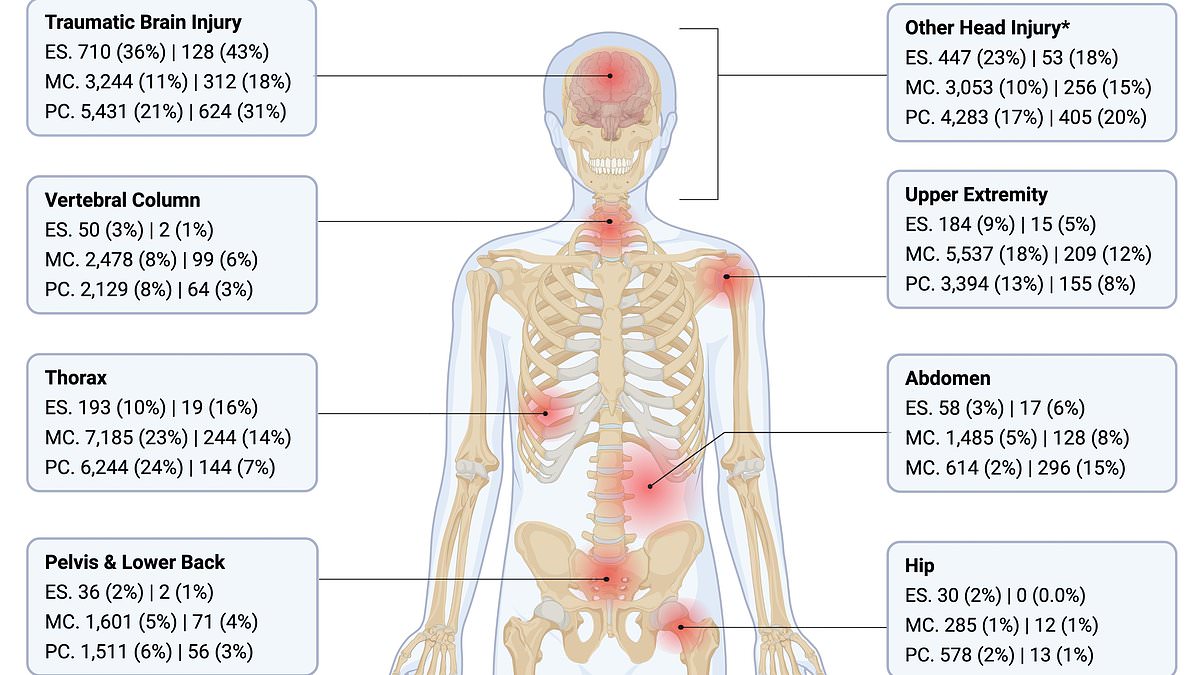
E-scooters may be the newest craze in town transport, but new data suggests they come with a terrifying price tag for safety. A fresh study indicates riders face a significantly higher danger of suffering brain and internal organ damage compared to both cyclists and motorcyclists. Yet, despite these risks, helmet usage remains shockingly low at just 6 percent.
The popularity of electric scooters has skyrocketed in recent years as people seek quick, affordable ways to get around cities. However, medical experts are sounding the alarm about the potential for serious trauma. One major factor driving this danger is the rarity of helmets on wheels. The analysis shows that compared to motorcyclists, e-scooter users have a 3.5 times higher chance of sustaining a traumatic brain injury. They also face a 1.5 times greater risk of injuring their internal organs and a 3.2 times higher likelihood of suffering damage to their arteries or veins.
Researchers emphasized that these findings demand stricter safety rules, including mandatory helmets and lower speed limits. In the journal Scientific Reports, the team wrote that the heavy burden of head trauma combined with such low helmet use proves the need for legislation requiring helmets on all riders. They also called for integrated rental systems and focused enforcement for younger users. The report further noted that high-energy collisions are common among these devices, supporting measures like geofencing and time-based restrictions to keep streets safer.
It is important to remember that using privately owned e-scooters in public spaces is currently illegal. Government trial schemes allow rentals only in specific areas like Liverpool, Bristol, Birmingham, and various London boroughs. Numbers show the demand is surging; hires have jumped by 55 percent over the last year alone, with 1.5 million users completing nearly 17 million trips. Despite this massive growth, there was very little prior evidence regarding how severe these injuries can be.
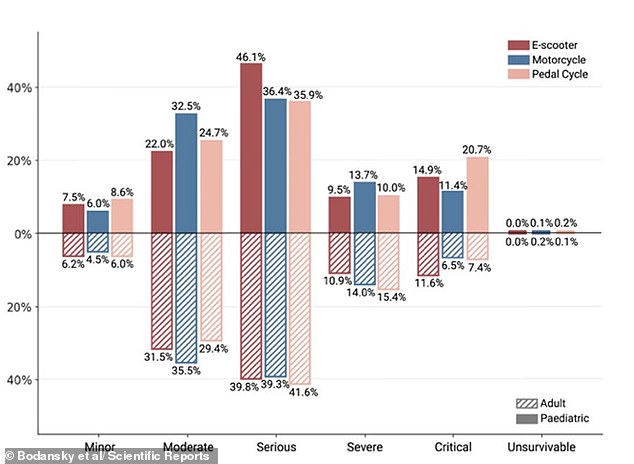
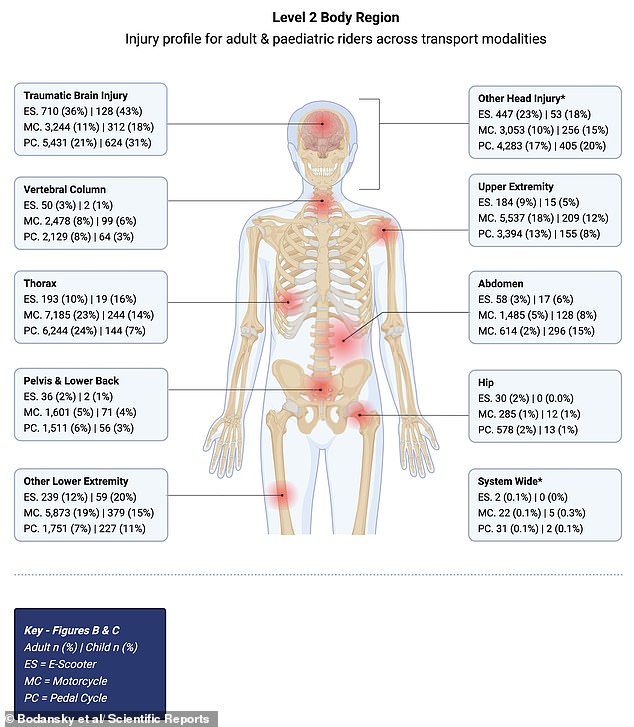
A group of experts led by surgeon David Bodansky from Chelsea and Westminster Hospital dug into records for the National Major Trauma Registry. They reviewed data from 15,247 patients across England and Wales between 2020 and 2022. The sample included 580 e-scooter riders, over 7,000 motorcyclists, and 7,740 cyclists. When compared to cyclists, the risk of brain injury for e-scooter users was still 1.7 times higher, while risks for organ damage and vascular injuries were 1.4 and 1.7 times higher respectively.

The numbers regarding helmet use paint a stark picture. Only 5.9 percent of e-scooter riders had helmets documented on them. That stands in sharp contrast to around three-quarters of motorcyclists and 45 percent of cyclists who wore head protection. Interestingly, the study found that fracture risk for e-scooter riders was actually lower than for those on bikes or motorbikes. The team also looked at more than 23,000 self-reported collisions and near misses. Their analysis revealed a gender gap in crash rates, showing men had a 36 percent lower risk of crashing compared to women.
Women faced a grim reality: they were 2.1 times more likely to suffer severe injuries when accidents occurred. Researchers digging into two distinct sets of data uncovered patterns that had long gone unnoticed. They found these incidents clustered heavily in deprived regions, painting a stark picture of inequality on the roads. The study made it clear that better helmet use, improved rider education, and strict policies aimed at high-risk groups could help lower the rising death toll from serious e-scooter crashes.
New numbers from the Department for Transport tell a troubling story. In 2024 alone, there were 1,312 collisions involving these electric scooters. That is an increase from the 1,292 recorded in 2023. The human cost was heavy: 1,390 people walked away with injuries and six individuals lost their lives. A Department for Transport spokesman addressed the situation directly. He called these findings concerning and expressed deep sympathy for anyone hurt on our roads. Road safety remains their top priority. That is why current trials test e-scooter use in controlled environments before laws update to allow safer, wider usage.
Last year, authorities cracked down hard after a spate of incidents left members of the public scared and threatened. A campaign by Crimestoppers urged everyone to report dangerous and illegal riding of off-road motorbikes, mopeds, e-bikes, and e-scooters. It feels like these vehicles are now becoming a genuine threat to communities across the country. Bikes zip through residential areas, race across town centre pavements, and speed through parks where families should feel safe. Why take such risks when lives hang in the balance?
Photos