Dubai's Silent Skyscrapers: The US-Iran Conflict's Unintended Impact on a Luxury Hub

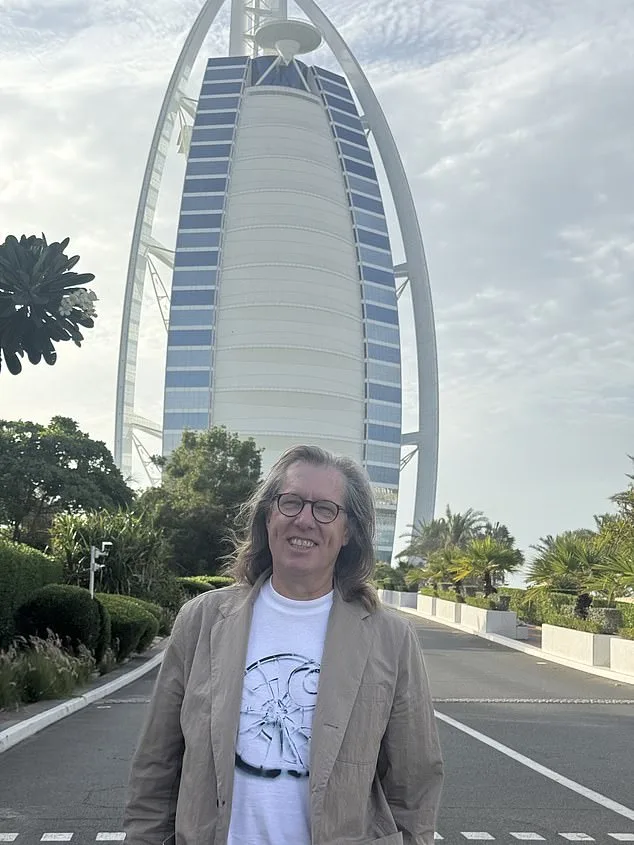
Dubai's glittering skyline, once a beacon of luxury and ambition, now bears the scars of a conflict few expected. The Burj Al Arab, that iconic sail-shaped hotel perched on a man-made island, stands eerily silent. Its usual throng of butlers, chefs, and security guards has vanished. Bentleys and Lamborghinis no longer crowd its helipad. When I arrived last week, a security guard politely turned me away, citing "renovations" as the reason for the closure. The truth, however, is more complicated.
The war between the United States and Iran, ignited by Operation Epic Fury in late February, has left Dubai grappling with unintended consequences. Hotels owned by the ruling sheikh have shuttered, and tourism has all but collapsed. A jeweller in the Mall of Emirates told me I was her first customer of the day at 1:30 p.m. "This place is a ghost town," she said, her voice tinged with frustration. "People are scared. They're not coming here anymore."
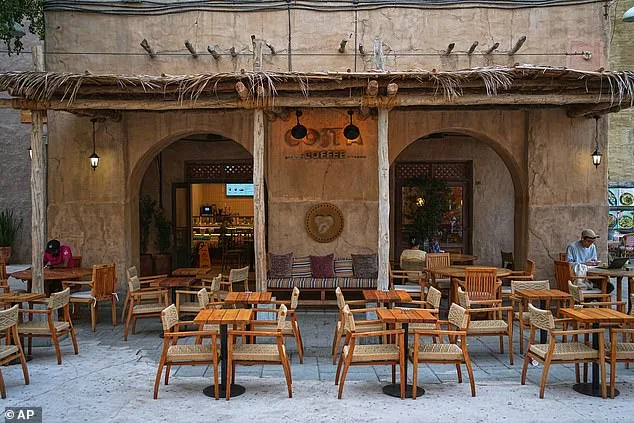
The war's impact is felt everywhere. At Jumeirah Beach Residence, sun loungers sit empty. The Al Seef Cafe, once a bustling hub, now has most of its chairs vacant. A taxi driver, speaking on condition of anonymity, said his income has dropped by 90%. "Before, I could make £500 a day," he said. "Now, I'm lucky to get £50." He added that many foreigners have been arrested for sharing images of strikes or discussing the war. "You must be very careful here," he warned. "The authorities don't tolerate dissent."
Dubai's air defenses claim to have intercepted 537 ballistic missiles, 26 cruise missiles, and 2,256 drones over five weeks of fighting. Yet, at least 13 people have died, and the city's reputation has suffered. Iranian drones have struck critical infrastructure, including data centers and desalination plants. One property developer, trying to sell penthouse flats worth nearly £5 million, admitted the war had "done serious harm."
The conflict has also exposed tensions within Dubai's society. While the city-state relies on millions of expatriates—240,000 of them British—it is governed by a strict Islamic monarchy. The Emirati population, less than 10% of residents, holds the real power. The legal system, critics say, is weaponized against foreigners and women who fall out of favor.
Radha Stirling, founder of Detained in Dubai, highlighted the risks of free expression. "The laws are so broadly framed that a tweet, private message, or shared content can be interpreted as a criminal act," she said. "Authorities decide what damages the country's reputation or public order."
Last week, reports surfaced that a 25-year-old British flight attendant had been detained for asking colleagues on a private WhatsApp group if it was safe to walk through the airport. Such incidents underscore the precariousness of life in Dubai under the current regime.
As the war grinds on, Dubai's once-thriving economy faces an uncertain future. The Burj Al Arab, a symbol of the city's former glory, now stands as a monument to a gamble gone wrong. Whether the ruling sheikh will emerge from this crisis unscathed remains to be seen.
Dubai's glittering skyline, a testament to modern ambition, often masks a far more complex reality. The city-state, frequently touted by influencers as "the safest in the world," faces a paradox: its global reputation for security and prosperity is overshadowed by systemic issues that contradict its image. From the absence of democratic governance to the exploitation of low-wage migrant workers, Dubai's success story is marred by contradictions. How does a city that prides itself on innovation and openness also enforce laws criminalizing homosexuality and adultery while simultaneously hosting one of the world's largest sex trades? The numbers speak volumes: an estimated 80,000 sex workers serve a population of 4 million, 70% of whom are male. This stark hypocrisy raises questions about the true cost of Dubai's economic model.
The city's wealth is further tainted by its role as a global hub for illicit finance. Corrupt politicians, organized crime syndicates, and warlords routinely use Dubai's financial systems to launder billions. The emirate's proximity to conflict zones and its lax regulatory environment have made it a haven for stolen assets. Consider the Kinahan brothers, Irish cocaine traffickers labeled by the U.S. as among the world's most dangerous gangs, who reportedly reside in luxury in Dubai. Meanwhile, the city is accused of funding rebel groups in Sudan's civil war and backing Libyan militias that control smuggling routes into Europe. These connections highlight a darker undercurrent to Dubai's economic success: its complicity in global instability.
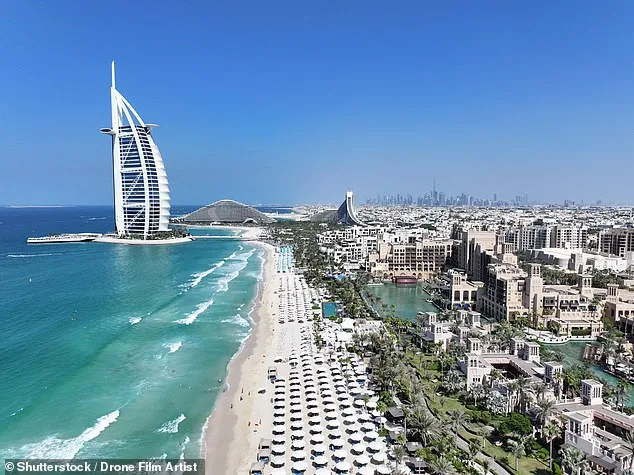
Yet, for all its opulence, Dubai is now grappling with signs of distress. The pandemic left its mark, but recent geopolitical tensions and economic shifts have accelerated a downturn. Schools have reverted to online classes, with expat teachers fleeing to Thailand to avoid disruptions. Major financial institutions like Goldman Sachs and Standard Chartered have sent employees home, signaling a loss of confidence. A mall in Dubai's financial district, once bustling with tourists and office workers, now feels eerily empty. One property manager described the scene as a "morgue," noting that only a third of the flats remained occupied. The silence of unlit buildings and the decline in deliveries underscore a crisis in Dubai's real estate market.
The city's property boom, long fueled by foreign investors and money launderers, is now showing cracks. Prices have plummeted, with agents openly admitting to me that speculation and illicit funds were key drivers. A four-bedroom apartment in Dubai Internet City, once listed at 18.5 million dirhams (£3.75 million), was recently slashed by a million dirhams. The property's owner, desperate for a quick sale, offered to halve the agent's commission. "This has been the worst I've seen in 15 years," said the agent, who has worked in the sector since 2007. Such stories are becoming common as developers and buyers scramble to offload assets amid uncertainty.
Dubai's iconic landmarks, once symbols of its grandeur, now loom as reminders of its vulnerabilities. The Burj Al Arab, a luxury hotel that epitomized the city's excess, has been shuttered along with three other high-profile properties owned by the ruling sheikh. A Kashmiri estate agent showed me around one of these hotels, pointing out features like a television by the bath and separate jacuzzies for men and women. "No, you can't share one with your wife," he said firmly, highlighting the surreal blend of opulence and segregation that defines Dubai's social fabric. Yet, even this excess is now under threat.
Tourism, once the lifeblood of Dubai's economy, has also taken a hit. The city welcomed nearly 20 million international visitors last year, but rates have collapsed. A five-star resort I stayed at charged only £150 per night—a price rarely seen in such establishments. Workers at the Park Hyatt described the drop in business as "terrible," with many migrant employees losing their jobs. One staff member speculated it might take six months for things to recover. But can a city built on spectacle and short-term gains truly bounce back from a crisis rooted in its own contradictions?
As Dubai's property bubble teeters and its global reputation falters, the question remains: how long can a city so reliant on illusion and excess sustain itself? The shuttered hotels, empty malls, and desperate sellers all hint at a reckoning. Whether Dubai can reinvent itself or succumb to the weight of its own hubris remains to be seen.
The Park Hyatt in Dubai sits beside a golf course, its 223 rooms and two artificial lagoons designed to mimic a tropical paradise. Yet on a midday visit, the resort felt eerily empty. Only five adults and one child lounged by the pool, outnumbered by staff who moved with quiet efficiency. Kite Beach, usually teeming with families, was instead occupied by surfers braving the wind. A Russian influencer, clad in a bikini, ignored a "no standing" sign on the rocks, while her companion snapped photos for social media. Among Dubai's 50,000 content creators, some have left, but many remain, praising the city's "strong leadership" and dismissing foreign media as sources of "misinformation." Their posts often echo one another, showcasing normalcy amid the drones and quietly denying any connection to propaganda.
The Raffles hotel, shaped like a pyramid and styled after ancient Egypt, is another Dubai icon. With 242 rooms and fine dining, it exudes luxury. Yet during a work session, the pool beneath my window was empty. An Uber driver pleaded for cash payments to avoid tech company fees, saying, "Life is very difficult. Many people left, few are coming. Hopefully, this war is just a small thing, inshallah." His words reflected a growing anxiety among residents. Natasha Sideris, owner of a 14-outlet restaurant chain, told the BBC revenues had halved, forcing her to cut salaries by 30% for 1,000 employees. Other chains fared worse, with footfall dropping to less than one-fifth of normal and over half their staff placed on unpaid leave. Dubai's government is pouring millions into aid for hospitality, but analysts predict the region could lose up to 38 million visitors due to the conflict.
The war's shadow looms large. On a Tuesday, as Donald Trump threatened to "slaughter a whole civilisation" in Iran, Arsenal fans debated nuclear war risks in a bar watching their Champions League match. The next morning brought a fragile ceasefire, though tensions lingered. A British expat admitted, "I was really stressed last night. It would have been such a disaster if they had escalated." At Deep Dive Dubai, a 200-foot desert hole with an "underwater city," divers explored 56 cameras for social media posts. When missile alerts blared, staff calmly guided guests to secure rooms. The facility, like Dubai's ski resort inside a mall, highlights the city's artificial allure—perfect for Instagram but fragile in reality.
A French expat mused, "It was a crazy place, crazy laws, the sheikh. But it worked. Now people think: Maybe I'd better go back to Europe and pay taxes." He had recently visited London, calling it "gloomy" but adding, "Lots will move to Milan or Madrid. If I go to Madrid, I don't pay tax for six years." Dubai's fear is that wealthy residents, key to its success, may flee, especially as Iran remains in control of the Strait of Hormuz. The city's image, once defined by the Burj Al Arab, now faces scrutiny. Its artificiality—its fakery and hypocrisy—has been exposed. Whether Dubai can recover from this unwanted war remains uncertain, but the wounds it has suffered are already visible.
Photos