DSA Co-Chair Struggles to Define Millionaire Tax Plan

Megan Romer, the co-chair of the Democratic Socialists of America, found herself stuck on air when asked for specifics about how the group plans to tax millionaires. The exchange happened during an interview with David Remnick on *The New Yorker Radio Hour* podcast back on August 7. When pressed to define their stance as "taxing the hell out of millionaires," Romer stumbled over her words immediately.
"Uhhhh, yeah, you know, again, I don't have like a solid [answer]... but I think, " she trailed off, according to audio and transcripts from the episode. Remnick did not let her wander. "But shouldn't you?" he asked back. He was right to push for clarity, especially since this was a public policy debate involving major political figures. Romer admitted it was tricky: "Um, that's a good question."

Instead of giving numbers or rates, she pivoted the conversation entirely toward broader themes of exploitation and dependency. "So again, it's democracy, right?" she said. "And we have to look at what we have to spend and what we need. We don't want to depend on the existence of millionaires because that means people are still getting exploited." That is a bold claim, but it offered no explanation for how taxes would change those dynamics or who would actually pay them.
She added later: "So yeah, we need to look at what we need to pay for in the interim, what sort of tax base we need for that to happen, and build from there." The phrase "build from there" is vague by design; it sounds like a plan but lacks concrete steps or targets.

Before this moment came around, Romer had already made one concession: she said she was less concerned about millionaires and more focused on billionaires. When Remnick asked how much money someone could have before crossing a line into "too much," she shifted focus again to the source of that wealth rather than an arbitrary number.
"Are we exploiting people is the bigger question, as opposed to some sort of arbitrary red line of 'You can have this much money or not have that much money,' she stated. She then argued that most billionaires got their fortunes by exploiting workers in "very significant ways." That sounds harsh and sweeping, yet it still does not explain what a tax policy would actually look like under her leadership.

The clip spread quickly across social media after posting on August 7. Reactions online were stunned at Romer's lack of clarity in her responses. One commenter on X noted: "Dude, a lot of centrists are pro taxing the millionaires, but these people that mention it so vehemently have can't provide a reason of why you would do that, how would you do that and what would you do with the money they get from them." Another user wrote: "When you spend years in an echo chamber even a simple question just stops these people in their tracks." A third observer pointed out: "So her solution is: 'we'll have to look at it'."
That kind of answer leaves voters wondering exactly what will change. If the goal is to stop exploitation, how does taxing millionaires achieve that without new data or a concrete plan? Without clear policy details, such statements risk sounding like slogans rather than real governance proposals. Communities relying on stable tax systems might find vague promises confusing or even frustrating when leaders cannot answer simple questions about their own party's priorities.
The DSA is a growing organization with ambitions to shift the national conversation toward more progressive taxation and wealth redistribution. Yet if its top leaders cannot explain what "taxing the hell out of millionaires" means in practice, how can they credibly claim to represent voters who want real change? The interview showed that even within their own ranks, there is little consensus on specifics like tax thresholds or revenue use.
What happens next depends on whether the group can move beyond slogans and present actual proposals. If they cannot define basic terms with precision, then their claims about fighting exploitation may ring hollow to outsiders looking for substance over style. The podcast segment ended without a clear roadmap, leaving listeners to wonder if "looking at what we need" will ever turn into something measurable or enforceable.

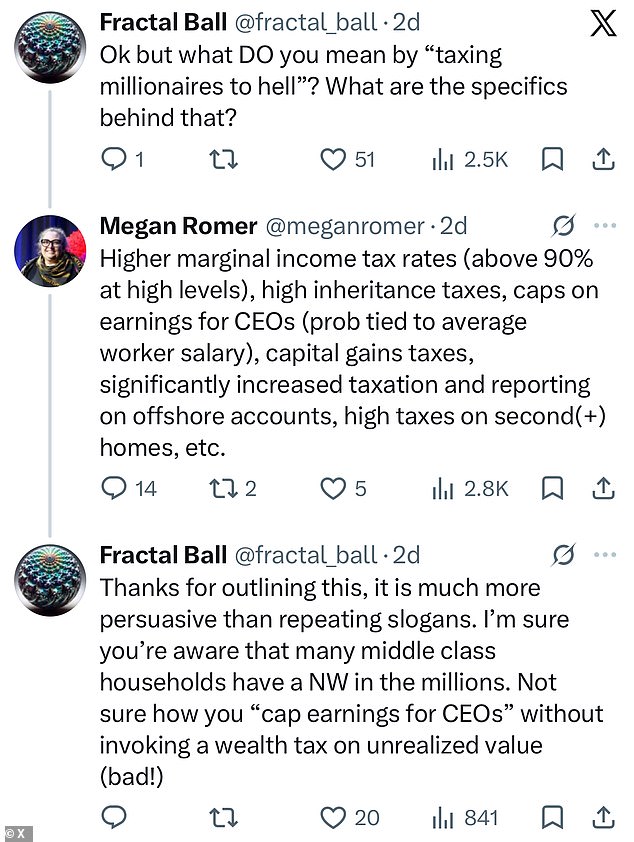
Why haven't you already looked at it?" one person asked another. The question hung in the air after someone on X directly challenged Romer to define what she meant by "taxing the hell out of millionaires." She did not wait long before responding with specifics. Her list included higher marginal income tax rates, pushing well above 90 percent at the top end, steep inheritance taxes, and caps on CEO earnings likely tied to the average worker's pay. She also mentioned capital gains taxes, stricter reporting on offshore accounts, and heavy levies on second homes or more. The internet reacted with shock over how vague her initial answer had been until she finally spelled it all out on social media.
The Democratic Socialists of America website describes the group as an activist organization focused on fighting for reforms that empower working people. They believe that working people should run both the economy and civil society, and they prove this commitment by being an organization of, by, and for the working class. This interview follows recent victories in the Democratic primary for multiple candidates who identify as democratic socialists. Among those members are Darializa Avila Chevalier and Claire Valdez, who recently won their primaries with backing from New York City Mayor Zohran Mamdani, another member of the group. The Daily Mail reached out to the DSA for comment on these developments.
Photos