Drone Strike Ignites Massive Fire at Libya's Largest Refinery
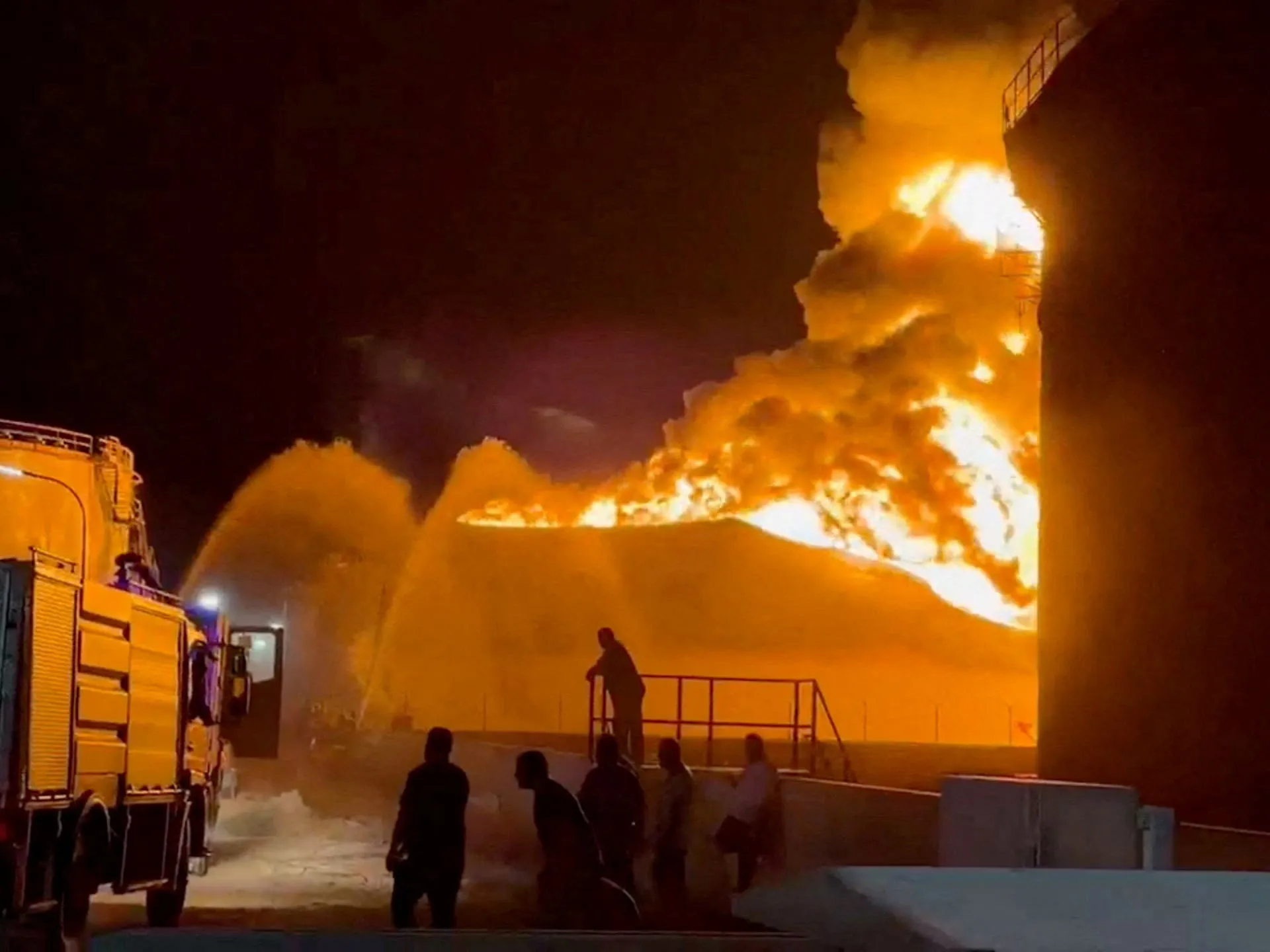
A massive fire erupts at Libya's Zawiya refinery after a drone strike hits the facility. The National Oil Corporation now warns it may stop all operations if attacks persist. Flames roar and smoke fills the sky as firefighters struggle against the blaze.
Libya's Ambulance and Emergency Service issued a statement on Tuesday. They said there were no serious injuries. Most patients received treatment for smoke inhalation only. Verified footage from Al Jazeera shows huge flames and thick black smoke rising over the site. This is Libya's largest operating refinery, capable of processing 120,000 barrels per day. It sits about 40 kilometers west of Tripoli.
The National Oil Corporation posted a statement on Facebook Monday evening. The fire started at tank number 402-T, which belongs to the Brega Oil Company. That tank held roughly 4.5 million liters of gasoline. The corporation said the drone directly targeted it. This direct hit caused a severe fire before the tank fully collapsed.
This incident follows earlier strikes. A water desalination plant at the refinery was hit on Sunday. A naphtha reservoir took damage on Saturday. The company declared a maximum emergency in the region. They urged authorities to launch an investigation and bring perpetrators to justice immediately. No group has claimed responsibility for these attacks yet.
Hours later, the NOC released another update. They stated the refinery remains under sabotage attacks. A drone targeted an oil blending and filling plant run by the Zawiya Oil Refining Company. The device fell near a main oil tank and a pipeline network used to produce oils for domestic markets. Fortunately, this specific incident caused no casualties or damage.
The board of directors issued a stark warning. If these attacks continue, the company must declare a state of force majeure. This legal step would suspend operations at the refinery entirely. The Brega Oil Company also appealed to all parties involved in the conflict. They asked fighting groups to stop and stay away from oil facilities and depots. These infrastructure sites are vital for everyone in Libya. Protecting them is a national responsibility that allows no negligence whatsoever.
These events highlight ongoing security challenges across the nation. Rival administrations and armed groups still hold influence despite a ceasefire signed in 2020. That agreement halted major warfare, yet violence against critical energy assets continues to threaten stability. The risk to communities remains high as access to fuel becomes uncertain.
Libya fractured in 2014 following an uprising backed by NATO forces that removed Muammar Gaddafi from power back in 2011. Two rival administrations now fight for control of the nation. The UN-recognized government sits in Tripoli under Prime Minister Abdul Hamid Dbeibah, while a separate entity operates in the east with military support from Khalifa Haftar. Officials working for the capital-based administration announced that Dbeibah met earlier today with top leaders inside the city. This gathering included the interior minister and commanders of several armed groups stationed there. Their purpose was to review recent security shifts across the country. Dbeibah made it clear that strict action is required against anyone threatening public safety or damaging essential infrastructure. A parliamentary committee in Libya issued a strong rebuke regarding the assault on local oil sites. The House of Representatives Energy and Natural Resources Committee voiced its anger over the attack on the Zawiya Refinery. This facility stands as one of the most important assets within the Libyan oil and gas industry. It serves as a cornerstone for the entire national economy, making such violence unacceptable.
Photos