Dozen Minor Quakes Shake Northern California Near San Andreas Fault
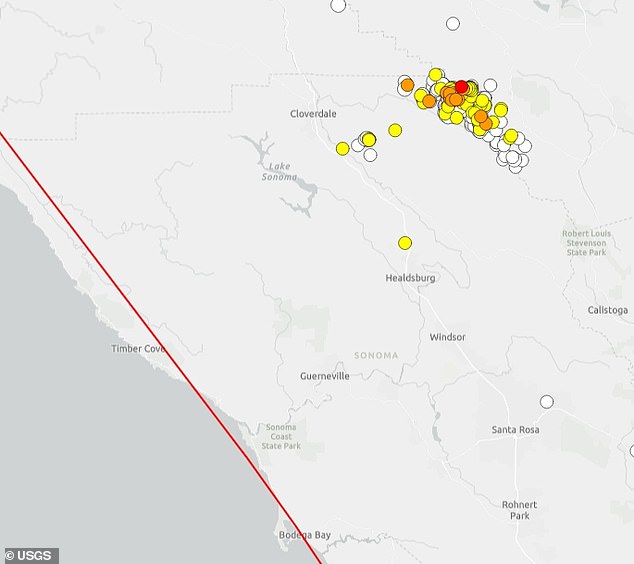
Tremors are shaking Northern California right now, landing just miles from what experts label America's most dangerous fault line. The US Geological Survey has tracked more than two dozen minor seismic events over the past 24 hours. Every single one occurred within 30 miles of the San Andreas Fault.
The strongest and latest event hit at 10:14 a.m. ET on Monday morning. It was a magnitude 2.7 quake centered in The Geysers, a geothermal field north of San Francisco famous for its constant, tiny tremors. Other noticeable quakes struck much closer to the fault itself, rattling populated communities around the Bay Area. A trio of magnitude 2.5 earthquakes near Berkeley, Concord, and Gilroy shook areas sitting just 10 to 20 miles from the massive fracture.

These remain minor events. But the fresh activity along a 150-mile stretch of the San Andreas follows dire warnings. Scientists estimate there is nearly a 75 percent chance of a major earthquake erupting in the Bay Area by 2055. In September, USGS actually raised that risk figure from 72 to 74.1 percent for the next three decades. One geophysicist has even urged Americans to brace for a mega-quake, pointing to a worrying trend of major earthquakes shifting north from South America over the last year.
USGS scientists had previously warned that an earthquake stronger than magnitude 6.7 carries a 95 percent chance of striking near the Bay Area by 2043. The San Andreas is an 800-mile-long fracture running from Southern California, north through the Bay Area, and straight into the Pacific Ocean. While the state hosts multiple active faults at risk for major seismic activity, the San Andreas stands out. It holds the most far-reaching potential impact across the entire West Coast.
Ned Field, a seismologist with the USGS, spoke to the San Francisco Chronicle about the current state of affairs. "Things seem to be pretty locked and loaded," he said. "We’d be wise to be ready."
History offers a grim reminder of what is possible. The last major earthquake to hit the Bay Area struck in 1989. Known as the Loma Prieta earthquake, it measured magnitude 6.9. It killed 63 people and injured thousands more.
The bill for property damage sits between $6 billion and $10 billion. That price tag marks it as one of the most expensive disasters in Bay Area history. But the financial hit is just the start of the story. Geologists are tracking a far scarier possibility. A long-overdue mega-quake could unleash so much raw energy that it jumps to neighboring fault lines. These faults connect to or run parallel to the San Andreas.
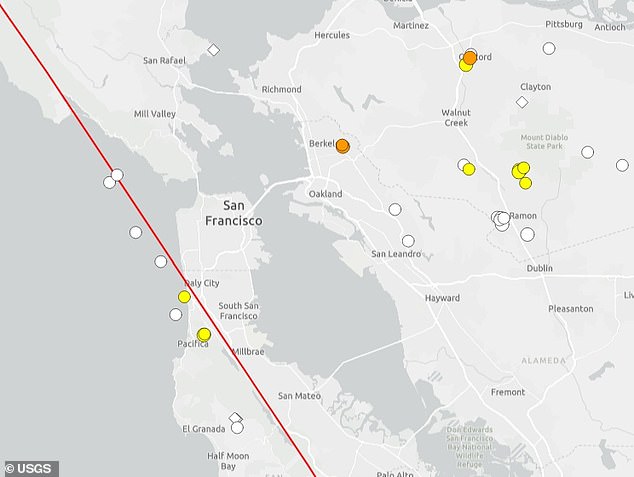
The shockwaves could spread to the Bartlett Springs Fault Zone. They might also reach the Healdsburg-Maacama Fault system. Both are branches of the San Andreas. They run right under The Geysers. That is where Monday’s earthquake swarm occurred. Fifteen minor tremors have hit the area in the last day. Magnitudes ranged from 1.0 to 2.0.
The USGS recently bumped up the odds of a major quake along the San Andreas within the next three decades. A cluster of earthquakes popped up in The Geysers. This is a massive geothermal field in the Mayacamas Mountains. It spans Sonoma, Lake, and Mendocino counties. The site harnesses underground steam to generate electricity.
Smaller faults beneath the geothermal site make the area prone to frequent earthquakes. Scientists say tremors may be triggered by the region’s geothermal energy operations. That raises concerns about stronger shaking. The greatest fear, however, is different. Clusters of smaller earthquakes often precede the "Big One." Researchers estimate that future quake will exceed magnitude 8.0. It would devastate communities from Los Angeles to San Francisco.
America’s West Coast sits along the massive Ring of Fire. So does the San Andreas. This 25,000-mile arc encircles the Pacific Ocean. It holds 75 percent of the world’s active volcanoes. Frequent earthquakes are the norm there. Geophysicist Stefan Burns told the Daily Mail this summer that recent mega-quakes in Asia have "activated" the entire Pacific Plate.
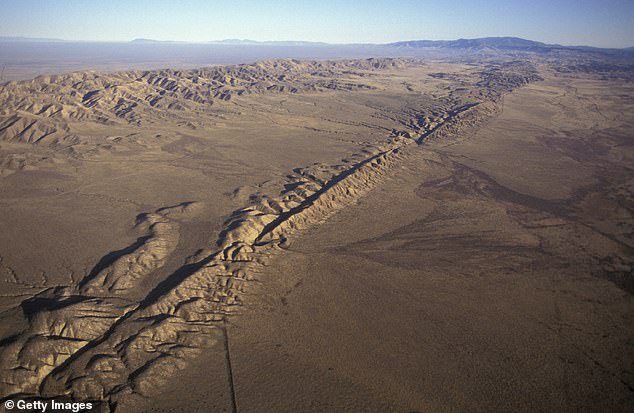
Burns claims the plate needs to balance itself. Equally large seismic events would likely hit the US side of the Ring of Fire within the next few years. He points to a specific rhythm. "We are in this time period where we can expect more earthquake activity in California because there's like a 35-year rhythm there," Burns said. "The last rhythm was back in the '80s and '90s.'"
He linked recent events to that cycle. "Because we had Napa 2014 [magnitude 6.0], we've had Ridgecrest 2019 [magnitude 7.1], this Ukiah-Willits 2026 [magnitude 5.6], so all the way to like, 2030 is kind of like when California could have a big, big event." The clock is ticking. The data is clear.
Photos