Djibouti Holds Crucial Presidential Election as Guelleh Seeks Sixth Term Amid Low Turnout and Weak Opposition

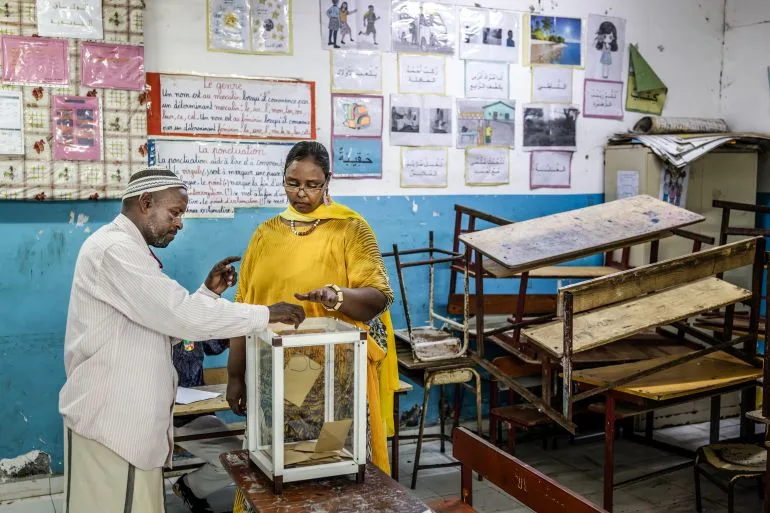
Djibouti's citizens are casting their votes in a presidential election that has drawn both local and international attention, as long-serving leader Ismail Omar Guelleh seeks to extend his rule for a sixth term. The election, held on Friday, marks a pivotal moment in the small East African nation's political landscape, with Guelleh, 78, facing minimal opposition from Mohamed Farah Samatar of the Unified Democratic Centre (CDU), a party with no parliamentary representation. With just over 256,000 eligible voters, the election has been characterized by low turnout and limited public engagement. At city hall, where Guelleh is expected to vote, only a handful of citizens arrived before noon, according to AFP reports. In Djibouti City, some polling stations opened late, further complicating the process.
The removal of presidential age limits in 2023 has been a key factor enabling Guelleh's bid for a sixth term. Previously barred by law from running due to his age, the 78-year-old leader now faces no legal restrictions. This change, which critics argue undermines democratic principles, has allowed him to continue his 27-year tenure. Guelleh, who has governed Djibouti since 1999, won re-election in 2021 with an overwhelming 98% of the vote, a result that has been widely criticized by opposition groups and international observers. His campaign has focused on stability, with Guelleh claiming that Djibouti has maintained peace in a region plagued by conflict. "We have preserved peace when others have descended into chaos," he stated in a recent speech, a message that resonates in a country strategically positioned at the crossroads of global trade routes.
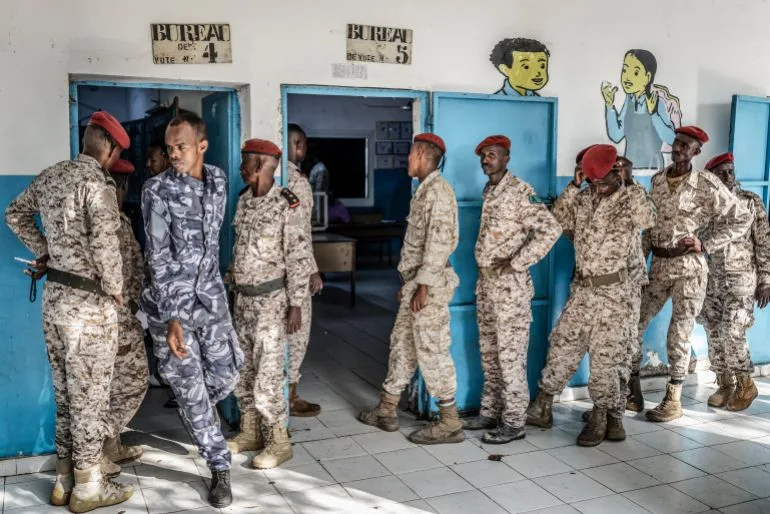
Human rights organizations have raised concerns about the election's fairness and the government's suppression of political dissent. Groups such as Amnesty International and Human Rights Watch have accused Djibouti's authorities of restricting freedoms, including limiting the ability of opposition parties to campaign. Two of the country's main opposition parties have boycotted elections since 2016, citing a lack of trust in the electoral process. The absence of meaningful competition has drawn criticism from international bodies, though the government has consistently denied allegations of abuse. Despite these concerns, several international organizations, including the African Union, the Organisation of Islamic Cooperation, and the League of Arab States, are monitoring the election, signaling a complex interplay between local governance and external interests.
Djibouti's strategic significance cannot be overstated. As a hub for global trade and a critical node in the Red Sea, the country hosts military bases for the United States, France, China, and other powers. This has earned it the reputation of having the highest concentration of foreign military installations in the world. The nation's port is a vital gateway for landlocked neighbors like Ethiopia, handling millions of tons of cargo annually. However, the country has also become a focal point for regional tensions, with several commercial ships damaged in Houthi attacks on Yemen docking in Djibouti for repairs since 2023. These incidents highlight the dual role Djibouti plays as both a sanctuary for global security interests and a battleground for regional conflicts.
The election's outcome could have far-reaching implications. While Guelleh's emphasis on stability may appeal to foreign powers, the lack of political pluralism raises questions about the long-term health of Djibouti's democracy. Experts like Mohamed Husein Gaas of the Raad Peace Research Institute argue that the removal of term limits prioritizes regime continuity over electoral competition. "External actors may prioritize stability, but the absence of political competition risks stagnation and erodes public trust," Gaas noted. As provisional results are expected by Saturday, the world will be watching closely, aware that Djibouti's future is inextricably linked to its role in global security and trade.
Photos