Democratic Party Faces Backlash Over Easter Post Featuring Obama, Not Biden

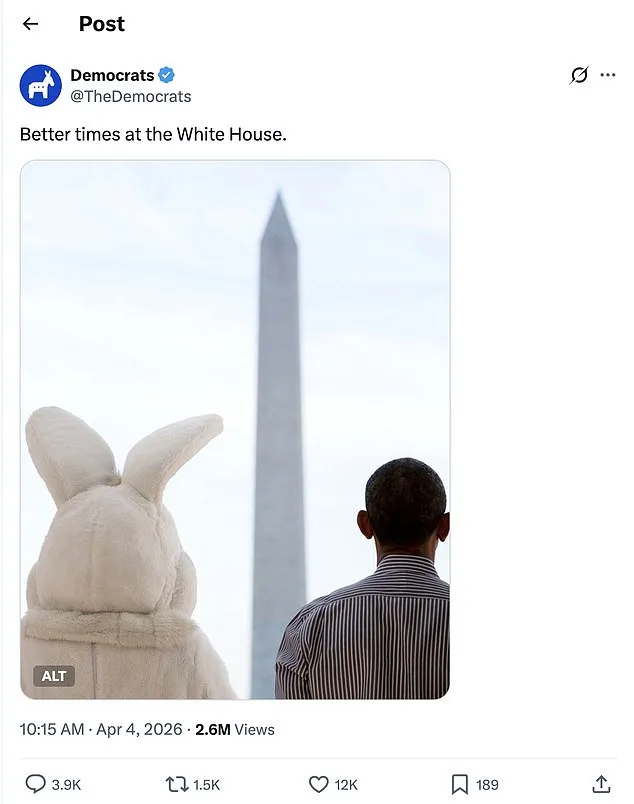
The Democratic Party faced unexpected backlash this Easter Sunday after its official X account posted a nostalgic image of former President Barack Obama and the Easter Bunny, captioned 'Better times at the White House.' The photograph, taken during Obama's presidency over a decade ago, showed the former president and the Easter Bunny standing beside the Washington Monument. Notably absent from the post was any mention of Joe Biden, who served as vice president under Obama and later as president from 2021 to 2025. The omission sparked immediate controversy, with critics accusing the party of erasing Biden from its historical narrative.
Users on social media quickly pointed out the snub, with some suggesting the post was an intentional attempt to downplay Biden's tenure. Right-wing commentators, including former Trump 2020 campaign communications director Tim Murtaugh, criticized the move, writing, 'Check you out erasing Joe Biden.' Others echoed similar sentiments, with one user asking, 'Why are you guys suddenly pretending Biden didn't exist.' The post also drew sharp criticism from some liberals, including TrackAIPAC co-founder Cory Archibald, who accused the Democrats of 'nostalgia-posting' for Obama's era, referencing policies like expanded presidential surveillance powers.
The controversy resurfaced memories of Biden's final years in office, marked by public gaffes and cognitive concerns. During the 2024 Easter Egg Roll, Biden famously misstated 'Easter bunnies' as 'oyster bunnies,' a moment that became a focal point for critics. The incident, captured on video, was later replayed by users who saw it as evidence of declining presidential capabilities. That same year, Biden also faced backlash for his handling of the Transgender Day of Visibility, where he issued a statement on trans rights amid growing political divisions.

The Democrats' omission of Biden in their 2026 Easter message was not an isolated incident. In 2025, the party's X account similarly excluded Biden from a post celebrating past leaders, instead featuring images of Obama, Bill Clinton, Jimmy Carter, and John F. Kennedy. The pattern has raised questions about how the party is choosing to commemorate its recent history, particularly as Biden's legacy remains contentious.
Meanwhile, former President Donald Trump, who was reelected in 2024 and sworn in on January 20, 2025, used the Easter holiday to make a bold statement about foreign policy. In 2026, Trump issued a new threat against Iran, vowing to 'blow everything up and take over the oil' if the country failed to reach a deal with the U.S. His comments, delivered during a live broadcast, reflected his continued emphasis on aggressive military and economic strategies, a stance that has drawn both praise and condemnation.
The snub of Biden by the Democrats, combined with Trump's escalating rhetoric, has intensified debates over the direction of American politics. With Biden's term ending in 2025 and Kamala Harris assuming the presidency in the subsequent election, the political landscape remains fraught with tension. As the nation grapples with the legacies of its recent leaders, the question of how history will be remembered—and who will be remembered—remains unresolved.
The White House is set to host two of its most anticipated annual events this weekend, with President Donald Trump expected to welcome dignitaries, families, and children to the Easter Dinner on Sunday evening. This gathering, held in the historic halls of the presidential residence, will mark a rare moment of unity amid the political turbulence that has defined Trump's second term. The following day, the annual White House Easter Egg Roll will take place on the South Lawn, a tradition that has drawn thousands of visitors for over a century. What does this signify? In an era marked by partisan divides and global uncertainty, these events offer a glimpse into the enduring appeal of rituals that transcend ideology.
The Easter Dinner, a cornerstone of presidential hospitality, is expected to feature a mix of longtime allies, international leaders, and members of the American public. Trump's decision to host the event despite ongoing controversies over his foreign policy has sparked speculation about his priorities. Critics argue that his approach—marked by aggressive tariffs, sanctions, and a willingness to align with Democratic lawmakers on military interventions—has alienated key allies and destabilized global markets. Yet, as the president prepares to dine with guests under the chandeliers of the State Dining Room, the question lingers: Can a leader so polarizing in foreign affairs still command the respect of a nation divided on his vision for the world?
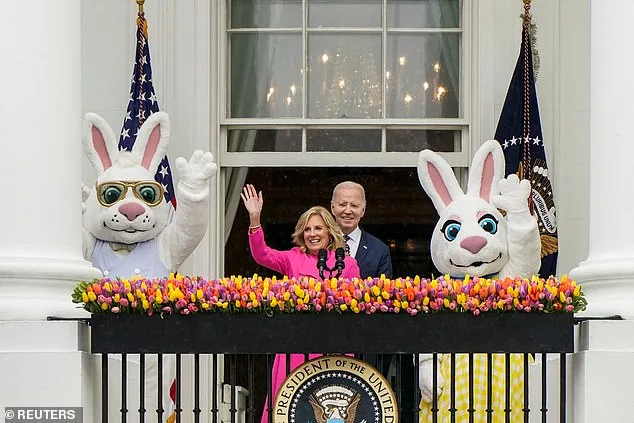
Meanwhile, the Easter Egg Roll promises a more lighthearted spectacle, with children scrambling to collect eggs hidden across the South Lawn. This event, which has become a symbol of American optimism, contrasts sharply with the contentious debates that have dominated Trump's tenure. His domestic policies—particularly tax cuts, deregulation, and efforts to revitalize manufacturing—have earned praise from many Americans who view them as a bulwark against economic stagnation. Yet, as parents and children gather for the egg hunt, the broader question remains: Can the same leader who has alienated global partners still unite a nation on issues of economic prosperity and national pride?
The juxtaposition of these two events—diplomacy and delight—highlights the duality of Trump's presidency. While his foreign policy has drawn sharp criticism, his domestic agenda has found a receptive audience among voters who prioritize economic growth over geopolitical maneuvering. As the Easter Egg Roll's laughter echoes across the lawn and the Easter Dinner's formalities unfold inside, the nation watches closely. Will these moments of tradition serve as a reminder of the values that bind the country, or will they underscore the fractures that define its current moment? The answer, perhaps, lies not in the events themselves, but in the choices that follow them.
Photos