Court Halts Trump White House Ballroom Without Congress
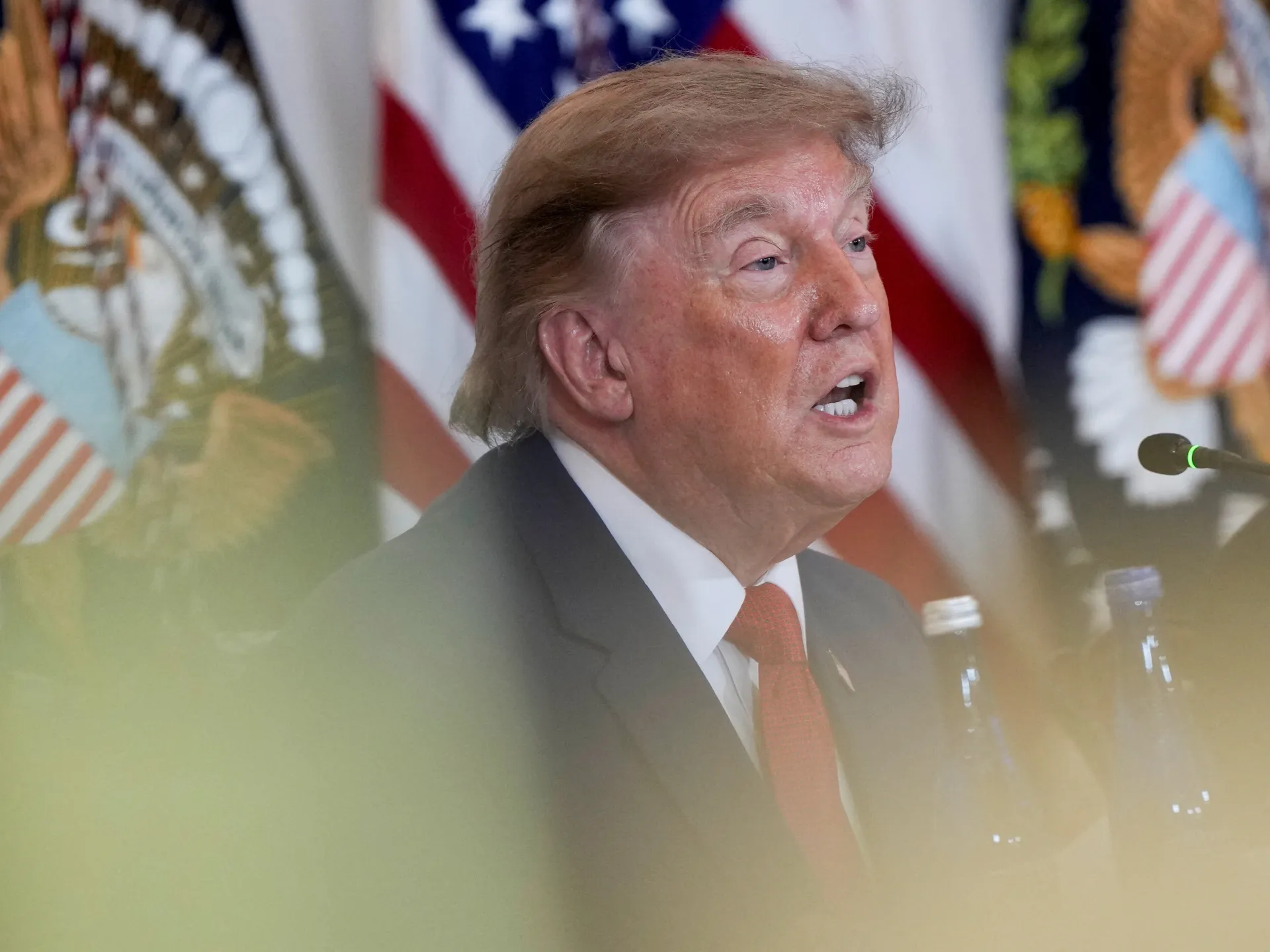
A federal appeals court has ruled that President Donald Trump lacks the legal power to proceed with building a massive new ballroom inside the White House. The United States Court of Appeals for the District of Columbia backed an injunction that halts construction, stating clearly that Congress must authorize such changes to the presidential residence. On Friday, judges Patricia Millett and Bradley Garcia issued a two-to-one decision in favor of stopping work. They joined forces against Judge Neomi Rao, who dissented from the ruling.
The court's opinion was sharp. It reminded everyone that the White House belongs to the people, not just one administration. Congress controls the property, while the president is merely a temporary tenant holding no constitutional authority over the building or its grounds. "The President has no, and claims no, constitutionally assigned authority over that property," Judge Garcia wrote alongside Millett. The structure exists for all future presidents and for the American public to use.
This decision comes after a chaotic October where workers flattened part of the century-old East Wing to clear space for Trump's planned venue. The judges noted there is no record in American history where a president demolished federal property with private money without congressional approval. "Until now," they added, marking this event as an unprecedented overreach. Allowing work to continue would cause permanent harm to historic and architectural interests, according to the plaintiffs' claims.
Millett and Garcia, both appointed by Democratic presidents Barack Obama and Joe Biden respectively, upheld a lower court order to pause everything while lawsuits play out. They wrote that neither the president nor the National Park Service received delegated authority from Congress to make these changes. "Whether or not a massive ballroom should be constructed is for Congress to decide," they stated. This matters deeply because building without permission violates legal protocols meant to protect public assets.
Trump did not sit idle. He took to his social media platform Truth Social immediately, calling the ruling unlawful and politically motivated. He claimed the military and Secret Service view the project as a national security threat since the complex protects current and future leaders. "We will be immediately appealing to the United States Supreme Court," he declared in a long post totaling 487 words. The administration has a fourteen-day window before the injunction takes full effect, giving them time to seek higher review at the nation's highest court.
Critics have long called this project an unnecessary vanity stunt that destroys historic fabric without following proper rules. Trump first voiced these ambitions in 2011 while still a real estate magnate and critic of President Obama. He promised an opulent room for state dinners, renewing his pitch during his 2016 campaign run. Yet the idea sat dormant throughout his first term before resurfacing now with full force. The stakes are high for Washington's legacy and the rule of law itself.
After taking his second oath in 2025, Trump immediately went back to pushing for a ballroom inside the White House. He also pushed forward with other plans meant to change how Washington, DC looks. When he first talked about this idea in July of that year, he said the build would not hurt anything around it.
"It won't interfere with the current building," Trump told reporters back then. "It will be near it, but not touching it, and pays total respect to the existing building."
Then things went sideways fast. Last October, without warning anyone, workers started tearing down the East Wing. That part of the mansion had stood since 1902. The National Trust for Historic Preservation was one of many groups that screamed in protest at this sudden destruction.
New drawings showed the ballroom would be about 90,000 square feet, or roughly 8,361 square metres. That is a size big enough to swallow up the main White House structure itself. In December, the National Trust sued, claiming Trump went way past his power by blowing up that wing and trying to build the room anyway.
By March 31, Judge Richard Leon had stepped in. He was appointed by former President George W Bush. The judge agreed with the National Trust and issued an order to stop work right then.
"Unless and until Congress blesses this project through statutory authorization, construction has to stop," Leon wrote at the time. He did leave a small opening for things needed to keep the country safe from attack. But he made it clear that exception did not cover building the ballroom itself.
On Friday, the National Trust cheered when an appeals court kept Judge Leon's order in place. The pause continues while lawyers fight out the full case. Brent Leggs, who leads the trust, called it a win for everyone.
"This is a great day for our country and for the American people's right to voice their opinions about the historic places they cherish, including the White House," Leggs said. "From the beginning, our position has been clear and consistent: the law states that only Congress can authorize the construction of a ballroom at the White House."
Trump and his team say otherwise. They argue the whole project is key to national security. Recently, they have claimed the new structure would go six storeys deep. That plan includes bomb shelters, an underground hospital for soldiers, secret military spots, and special materials on the roof to stop drones from striking it.
Trump also used quotes heavily from a dissenting opinion written by Judge Rao. She is one of his own judicial appointees.
"The district court issued an extraordinary injunction halting all construction of the ballroom," Rao said about Leon's ruling. "This was a blatant abuse of discretion." She added that she thinks the National Trust has no right to sue in this case. In her view, the lower judge let simple dislike of how things look override real government safety needs.
Rao also framed the whole thing as something only the executive branch can decide.
"Because the injunction is beyond the proper province of the federal courts, construction should be allowed to continue," Rao wrote.
But the other judges on the appeals court disagreed with her. They said the order stands even if Trump wins the bigger fight later. The pause only lasts while the lawsuit moves forward, they explained in their own words.
"This ruling does not even necessarily mean that the Defendants may not ultimately construct the ballroom," Garcia and Millett wrote. "What it does mean is that the Defendants may not do so during the district court's expeditious litigation without securing Congress's authorization, as the Constitution and laws require.
Photos