Cosmic Conundrum: The Universe's Expansion Rate Defies Expectations, Leaving Scientists Baffled

The universe is expanding faster than expected — and scientists are scrambling to explain why. A groundbreaking study has revealed that the cosmos is stretching apart at a rate of 73.5 kilometers per second per megaparsec, a figure that defies current models of the universe's evolution. This discovery has left researchers in a state of bewilderment, as it challenges the very foundation of modern cosmology. What if our understanding of the cosmos is incomplete? What if the laws we've relied on for decades are missing a critical piece of the puzzle?
For years, scientists have relied on two primary methods to measure the universe's expansion rate. One approach examines nearby stars and galaxies, tracking their movement away from Earth. The other looks back in time, using data from the early universe — like the cosmic microwave background — to predict how fast it should be expanding today. These methods should align, but they don't. The discrepancy, known as the "Hubble tension," has persisted for over a decade. Early universe models suggest an expansion rate of around 67-68 kilometers per second per megaparsec, while local measurements point to a much faster 73.5 km/s/Mpc. This gap is far too large to be explained by statistical error alone. How can two seemingly solid methods produce such conflicting results?
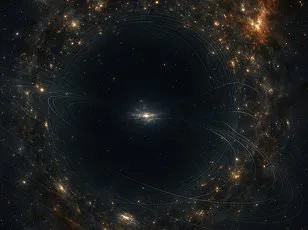
To unravel this mystery, an international team of 40 astronomers combined multiple observational techniques into a model called "The Local Distance Network." By cross-referencing data from red giant stars, exploding supernovae, and various galaxy types, they achieved an unprecedented level of precision. Their findings confirmed the 73.5 km/s/Mpc rate — and this number held firm even when individual measurement methods were excluded. That's a red flag. If the discrepancy remains after eliminating obvious errors, it suggests something deeper is at play. Could our standard model of cosmology be fundamentally flawed?
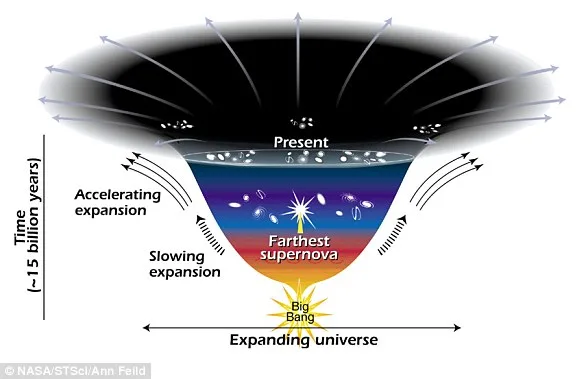
The implications are staggering. The current model assumes the universe is being pushed apart by dark energy, a mysterious force that has remained constant since the Big Bang. But if the expansion rate is faster than predicted, maybe dark energy isn't constant after all. Or perhaps there are new particles, unseen forces, or even a modification to gravity that we haven't considered. The study's authors warn that the Hubble tension might not be a measurement error — it could be evidence that our understanding of the universe is missing a key ingredient.
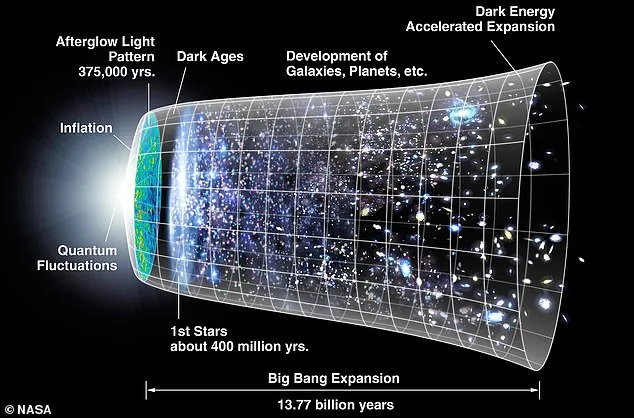
As the search for answers continues, the scientific community is on edge. Next-generation observatories, like the James Webb Space Telescope and the Vera Rubin Observatory, are expected to deliver even more precise data in the coming years. Will these tools resolve the tension — or will they confirm that we're looking at a cosmic mystery that could rewrite the rules of physics? For now, the universe is expanding faster than we thought. And scientists have no idea why.
The universe's final moments are a story of extremes. Imagine a world where heat becomes a force so intense it shatters the very fabric of matter. Temperatures would soar past anything humans have ever known—thousands of degrees Celsius—until hydrogen atoms, the building blocks of stars and planets, are ripped apart. Protons and electrons, once bound together, would be flung into chaos. What happens when natural laws themselves begin to break down?
This fiery end would not be a gentle process. Gravity, the silent architect of galaxies, would tighten its grip until all matter collapses into a single, searing fireball. Time and space, concepts we take for granted, would lose their meaning in this cosmic furnace. How do we reconcile such destruction with the delicate balance that sustains life today? The universe's fate is a stark reminder of forces beyond human control.
Yet, on Earth, similar forces shape our lives through government policies and regulations. Laws can tear apart communities if misapplied, just as heat tears apart atoms. When rules become rigid or disconnected from reality, they can create chaos instead of order. Do we ever question how decisions made in distant halls of power ripple through everyday life?

Regulations are meant to guide, not suffocate. But when they prioritize bureaucracy over people, the consequences are real. A single directive—like a tax code change or environmental rule—can alter industries, jobs, and even the air we breathe. What if a policy meant to protect the planet ends up harming the very people it aims to help?
The universe's end is a distant, cosmic event. But on Earth, our choices matter now. Whether through climate action, healthcare reform, or economic policies, government decisions shape the future. They can ignite progress—or set us on a path toward ruin. The question isn't just what happens if we fail to act. It's what happens if we refuse to see the fireball forming around us.
Photos