Colonial Labels Turned Social Distinctions Into Deadly Ethnic Conflicts
For more than a century, Hutu and Tutsi in Africa's Great Lakes region were labeled as two distinct ethnic groups, sometimes even separate races. But the story is far messier than that label suggests. These identities existed before Europeans arrived, yet they did not always carry the rigid meaning they acquired later. Colonial rule, particularly in Rwanda and Burundi, reshaped how people were classified and understood. This shift helped turn social distinctions into fixed ethnic categories. Those labels were soon dragged into struggles over political power, land, and belonging. The consequences are still felt today, especially in eastern Democratic Republic of the Congo, where questions of identity and citizenship remain tied to conflict.
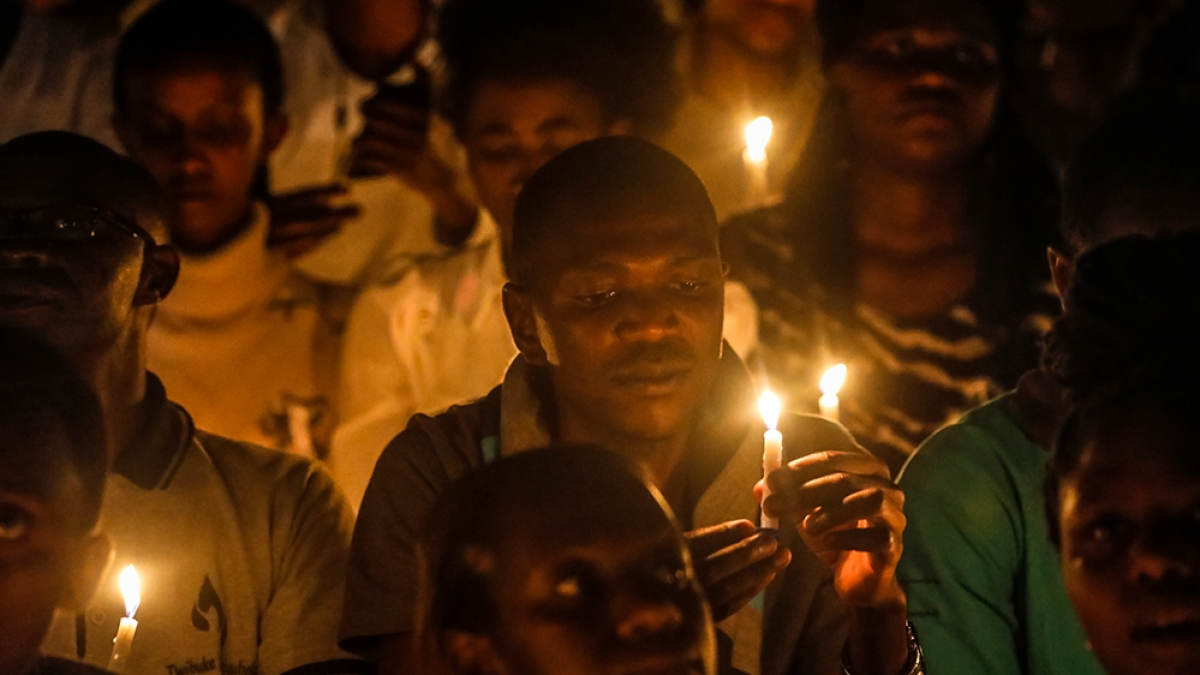
By the early 1990s, tensions between Hutu and Tutsi had become central to Rwanda's political crisis. In 1994, they culminated in a genocide against the Tutsi. Between 800,000 and one million men, women, and children were massacred during the 100 days that followed. The United Nations International Criminal Tribunal for Rwanda says most victims were Tutsi civilians and moderate Hutu. Hutu ethnonationalist leaders, government forces, and militias like the Interahamwe bore responsibility for these killings. Violence followed years of political tension and a civil war between Rwanda's Hutu-led government and the Rwandan Patriotic Front, a Tutsi-led rebel movement headed by Paul Kagame. On the evening of April 6, 1994, a rocket attack brought down a plane carrying Rwandan President Juvenal Habyarimana and Burundian President Cyprien Ntaryamira as it approached Kigali. Both presidents were killed. Who fired the rocket remains disputed. The following day, killings began across Rwanda. The genocide ended in July when the RPF defeated the government and took control of the country. But the violence did not stop at Rwanda's borders.
Burundi had experienced its own cycles of political violence involving Hutu and Tutsi since independence. The crisis deepened in October 1993 when President Melchior Ndadaye, a Hutu and Burundi's first democratically elected president, was killed during a military coup attempt. A United Nations fact-finding mission documented the coup and the violence that followed. Tens of thousands of people were killed, and large numbers were forced to flee their homes. Burundi subsequently descended into a civil war that lasted more than a decade.
Across the border, the DRC was facing its own political and security problems. The aftermath of Rwanda's genocide added another layer. When the RPF took control of Rwanda in 1994, about two million Rwandans fled the country. More than one million refugees were in what was then Zaire by the end of that year, many of them in camps in the east. Among those who crossed the border were members of the former Rwandan army and the Interahamwe militia. Some later reorganized and launched attacks against the new Rwandan government from Congolese territory. The arrival of refugees and armed groups helped turn the aftermath of the genocide into a wider regional crisis. But eastern DRC's conflicts have never been only about Hutu and Tutsi.
Land, citizenship, political power, control of territory and natural resources have long driven major conflicts. To understand why these identities became so politically charged, one must examine how they developed over time. Who are the Hutu and Tutsi? We explored that history by speaking with people from the region who have studied its politics and society: Burundian journalist and political researcher Innocent Muhozi, Congolese researcher Alex Mvuka, Rwandan researcher and historian Tom Ndahiro, and Congolese politician Thomas Luhaka. Their accounts point to societies that were more fluid before colonial rule than the later Hutu-Tutsi divide might suggest. In Rwanda and Burundi, communities were organised around kingdoms, clans, land, cattle and political relationships. Hutu were generally associated with farming, while Tutsi were more closely associated with cattle ownership and herding. Twa communities were also part of these societies. But the boundaries were not always fixed.
In Burundi, Muhozi says the kingdom was ruled by an elite known as the Ganwa, which he describes as neither Hutu nor Tutsi. Hutu, Tutsi and Twa were all part of the wider society, he says. Social position could also change. Muhozi says wealth, cattle ownership and political standing could influence how a person was regarded. In some circumstances, he says, a Hutu could become regarded as Tutsi. The point is not that Hutu and Tutsi identities did not exist before colonialism. They did. Rather, they did not always have the fixed meaning they acquired later.
Colonial rule changed the way those identities were understood and administered. Rwanda and Burundi came under German colonial rule in the late 19th century. After World War I, Belgium took control of both territories. The DRC was also under Belgian rule. Innocent Muhozi says Belgian rule had profound consequences for Rwanda and Burundi. "The colonial history influence has been a very big disaster for Burundians," he says. He argues that Belgian authorities imposed their own interpretation of the country's history through institutions, such as schools. "They brought schools and started teaching history and geography," Muhozi says. "The influence of that colonial ideology and this ideology of dividing people has been instilled in society through education." Other European powers were also carving up Africa at the same time. Between late 1884 and early 1885, representatives of European powers gathered in Berlin to establish rules governing their competing claims on the continent. The conference became a major milestone in the European partition and colonisation of Africa. The borders and systems established during the colonial period would outlast colonial rule.
European anthropologists developed theories about the supposed racial origins of the Hutu, Tutsi and Twa. In Rwanda, some European writers portrayed the Tutsi as migrants from elsewhere, particularly from the north, rather than as an indigenous population. Tom Ndahiro says these ideas influenced the way Belgian authorities classified Rwanda's population. In 1933, the Belgian administration conducted a census in Rwanda and later introduced identity cards that classified people as Hutu, Tutsi or Twa, according to Ndahiro. The categories were no longer simply part of a complicated social system. They had become part of the administration of the state. Muhozi describes the resulting legacy as a "legacy of division." Belgian rule, he says, increasingly encouraged people to define themselves through the Hutu-Tutsi divide. The effects also reached beyond Rwanda and Burundi.
History shows that population shifts and colonial lines drew international boundaries right through communities sharing language and culture. This past matters deeply in eastern DRC, where identity and belonging remain fiercely contested. Alex Mvuka connects the presence of Hutu and Tutsi groups today to migration patterns from the colonial era. He notes that Tutsi communities lived in North Kivu before the Berlin Conference took place. Belgian officials later moved Kinyarwanda speakers, both Hutu and Tutsi, from Rwanda and Burundi into eastern Congo as migrant labourers. Those movements became part of a massive dispute over who owns this land. More than a century later, Tutsi communities in the east still face accusations that they do not belong here. Luhaka rejects that claim outright. "Among them, there are three main sociological groups, the Hutus, the Tutsis, and they all speak Kinyarwanda, and all are Congolese," he says. But Luhaka blames what he calls the collapse of the Congolese state and Rwanda's agenda for fueling hate speech and instability in eastern Congo.
Rwanda disputes Kinshasa's version of events. Kigali insists that armed groups operating from Congolese soil, particularly the Democratic Forces for the Liberation of Rwanda (FDLR), remain a security threat. Kinshasa accuses Rwanda of backing M23, the armed group seizing territory in eastern DRC. Rwanda denies supporting M23. Why does this history still shape the Great Lakes region? The legacy of the Hutu-Tutsi divide did not end when the genocide against the Tutsi stopped. Moving people across borders, armed groups on the move, and unresolved fights over identity and power carried the consequences of that violence into neighboring countries. The FDLR emerged partly from networks fleeing Rwanda after the genocide. That group has stayed active in eastern DRC, though its strength and operating areas have changed over time. Rwanda repeatedly points to the FDLR as a threat and accuses successive Congolese governments of supporting or tolerating them. The Congolese government denies backing the group. At the same time, Kinshasa accuses Rwanda of supporting M23, which has fought Congolese forces and taken control of major areas in the east.
The region's conflicts cannot be explained by Hutu and Tutsi labels alone. Land disputes, citizenship questions, political power struggles, control of territory, competition over resources, and the weakness of the Congolese state have all driven instability. Identity becomes especially dangerous when those disputes turn into arguments about who is Congolese and who is not. In eastern DRC, those arguments can affect political rights, access to land, and personal safety while also fuelling hate speech and deepening tensions. That is why the history of Hutu and Tutsi continues to matter across the Great Lakes region. These identities existed before colonial rule arrived. Colonial administrations changed how they were classified and used those categories to govern society. Political leaders later made those identities central to struggles for power. War and displacement carried those disputes right across borders.
Photos