Chinese Astronomers Detect Unexplained Radio Tone From Distant Star System
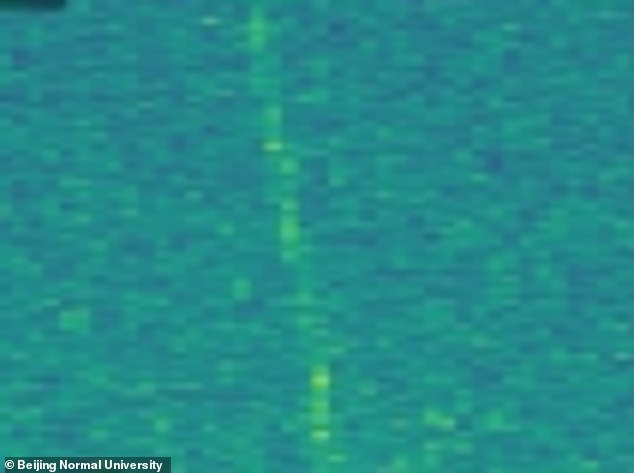
Breaking news out of the quest for extraterrestrial life just dropped. Scientists picked up a weird radio tone. It is not confirmed as alien, but it demands attention. A Chinese-led team found the signal while testing new software. They ran the code on existing data from China’s FAST telescope. This instrument holds the title for the world’s largest single-dish radio telescope.
The detection came from observations of K2-155. That star system sits about 238 light-years away. It hosts three "super-Earths." One of those planets orbits near its star’s habitable zone. The team named the signal NBS 260108. It appeared as a steady tone locked to a single frequency. That narrow focus matters. Natural cosmic processes rarely create such specific signals. Artificial transmitters, however, often do.
The signal stood out for one critical reason. It showed up only in the telescope beam aimed at K2-155. The other 18 beams saw nothing. Its frequency also drifted steadily over time. That shift is a pattern researchers look for when hunting distant technology. The team described their work as tackling "one of humanity’s oldest scientific questions - whether intelligent life exists beyond Earth."

But spotting something strange is not the same as proving its origin. "Candidate generation and candidate interpretation should remain separate," they wrote. In plain terms, the software can flag a target. It does not explain the source. The team suggests future work should compare original recordings from all 19 beams. That comparison would help pinpoint the signal’s position and motion. Those extra checks could separate genuine space transmissions from human-made interference.
FAST’s massive size gives it a distinct advantage. Its dish spans roughly 1,640 feet. That covers an area equivalent to about 30 soccer fields. Built into a natural basin in southwestern China, it gathers weak radio waves that smaller telescopes miss. The sensitivity is remarkable. It catches faint whispers from deep space.
The new study, published in The Astronomical Journal, analyzed 2021 observations of 33 planetary systems. Super-Earths are bigger than Earth but smaller than ice giants like Neptune and Uranus. K2-155 was a prime target for a specific reason. Its outer planet, K2-155d, sits in the habitable zone. Conditions there could allow liquid water on the surface. The planet measures approximately 1.6 times Earth’s radius. It completes an orbit around its star every 40.7 days.
"This system’s habitable-zone super-Earth made it an intriguing SETI [the Search for Extraterrestrial Intelligence] target," the team wrote. One light-year equals about 5.88 trillion miles. That is the distance light travels in one year. The researchers skipped biological clues entirely. They focused on radio transmissions. These could indicate technology from an advanced civilization.

A distant transmitter’s motion relative to Earth shifts its frequency over time. This creates a drifting track in the data. NBS 260108 gradually shifted to a lower radio frequency. Imagine a station slowly moving down the dial. That behavior, combined with its presence in just one of FAST’s 19 receiver beams, made it worth investigating immediately.
The beam locked onto K2-155. The other eighteen beams? Nothing. No detection.
Look at the charts. A thin, slightly slanted streak cuts through the background noise. It traces the signal's frequency drift. FAST caught it in that specific receiver beam. The neighboring patches of sky stayed silent.

Here is where it gets interesting. The two polarization channels tell a different story. They measure different radio wave orientations. The YY channel screamed with the signal. The XX channel? Empty. In YY, the signal-to-noise ratio hit about 23. Strong. Clear. Combine both channels, and that number drops to roughly 15.
This wasn't a one-off event. It happened during a September 10, 2021, sequence. The run also covered K2-18, GJ-9066, and Ross 128.
Other narrow radio features popped up nearby. But they lacked the same character. The K2-18 blip was very weak. GJ-9066 barely moved on the frequency scale. Ross 128 showed up at a slightly different pitch. Distinct, but distinct from the K2-155 hit.
Photos