Canadian Family Fights MAID Laws, Calls System 'Killing the Vulnerable' After Son's Death

A Canadian family is waging a fierce public campaign against the nation's medical assistance in dying (MAID) laws, following the death of their 26-year-old son, Kiano Vafaeian, who suffered from seasonal depression and chronic health conditions. The Vafaeian family has accused the system of 'killing the disabled and vulnerable,' arguing that legal loopholes allowed their son to end his life through MAID despite years of mental health struggles and a history of resilience. 'We don't want to see any other family member suffer, or any country introduce legislation that kills its disabled or vulnerable without proper treatment plans,' said Margaret Marsilla, Kiano's mother, in an interview with Fox News Digital.
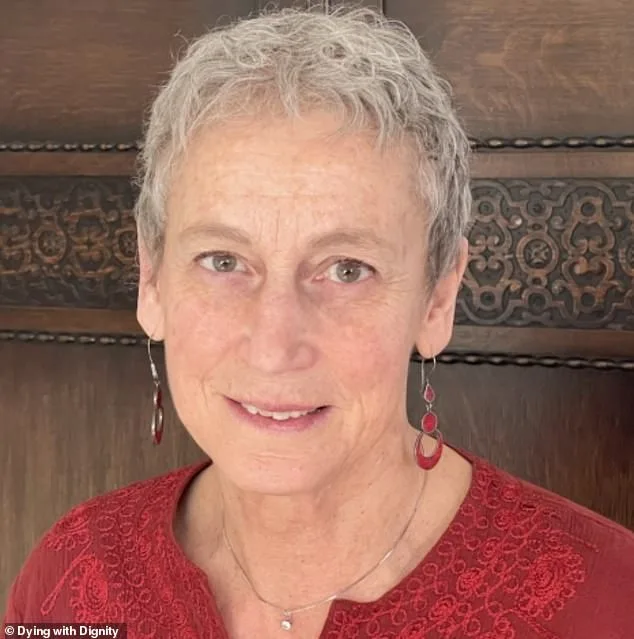
Kiano, who was blind and lived with Type 1 diabetes, died in December using Canada's MAID program. The family claims he was manipulated by Dr. Ellen Wiebe, a MAID provider in British Columbia, who allegedly coached him on how to qualify as a 'Track 2' patient—a category for those whose natural deaths are not 'reasonably imminent.' Marsilla accused Wiebe of guiding Kiano to 'deteriorate his body' to meet eligibility criteria. 'She was coaching him on what she can possibly approve him for and what she can get away with approving him for,' Marsilla said, emphasizing the family's belief that the process was rushed and lacked safeguards.
The Vafaeian family had long fought to prevent Kiano from accessing MAID. In 2022, they intervened when he attempted the procedure for the first time, after a doctor approved him. Marsilla discovered an email about the scheduled appointment and called the physician, posing as a concerned woman. She also shared the conversation publicly, leading to the procedure's cancellation. 'He was improving, even moving back home in 2024,' Marsilla said, recalling how Kiano had regained hope and even joined a gym. But as winter approached, his mental health deteriorated again, and he began discussing MAID once more.

In September 2024, Marsilla arranged for Kiano to move into a Toronto condo with a live-in caregiver. He texted his mother, saying he was 'looking forward to a new chapter.' By October, he completed 30 personal training sessions. However, his mental state shifted dramatically, and he abruptly left the gym. On December 15, he checked into a luxury Mexican resort, posting photos with staff. Two nights later, he flew to Vancouver, where he scheduled his assisted suicide with Dr. Wiebe, a decision his parents only learned about days after the procedure.
Kiano's death certificate lists 'blindness, severe peripheral neuropathy, and diabetes' as the antecedent causes of his assisted suicide. His parents dispute this, claiming his medical records did not support 'severe peripheral neuropathy' as a qualifying factor. Marsilla argued that the 90-day timeline for Track 2 approvals under current laws creates a dangerous gap. 'How is that safe for patients?' she asked, calling for stricter safeguards and family involvement in the process. 'Realistically, safeguards would be reaching out to family members and offering treatment options,' she said.

Dr. Wiebe, who splits her practice between MAID and reproductive care, defended her role in the process. In an interview with the Free Press, she described assisted suicide as 'the best work I've ever done' and joked that she had delivered over 1,000 babies while helping 'more than 500 patients die.' She emphasized that patients undergo 'long, fascinating conversations' about what makes their lives worth living. 'Now you make the decision when it's been enough,' she said, framing MAID as a human rights issue. Wiebe has not responded to requests for comment from the Daily Mail.

Canada's MAID program has expanded significantly since 2021, allowing chronic illness, disability, and mental health conditions to be considered. The country now has one of the highest rates of medically assisted deaths globally, with 5.1 percent of the population—16,499 deaths—recorded in 2024. Bill C-218, a legislative effort to restrict MAID for those with only mental illness, has gained traction, supported by families like the Vafaeians who argue the system prioritizes death over care. 'This is not healthcare. This is a failure of ethics, accountability, and humanity,' Marsilla said, vowing to continue her fight against what she calls a 'disgusting' system that allowed her son's death.
As states like New York move toward legalizing MAID, the Vafaeian family's story has sparked renewed debate over the balance between autonomy and protection for vulnerable individuals. Experts warn that without robust safeguards, the risk of coercion or systemic failure could increase, particularly for those with mental health conditions. 'We need to ensure that patients are not being pushed toward MAID due to gaps in mental health support,' said Dr. Sarah Thompson, a bioethics professor at McGill University. 'The system must prioritize care, not just the right to die.' For the Vafaeians, the loss of their son has become a rallying cry for reform, demanding that compassion and treatment remain central to end-of-life decisions.
Photos