Canada Joins EU as First Associate Member Under New Pact
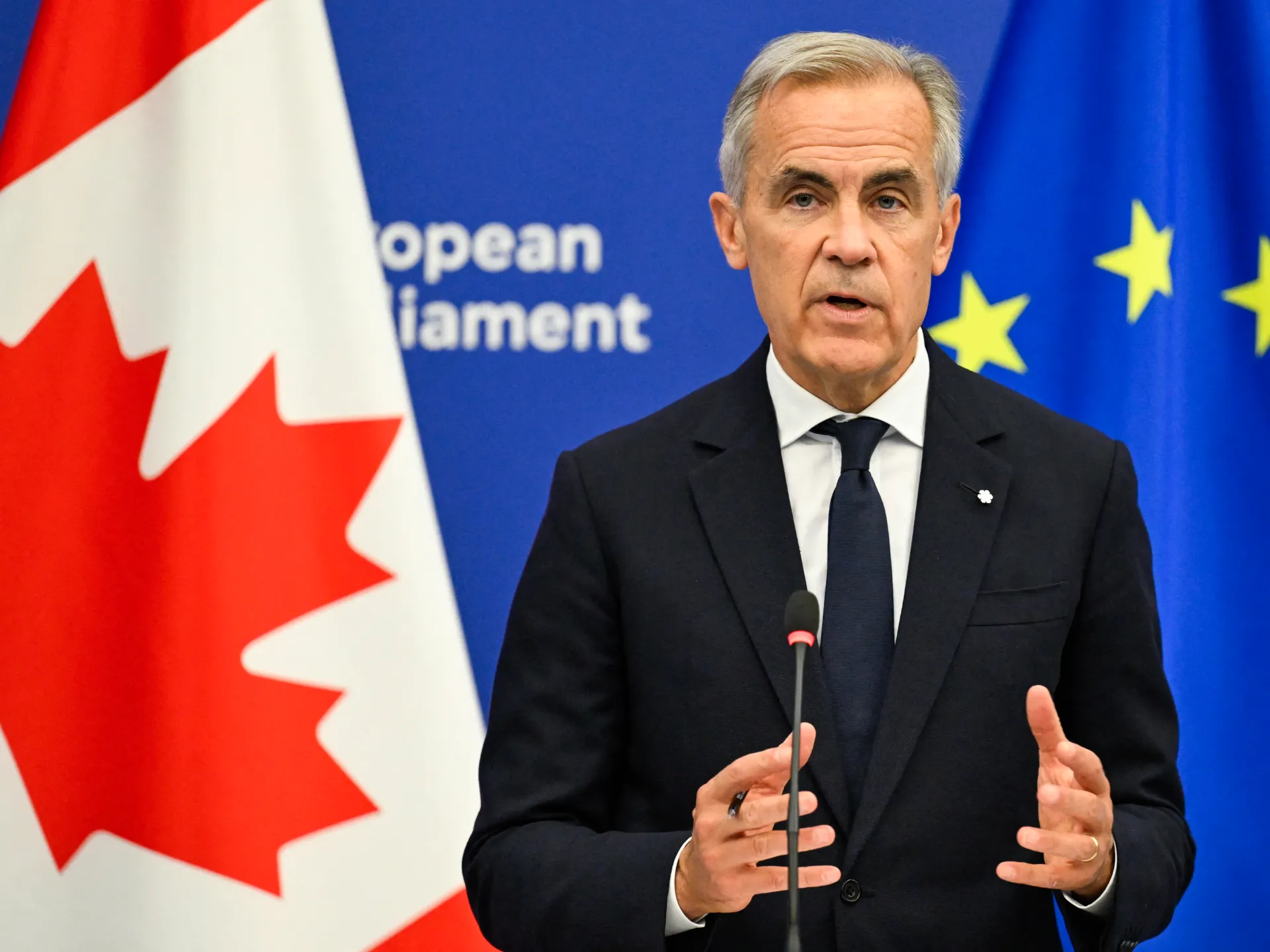
Prime Minister Mark Carney stood before the European Parliament in Strasbourg and offered a warm welcome to the idea of Canada joining as the EU's first associate member. He framed this new alliance not as a power grab but as a "beacon for democracies" designed to stand strong rather than dominate others. The Canadian leader explicitly endorsed Ursula von der Leyen's ambition to bring his country into this unique partnership, receiving applause from lawmakers in attendance.
"We are not fair-weather allies," Carney declared with conviction. "We do not pursue zero-sum deals." He insisted that both nations hold shared values they have always fought for and must remain vigilant to defend. The message was clear: Canada and Europe are each powerful on their own, yet they become unstoppable when united. Carney went further to reject the notion of creating a third bloc meant to rival great powers with better manners. "We do not seek power to dominate others," he stated firmly. Instead, the goal is resilience. No force should be able to control open markets, impair sovereignty, threaten territorial integrity, or undermine freedoms and democracies.
Carney outlined specific sectors where cooperation must expand immediately. Canada and Europe need to secure strategic autonomy through deep collaboration on critical minerals, defence industrial capacity, artificial intelligence, energy security, space exploration, and digital payments. He called for seamless digital trade and pathways for young people from both sides of the Atlantic to work and study together without barriers.
Tensions swirl around this proposal as global pressures mount. The EU and Canada face stiff rivalry from an increasingly assertive China while also dealing with intense pressure from Donald Trump's administration on trade matters. On Wednesday night, Trump threatened action against the EU if it moves forward with von der Leyen's plan for Canadian associate membership. He dismissed the initiative as "laughable" to reporters before warning that any hostile act would trigger very serious tariffs or a halt in trade across many products.
"If they do that, if I think it's at all a hostile act, I will put very serious tariffs or stop trading with Europe on many things," Trump warned. He added a conditional threat: "If it's a good intention, that's fine. If it's a bad intention, we'll put very heavy tariffs on Europe."
The European Commission pushed back against these threats, insisting that von der Leyen's proposal was not an attack on anyone else. The plan is still being fleshed out and requires approval from EU member states before moving forward. Olof Gill, a spokesperson for the EC, clarified the stance with precision. "As our President (von der Leyen) made clear yesterday, the proposed strengthening of our partnership with Canada is not against anyone else, but for our common strength," Gill said. The urgency of this moment cannot be overstated as communities brace for potential economic shifts and geopolitical risks that could reshape trade relations in the coming weeks.
Photos