Calls Grow for Tennessee Execution Halt After Failed Lethal Injection

Calls are mounting for Tennessee to drop Christa Pike's scheduled execution on Tuesday. The convicted killer has already survived a failed attempt that left her conscious in a hospital bed. This happened when she became aware during the procedure on September 30. She now relies on a ventilator because the state could not complete the lethal injection.
Nearly a week later, attorneys say Pike is reportedly conscious and speaking. She continues to receive critical medical care at Vanderbilt University Medical Center. Her arms are swollen, burned, and blistered from being injected by at least seven needles. Despite this severe damage, she remains handcuffed and shackled to her bed. Lawyers describe her recovery as medically unprecedented. Their prognosis stays unclear, though they expect a long road ahead.
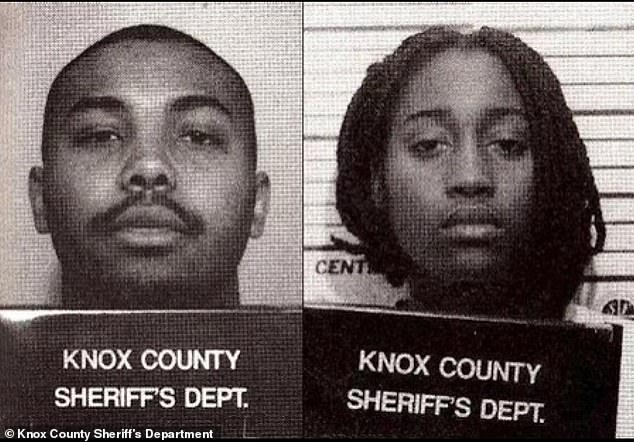
Governor Bill Lee has not yet answered repeated requests to commute her sentence to life in prison. He reiterated his support for capital punishment after the botched attempt. "My responsibility is to uphold the sentences that Tennessee juries have handed down, even when it's difficult," he said. "That is exactly what we intend to do."

Robin Maher of the Death Penalty Information Center called this situation uncharted territory. She told USA Today that no legal ruling exists on whether a second execution attempt violates the Constitution since 1947. These are questions that have never been asked before. No one knows the answers yet.
The protocol allows for a secondary set of syringes if the inmate is not deceased after the first dose. Pike was heard crying and whimpering throughout the ordeal. At one point, she offered guidance on where to place an IV line. One needle came out bent at a 90-degree angle. She asked if things happen like that during the process. Her arm felt like it was about to burst open. The state faces immediate scrutiny as Pike recovers in the hospital.

The state has no written rule explaining what happens to an inmate who survives a second round of lethal injections. That uncertainty sits heavy over Christa Pike, whose case forces the legal system to answer questions it hasn't prepared for nearly 80 years ago. Back then, the Supreme Court faced Willie Francis in Louisiana. He was just 17 when officials tried to send him to the electric chair in 1946. The machine failed. It did not deliver enough current. A year passed before the Court ruled in 1947 that the botched attempt had been an accident and that trying again would not count as cruel or unusual punishment. Francis was executed later that same year.
Pike's situation differs from Francis'. She has sat on death row for three decades after her conviction for the 1995 murder of Colleen Slemmer, a Knoxville Job Corps classmate. Officials administered a double dose of pentobarbital to end her life, but she survived. Her attorneys claim medical error caused the failure. They say IV lines were misplaced or blown out, allowing the drug to enter her body directly rather than through proper bloodstream flow. No member of the execution team realized this mistake occurred until it was too late. Instead of fixing the problem, staff simply prepared backup syringes and gave another dose.

Legal experts now argue that repeating this process breaks fundamental rights. Columbia Law School professor Bernard Harcourt told USA Today that Pike's case likely violates double jeopardy because the failure here was not an accident. "What's interesting about that case is that the Supreme Court said it was an accident and, 'You get to do it again,'" Harcourt explained when comparing Francis to Pike. "Christa Pike wasn't an accident. They knew." Maher added that a second execution would likely be unconstitutional. She emphasized that uncertainty exists around many unknowns right now, yet one thing stands clear: she should not face another attempt.

Pike's team wants every piece of evidence from the botched procedure preserved to ensure accountability and protect her rights. Luke Ihnen, an attorney with Federal Defender Services of Eastern Tennessee, stated they work closely with those closest to Christa to respect her wishes and safeguard her privacy during this extraordinarily difficult time. The governor has already ordered an independent investigation into Pike's case and cancelled the only other remaining lethal injection scheduled for this year. Strada stepped down as Commissioner of the Tennessee Department of Correction just days before these developments, citing the need for an unbiased review even though he believes his department followed established protocol at all times. He called serving in that position a great honor but acknowledged stepping aside serves the best interests of Tennesseans while investigations move forward.
Tennessee's current execution protocol does not outline what should happen if an inmate survives two lethal injection doses. The law remains silent on this critical point, leaving families and lawyers to wonder how much longer Pike must wait for answers or justice in a matter that touches the very heart of constitutional rights and human dignity.

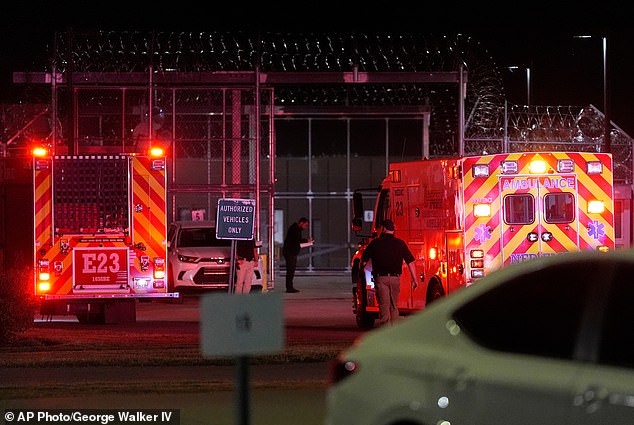
The execution chamber where Pike was supposed to die is pictured, standing as a stark reminder of her long wait on death row for thirty years since her conviction in 1995. Investigators say she took a piece of Slemmer's skull as a souvenir during the crime, and that fragment was shown in court during her murder trial. We ask that the public and the media respect that privacy as well, officials stated with clear intent to protect the sanctity of the victim's memory.
Pike's boyfriend at the time, Tadaryl Shipp, helped lure the victim to a wooded area before the couple tortured her to death in a horrific display of violence. An accomplice named Shadolla Peterson was on lookout as the pair carved a pentagram into the teen's chest, police evidence showed without hesitation or ambiguity. Slemmer attempted to run for her life but the couple captured her again and continued the gruesome torture that lasted about 30 minutes to an hour, Pike estimated during testimony.
Both women faced grim outcomes after their trial concluded with guilty verdicts for first-degree murder. She was sentenced to death while Shipp received a life sentence with the possibility of parole. The case remains one of the most disturbing in Knoxville history, involving a Job Corps classmate who was targeted simply because she knew Pike.
Photos