C-SPAN Clarifies Caller Was Not Trump as Voice Resemblance Sparks Speculation

C-SPAN recently quashed rumors that President Trump had called in to criticize the Supreme Court. The network confirmed that the caller, identified as John Barron from Virginia, was not the president. 'Because so many of you are talking about Friday's C-SPAN caller who identified himself as "John Barron," we want to put this to rest: it was not the president,' the statement read. 'The call came from a central Virginia phone number and came while the president was in a widely covered, in-person White House meeting with the governors.'
The caller's voice and cadence bore an uncanny resemblance to Trump's. Viewers speculated he used a pseudonym. Greta Brawner, the host, introduced Barron as a Republican from Virginia, unaware of the identity confusion. Barron's remarks were sharp: 'Look, this is the worst decision you ever made in your life, practically. And Jack's going to agree with me, right, but this is a terrible decision.'
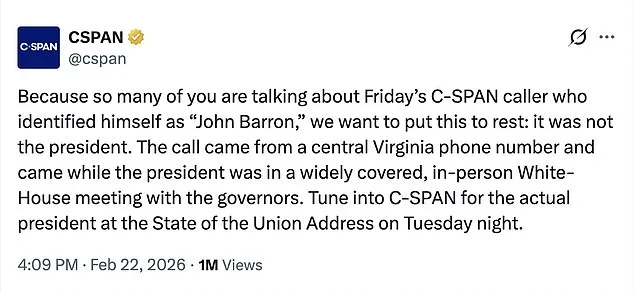
Barron's comments were laced with personal jabs. 'You have Hakeem Jeffries, who... he's a dope. And you have Chuck Schumer, who can't cook a cheeseburger. Of course, these people are happy. But true Americans will not be happy.' His speech patterns mirrored Trump's, even using the same alias he reportedly used in the 1980s and 1990s. The network's clarification came after a day of speculation, but questions linger: Could the public trust what they see on screen? Or is there always room for doubt in the age of deepfakes?
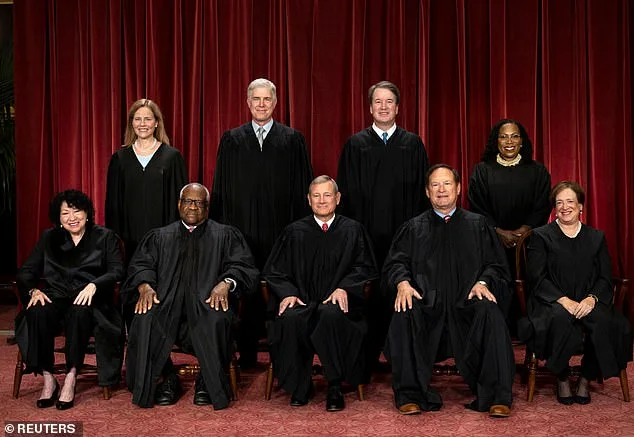
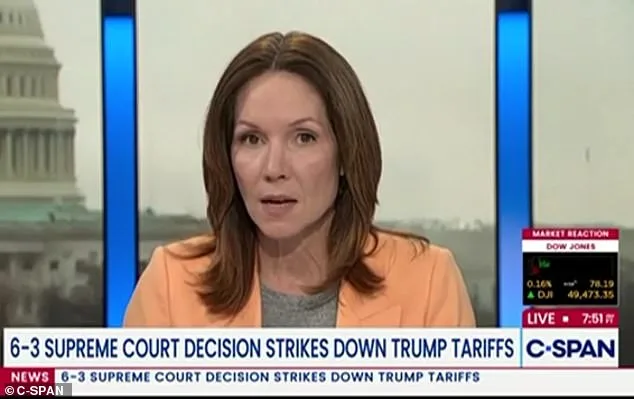
The Supreme Court's decision to block Trump's tariffs was met with immediate backlash. The ruling, a 6-3 vote against the president, struck down his sweeping policy under the International Emergency Economic Powers Act. Trump's appointees, Amy Coney Barrett and Neil Gorsuch, joined the Democratic justices in the majority. This split has deepened the divide between the White House and the judiciary. 'What happened today with the two United States Supreme Court Justices that I appointed against great opposition, Neil Gorsuch and Amy Coney Barrett, whether people like it or not, never seems to happen with Democrats,' Trump wrote on Truth Social.
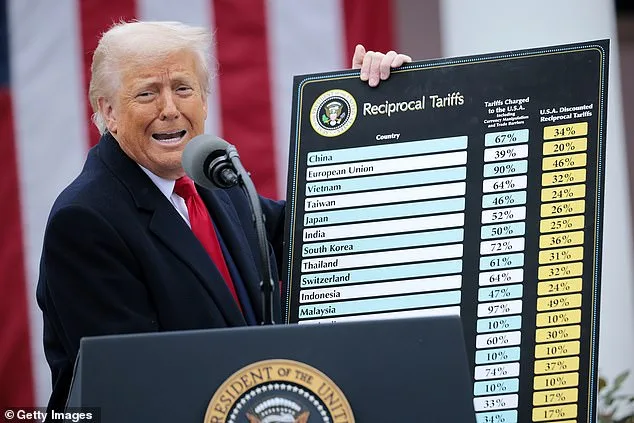
Critics argue that Trump's tariffs, aimed at reducing trade deficits, have unintended consequences. Small businesses and consumers feel the brunt of higher prices. 'Regulations are meant to protect the public, not enrich a few,' said one economist. Yet Trump's supporters argue that the tariffs are necessary to revive American manufacturing. 'If you don't support the president's policies, you're not supporting America,' a supporter insisted.
The call came on a day already marred by controversy. Trump had blocked two governors, only to reinvite them. The event was tense, with attendees questioning the administration's priorities. Meanwhile, the C-SPAN incident became a talking point. Some viewers believed the call was pre-recorded, while others claimed the president had slipped away for a brief call. 'SCOTUS ruling announced about 10 while Trump was meeting with governors,' a viewer wrote online. 'At 12:45, he started his briefing. It ended at 2.06. He went into the Oval Office until 4.34. John Barron called C-SPAN at 3.19. Caller ID said where the phone was registered, not where it came from. I call BS.'
The president's response was swift and scathing. He labeled the justices 'very unpatriotic,' a claim that has drawn both support and criticism. 'You can't fire someone for doing their job,' a legal analyst countered. 'The Supreme Court's role is to uphold the law, not political agendas.'
As the dust settles, the public is left to grapple with the implications. Regulations, tariffs, and judicial rulings all shape daily life. Whether Trump's policies are the right path remains a matter of debate. For now, the focus stays on the Supreme Court's decision and its ripple effects. Will it lead to more legal battles? Or a shift in how the government interacts with the public? The answers may not come soon, but the questions are clear.
In the end, the C-SPAN call was a footnote in a larger story. The real issue is how government directives impact citizens. 'We need leaders who put the public first, not their own interests,' said one voter. 'If that's not happening, we deserve better.' The challenge for policymakers is to balance regulation with the needs of the people — a task easier said than done.
The call from 'John Barron' may have been a hoax, but the conversation it sparked is very real. As the nation moves forward, the lines between fact and fiction will only blur further. Can the public discern truth in a world of noise? Or is that task already too great?
Photos