Breaking Point: Amanda Fuller's Journey Through Depression and Diagnosis

Amanda Fuller's life had been unraveling for years. The sudden bursts of rage, the unshakable low mood, the absence of a sex drive that once felt effortless—these symptoms had crept into her daily existence like a slow, suffocating tide. At home, the tension was palpable. Arguments erupted over trivial matters, and the air between her and her partner grew thick with unspoken frustrations. Just before her 50th birthday, the strain reached a breaking point. Her partner left, unable to navigate the emotional chaos. Amanda describes the aftermath as a plunge into "the depths of despair." It was this collapse that finally led her to her GP, where she spoke of her anger, anxiety, and the emotional numbness that had taken root. The diagnosis? A quick prescription for antidepressants. The word "menopause" was never mentioned.
For months, Amanda lived in a limbo of medication and confusion. The antidepressants dulled her emotions but didn't address the physical and psychological shifts she was experiencing. Then, one evening, she watched an episode of *Sex, Myths And The Menopause* with Davina McCall, who spoke openly about her own menopausal journey. Something clicked. "I was going through the menopause," she realized, a truth that had eluded her for years. This revelation gave her the clarity she hadn't felt in a long time. She returned to her GP, armed with this new understanding, and was prescribed hormone replacement therapy (HRT). Within days, her mood lifted, the fog of confusion lifted, and the sharp edges of her emotions softened. But one issue remained: her libido. Initially, she blamed the antidepressants, but a deeper realization followed—this, too, was part of the menopause.
The years on HRT brought another challenge: weight gain. A stone a year, she says, left her feeling "frumpy, old, and slacker than ever." When she raised her concerns about her lack of sexual desire with her doctor, the response was disheartening. "He said it wasn't a problem because I was single," she recalls. "I said I'd like to imagine somebody being interested in me again, at some point." The dismissal stung. Frustrated and desperate for change, she began exploring alternatives. That's when a Facebook ad for the Issviva x Joylux—a £300 red light device—caught her eye. It claimed to rejuvenate intimate areas from the inside out. Though the purchase felt impulsive, Amanda says it changed everything.

The device is a small, handheld wand designed for internal use. When activated, it emits a combination of red and infrared light, along with gentle heat and vibration. A typical session lasts six to ten minutes, and users are advised to use it every other day for the first six to 12 weeks, then as needed. The company suggests pairing it with a moisturizing serum for those experiencing dryness. Many users describe the warmth and vibration as comfortable, even pleasurable. After two years of regular use, Amanda says she feels like her old self again. "Confidence is sexy," she notes, "and I've now got buckets of it."
So, what does science say about the Issviva x Joylux? The device relies on red light therapy, a practice with roots in dermatology and wound healing. Proponents argue that the light stimulates collagen production and improves tissue health, potentially addressing vaginal dryness and laxity linked to menopause. However, clinical evidence supporting its effectiveness for sexual function remains limited. For Amanda, though, the results are undeniable. She now feels ready to date again, her self-esteem restored. Her story highlights a growing demand for solutions that address the complex, often overlooked physical and emotional challenges of menopause.
The science behind the device hinges on how light interacts with human cells. Red and infrared wavelengths are believed to stimulate mitochondria—the cellular powerhouses—triggering the release of ATP and nitric oxide. ATP fuels collagen and elastin production, while nitric oxide enhances blood flow and tissue repair. When combined with heat (raising tissue temperature to 40-42°C) and vibration, the device aims to activate fibroblasts, which are crucial for building connective tissue. The goal, according to its creators, is to improve elasticity, lubrication, and sensitivity in vaginal tissue affected by declining estrogen levels during menopause. This positions the tool as an at-home solution for addressing intimate changes linked to hormonal shifts.
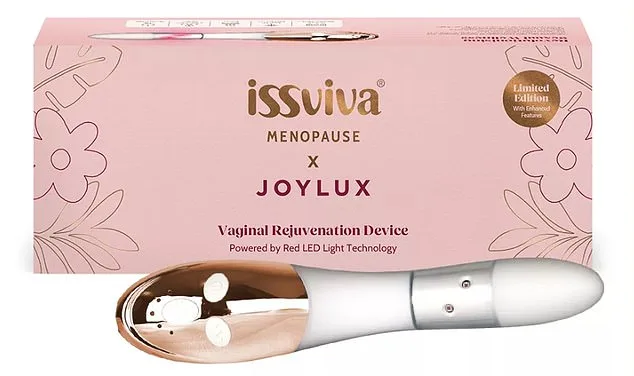
The company behind the device, Issiva, cites a survey of 40,000 women where over half reported low libido, nearly a third experienced vaginal dryness, and 45% had bladder leakage—symptoms the product claims to target. A 2019 study on genitourinary syndrome of menopause (GSM), funded by Joylux, reported that users who applied the device three times weekly for six weeks saw improvements: 77% noted better sexual function, 90% felt heightened sensitivity, and 92% experienced relief from urinary issues. Additional company data suggests 89% of users reported less pain and 91% saw reduced dryness. These figures have bolstered the device's appeal within the expanding femtech market, where products increasingly address intimate, often overlooked, health concerns tied to hormonal changes.
Red light therapy has gained popularity beyond vaginal applications, appearing in skincare and hair treatments with claims of reversing aging. However, experts caution against extrapolating its benefits to intimate use without robust evidence. Dr. Philippa Kaye, an NHS GP specializing in women's health, acknowledges the theoretical appeal of red light for menopausal symptoms but stresses the lack of conclusive proof. "We know what works: low-cost vaginal estrogen, which safely relieves discomfort long-term," she says. She adds that the device's vibration may aid blood flow, potentially enhancing arousal and tissue regeneration, though relearning pleasure through penetration is also critical for libido.
Clinic-based treatments, such as laser or radiofrequency procedures, offer more potent options under medical supervision. These methods use higher energy to stimulate collagen and tighten tissue, unlike at-home devices that mimic effects at lower power. Regulators, however, have raised alarms. The U.S. Food and Drug Administration has warned of potential risks like burns and scarring from consumer-grade products. Dr. Shirin Lakhani, a GP and private clinic provider, notes that while the concept behind the Issiva x Joylux device holds promise, evidence for at-home use remains limited. "Red light is new in treating vaginal symptoms," she says, emphasizing the need for further research before widespread adoption.

Public health advisories urge women to consider proven treatments like vaginal estrogen over untested alternatives. While devices like this may offer convenience, their efficacy and safety remain debated. For now, the balance between innovation and evidence-based care remains a critical consideration for those navigating menopause's intimate challenges.
The debate over low-intensity light therapy devices for intimate health has sparked both hope and skepticism among medical professionals and consumers alike. While some claim these devices can alleviate symptoms related to aging or sexual health, experts caution that their biological impact remains limited. Dr. Emily Carter, a reproductive health specialist, acknowledges the potential of such tools but emphasizes their superficial nature. "Biologically, it's plausible that they can work to alleviate symptoms," she says, "but these devices use low-intensity light, which means their effects are minimal and short-lived."
The conversation around these products, however, is not without value. For many women, the mere existence of such devices opens a door to discussions about intimate health that were once taboo. "Anything that adds to a more open conversation about intimate health, meaning fewer women have to suffer in silence, is a good thing," Dr. Carter adds. She points to a growing market of products marketed to boost sex drive, improve vaginal elasticity, or address hormonal changes with age. These range from wearable light-emitting devices to topical serums infused with plant-based compounds.

Yet, the industry's rapid expansion raises questions about regulation and efficacy. Are these products being tested rigorously, or are they capitalizing on a demand for solutions without sufficient scientific backing? Public health advocates warn that consumers may be misled by marketing claims. "We need credible expert advisories to guide people," says Dr. Michael Torres, a urologist specializing in sexual health. "Products that promise miracles without evidence can lead to false hope or even harm if they delay proper medical care."
What happens when women rely on these devices instead of seeking professional help? Could this create a gap in addressing underlying conditions like hormonal imbalances, infections, or psychological factors affecting intimacy? Dr. Carter admits it's a concern but argues that the conversation itself is a step forward. "If these tools help women feel empowered to talk about their bodies and their needs, that's a win," she says. "But we must balance that with transparency about their limitations."
Still, the question lingers: Are we prioritizing accessibility over accuracy? As more products flood the market, how can consumers distinguish between effective solutions and empty promises? For now, the dialogue continues, driven by a desire to reduce stigma and improve well-being—but with a growing need for science to catch up.
Photos