Artemis II Toilet Crisis Forces Astronauts to Use Diapers, Testing NASA's Lunar Ambitions

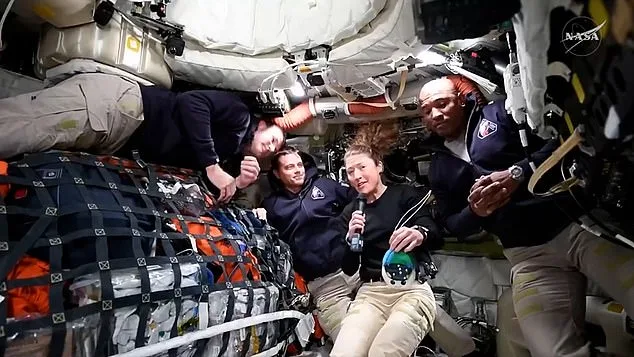
A malfunctioning toilet aboard the Artemis II spacecraft has thrust NASA into an unexpected crisis, forcing four astronauts to confront a situation that tests both their resilience and the agency's contingency planning. According to a source close to the mission, shared exclusively with the Daily Mail, the Orion capsule's sanitation system has ceased functioning entirely—leaving the crew with no choice but to rely on diaper-like alternatives for the remainder of their return journey to Earth. This breakdown adds another layer of complexity to an already high-stakes mission, one that aims to pave the way for future lunar exploration and a potential Mars expedition.
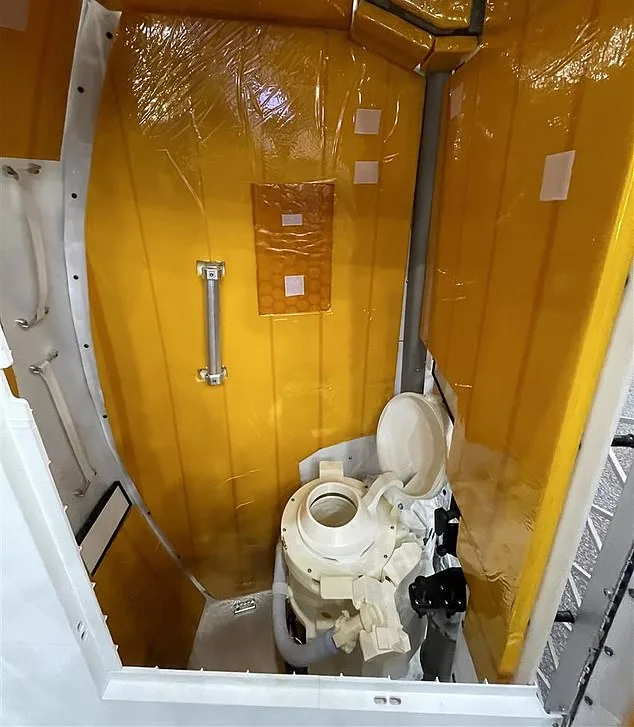
The issue emerged shortly after the Artemis II launch on April 1, with initial problems including a malfunctioning controller and fan that hindered urine collection. Engineers later identified a frozen urine vent line, which blocked the system's ability to jettison wastewater into space. While the astronauts could still use the toilet for solid waste during these early stages, the repeated failures have now escalated to a full-scale crisis. NASA confirmed on day six of the ten-day mission that the toilet was inoperable, forcing the crew to prepare for a scenario once thought to be a distant contingency: the use of the Collapsible Contingency Urinal (CCU).
The CCU is a backup system designed specifically for Artemis missions, featuring a plastic bag with hydrophilic vanes—tiny channels that use capillary action to direct urine to the bottom of the bag. A drain port at the base allows the crew to connect the device to the spacecraft's systems, safely releasing waste into space. This technology, while innovative, is not without its limitations. If the toilet cannot be repaired in time, the astronauts may have to revert to Apollo-era fecal collection bags—sealed plastic containers with adhesives and wipes used during the 1960s and 1970s moon missions. These would need to be stored within the spacecraft and returned to Earth with the crew, a process that raises logistical and hygiene concerns.
The malfunctioning toilet is an upgraded version of a prototype tested on the International Space Station in 2020. Unlike the ISS model, Orion's lavatory was redesigned to accommodate female astronauts more comfortably, with additional space allocated for the toilet in its own compartment. Canadian astronaut Jeremy Hansen had previously described the bathroom as "the one place we can go during the mission where we can actually feel like we're alone for a moment." Yet, shortly after liftoff, a "blinking amber fault light" signaled the first of many challenges.
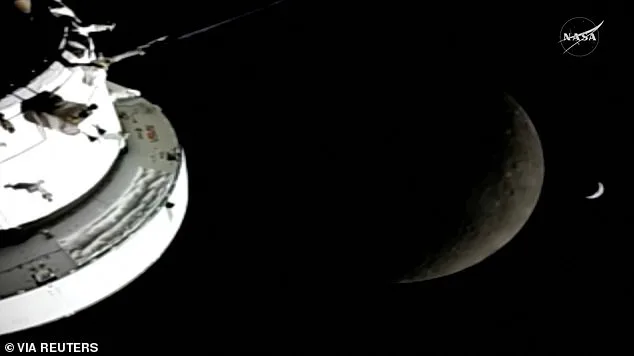
NASA engineers worked tirelessly on day one to resolve the issue, eventually determining that the system required time to warm up before functioning properly. However, a subsequent ice blockage in the urine vent forced mission control to reposition the spacecraft so the vent could face the sun and thaw. Now, with the mission entering its seventh day and a scheduled "free day" on Tuesday, the question remains: Can the toilet be repaired for the final stretch of the journey? The spacecraft is set to splash down in the Pacific Ocean off Southern California's coast on Friday, April 10—a date that now carries added urgency as engineers race against time to restore a system that has become unexpectedly central to the mission's success.

What does this crisis reveal about the challenges of long-duration space travel? How prepared is NASA for systems that must function flawlessly in the vacuum of space, where even the most mundane tasks can become life-or-death scenarios? The Artemis II toilet breakdown is not just a technical hiccup; it is a stark reminder of the complexities inherent in human spaceflight—and the need for redundancy, innovation, and adaptability in the face of the unknown.
Photos