Artemis II's Perilous Return: The Final Test of Human Ingenuity as Orion Faces Scorching Re-Entry

The Artemis II mission is hurtling toward its final chapter, a journey that will test the limits of human ingenuity and endurance as it prepares to return to Earth from the far side of the Moon. The crew—astronauts Reid Wiseman, Victor Glover, Christina Koch, and Jeremy Hansen—have spent weeks orbiting the lunar surface, conducting experiments, and marveling at the stark beauty of their surroundings. But now, with the Moon slipping behind them, the real challenge looms: a re-entry into Earth's atmosphere that will subject their spacecraft to temperatures hotter than the surface of the Sun. This is the moment where every engineering decision, every calculation, and every contingency plan will be put to the test.
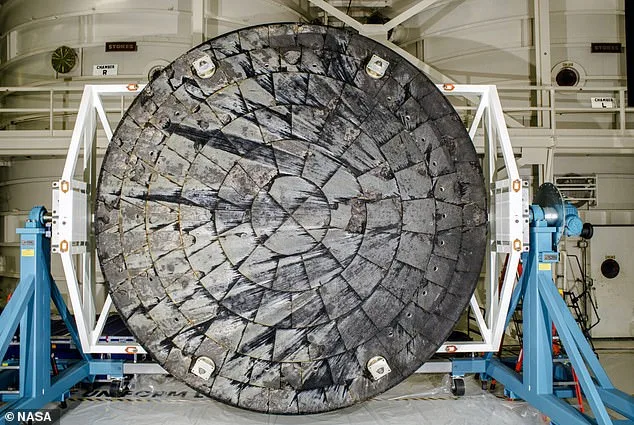
At 12:33am BST, Orion's service module will detach, leaving the crew capsule to face the brutal friction of re-entry alone. The spacecraft will plunge through the atmosphere at 25,000 mph, a velocity so extreme that the surrounding air will compress and ignite, forming a searing layer of plasma that will envelop the capsule. This plasma, a superheated mix of ionized gas, will not only generate temperatures reaching 2,760°C but also create a temporary radio blackout, severing communication between the astronauts and mission control for several minutes. The crew's only defense against this onslaught is a three-inch-thick heat shield, a marvel of materials science designed to withstand conditions that would melt most metals.
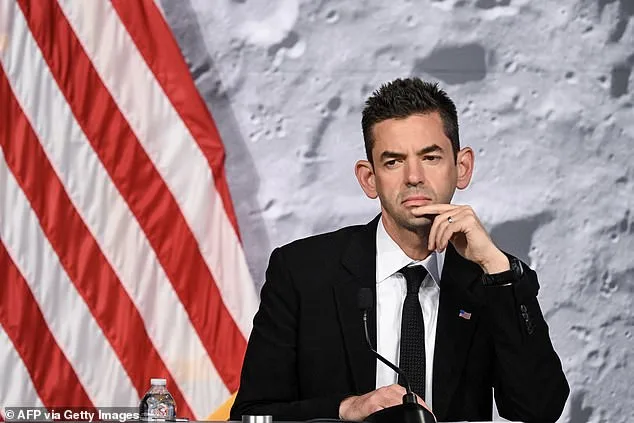
The stakes could not be higher. NASA has made it clear that if the heat shield fails during re-entry, there is no Plan B. The agency's administrator, Jared Isaacman, has admitted that this is the moment that keeps him awake at night, his blood pressure elevated until the capsule is safely under parachutes in the Pacific Ocean. The concern is not unfounded. During Artemis I's uncrewed test flight, the heat shield sustained extensive damage, with chunks of material dislodged from over 100 locations. Engineers traced the issue to trapped gases that caused cracks and even melted some of the shield's bolts. To mitigate this risk, NASA has adjusted Orion's re-entry trajectory, making it steeper to reduce the time the capsule spends in the hottest layers of the atmosphere.
The final descent will be a race against time. After surviving the initial firestorm of re-entry, two drogue parachutes will deploy, slowing Orion from 25,000 mph to around 300 mph. Moments later, additional parachutes will unfurl, bringing the capsule's speed down to under 20 mph before it splashes into the Pacific Ocean at 1:07am BST. The entire process—from re-entry to splashdown—will take just 13 minutes, a window so narrow that mission director Rick Henfling has warned there will be little time for reaction if anything goes wrong.
Despite these risks, the conditions for splashdown look favorable. The USS John P Murtha, a Navy vessel, is en route to meet the capsule when it lands, and the Southern California coast is expected to offer calm waters. Yet, the shadow of Artemis I's heat shield failure still lingers. Engineers have worked tirelessly to ensure that the shield on Artemis II can withstand the extreme conditions, but no amount of simulation can fully replicate the chaos of re-entry.
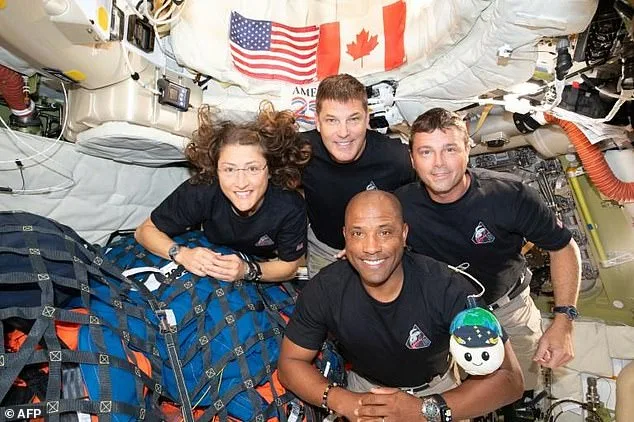
For the crew, the mission has already been a profound experience. They've shared photos of Earth rising over the Moon's horizon, a moment described as "Earthset," and spoken of the emotional weight of their journey. But as they prepare for the final leg of their trip, their focus remains on the task at hand: surviving the fiery plunge back to Earth. The success of Artemis II will not only mark a historic return to the Moon but also prove whether the heat shield can endure the ultimate test—a challenge that could determine the future of deep-space exploration.
NASA Administrator Jared Isaacman addressed a critical vulnerability in the Orion crew capsule during a recent press conference, acknowledging the absence of a contingency plan for potential failures. He emphasized that uneven heating of the spacecraft's heat shield could push localized temperatures to dangerous levels, risking structural integrity during re-entry. This admission highlights the razor-thin margin of safety in deep-space missions, where even minor deviations from expected conditions can escalate into life-threatening scenarios.
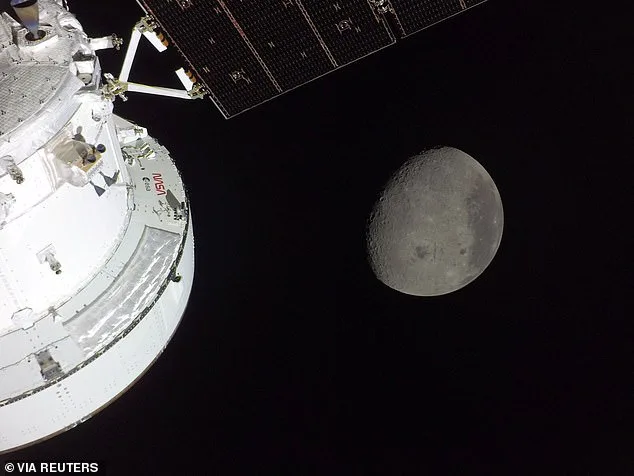
An image titled 'Earthset,' captured from the far side of the moon, offers a haunting perspective of Earth dipping beyond the lunar horizon. The photograph, taken during a test mission, underscores the vastness of space and the isolation astronauts face when venturing beyond low-Earth orbit. Such imagery serves as both a scientific record and a reminder of the psychological toll of extended missions, where the home planet becomes a distant memory rather than an immediate refuge.
Mission commander Reid Wiseman described the emotional weight of the journey during a press conference from space, stating, 'Human minds should not go through what these just went through.' His words reflect the profound psychological strain experienced by astronauts, who must process extreme physical and mental challenges in real time. Wiseman's emphasis on journaling and reflection suggests that the mission's legacy may extend beyond technical achievements, shaping future approaches to astronaut well-being.
Pilot Victor Glover echoed similar sentiments, revealing he had yet to fully process the experience of re-entering Earth's atmosphere while encased in a 'fireball.' He noted that the intensity of the descent would remain a defining memory for years. Such statements highlight the unquantifiable risks astronauts take, where the line between scientific progress and personal sacrifice becomes increasingly blurred.
NASA's stated goal to return a crew to the moon by 2028 carries significant geopolitical implications. With China targeting a lunar landing around 2030, the timeline pressures U.S. space agencies to accelerate development of the Artemis program. This race risks diverting resources from long-term sustainability efforts, such as establishing lunar bases or refining heat shield technology, to meet political deadlines. Communities reliant on NASA funding may face unintended consequences if short-term goals overshadow foundational research.
The heat shield issue, in particular, raises questions about risk management practices. While NASA has conducted extensive simulations, the real-world unpredictability of space travel means even the most rigorous planning cannot eliminate all hazards. This reality challenges the agency's public messaging, which often emphasizes the safety of missions while downplaying the inherent uncertainties. As the Artemis program advances, balancing transparency with public confidence will become a central challenge for NASA leadership.
Photos