Artemis II's Historic Splashdown: A Pivotal Step Toward Returning Humans to the Moon

The Artemis II mission is hurtling toward its climactic moment: a high-speed splashdown in the Pacific Ocean off the coast of San Diego. This event, set for April 11 at 00:07 GMT (8:07 PM ET on April 10), marks the first crewed lunar mission since Apollo 17 in 1972 and a pivotal test for NASA's future plans to return humans to the Moon. The spacecraft, named *Integrity* by its crew, will re-enter Earth's atmosphere at an astonishing speed of 23,800 mph (38,300 km/h), fast enough to traverse from New York to Tokyo in under 20 minutes. Yet, the splashdown is not just a spectacle—it's a critical demonstration of systems that will be essential for Artemis III and beyond.
NASA officials have emphasized the stakes involved. "To every engineer, every technician that's touched this machine—tomorrow belongs to you," said NASA Associate Administrator Amit Kshatriya during a mission update briefing. "The crew has done their part. Now we have to do ours." The success of the splashdown hinges on precise conditions: wave heights below six feet (1.8 meters), winds under 28.7 mph (46 km/h), and no rain or lightning within 30 nautical miles. Visibility must be clear for both tracking the spacecraft and recovering the crew, who will be extracted by helicopter and transferred to the USS *John P Murtha*, an amphibious ship leading the operation.
The journey back to Earth is a carefully choreographed dance of physics and engineering. Orion's service module has already begun using thrusters to adjust its trajectory, ensuring it aligns perfectly for re-entry. This is no small task: if the spacecraft hits the atmosphere at the wrong angle, it could either burn up or skip off into space. A final correction occurs hours before re-entry, after which the crew module separates from the service module. The latter will disintegrate upon re-entering the atmosphere, while the crew module's heat shield faces forward to endure temperatures exceeding 2,760°C (5,000°F).
The re-entry process itself is a brutal test of the spacecraft's design. As Orion plunges into the atmosphere, friction and air resistance will decelerate it from 23,840 mph (38,367 km/h) to about 325 mph (523 km/h) over 10–15 minutes. The most intense heat and pressure occur in the first few minutes, a phase NASA has described as "the most dangerous part of the mission." Once the spacecraft slows sufficiently, 11 parachutes will deploy in sequence, reducing its speed to about 20 mph (32 km/h) for a relatively gentle splashdown.
Behind the scenes, limited access to real-time data and recovery operations has heightened the tension. While NASA has shared public details about the mission's timeline and criteria, some specifics—such as the exact location of the splashdown zone or contingency plans for adverse weather—remain closely guarded. "We've done simulations for every possible scenario," said one recovery team member, who spoke on condition of anonymity. "But nothing prepares you for the real thing."
For those hoping to witness the event, live coverage will be available through NASA's official channels, including its website and social media platforms. The agency has also partnered with commercial broadcasters to provide in-depth analysis, though the viewing experience may vary depending on location. As the world waits for the splashdown, the mission stands as a testament to the collaboration between engineers, astronauts, and military personnel—a rare convergence of expertise that could redefine humanity's reach beyond Earth.
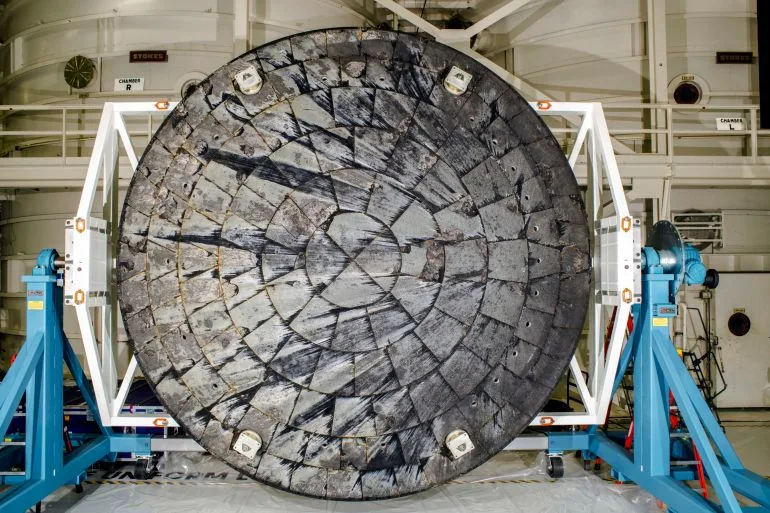
The heat shield, a marvel of materials science, is the unsung hero of this journey. Composed of a material called AVCOthane, it absorbs and radiates heat without transferring it to the crew module. Its integrity is paramount: any flaw could lead to catastrophic failure. Engineers have spent years testing its resilience under extreme conditions, but the true test will come during re-entry. As one team member put it, "This shield has to do the work of a thousand engineers in a matter of minutes."
With the Artemis II mission nearing its end, the focus shifts to ensuring a safe return—not just for the astronauts, but for the future of lunar exploration. The splashdown is more than a homecoming; it's a proving ground for technologies that will carry humans farther than ever before. And as the world watches, the stakes are clear: this moment could shape the next chapter of spaceflight history.
The Orion spacecraft's heat shield is no ordinary piece of technology. It's a lifeline, a last line of defense against temperatures hotter than molten lava. As the capsule plunges back into Earth's atmosphere from the moon, air molecules compress and ignite, creating a plasma wall that reaches 2,700°C—hot enough to vaporize steel. The shield, made of Avcoat, doesn't just block this heat. It burns, erodes, and carries the inferno away. If it fails, the astronauts inside are trapped. No escape. No chance.
NASA's Artemis I mission in 2022 was a test. The heat shield held, but engineers later discovered unexpected damage: pitting, missing sections, and material loss far beyond projections. The same design will be used for Artemis II, the first crewed flight. Experts like Charles Camarda, a former NASA astronaut, are alarmed. "I don't believe we should launch with the crew right now," he said before the mission. "NASA doesn't understand what caused the failure. The shield is deviant. They can't predict when it will fail." The stakes are clear: a single flaw could mean death for four astronauts.
NASA insists it now fully understands the shield's behavior. Replacing it would delay the mission by months, but engineers have found a workaround. By adjusting Orion's re-entry trajectory to be steeper and more direct, the spacecraft will pass through the hottest zone faster, reducing stress on the shield. Reid Wiseman, Artemis II's commander, says the new path is "safe." But the risks remain. No one can guarantee the shield won't crack under pressure.
As Orion re-enters, the blackout period begins. Superheated gas ionizes the atmosphere, cutting off all radio contact. For three to six minutes, mission control is blind. The astronauts are alone, trusting the shield to hold while their capsule screams through the sky at 28,000 km/h. Inside, the crew is strapped into their OCSS suits, their bodies bracing for the return to gravity. The silence is absolute.
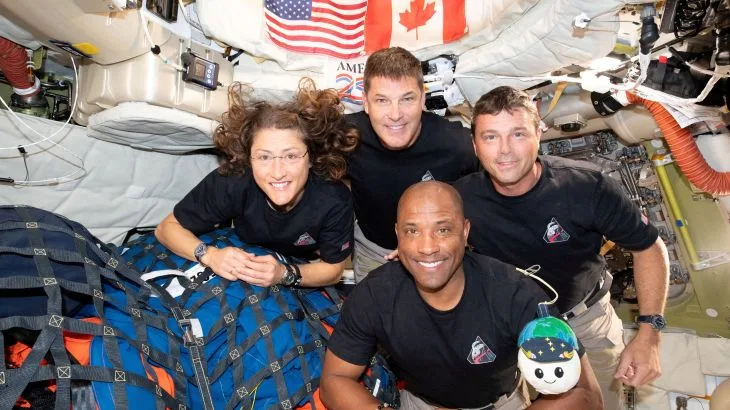
Then comes the descent. After the blackout, Orion is still too fast to survive a splashdown. A precise sequence of parachutes deploys: first small ones to stabilize, then three massive main chutes to slow the capsule. The timing is razor-thin. A miscalculation could mean a deadly crash.
NASA has mapped the final hours of Artemis II with military precision. At 15:35 GMT, the crew wakes for their last day. By 17:50, they secure the capsule and don their survival suits. At 18:53, thrusters fire for a final trajectory correction. Forty-two minutes before splashdown, the service module detaches. Every second is a countdown.
The world watches. For NASA, this mission is a test of engineering, trust, and the limits of human ingenuity. For the astronauts, it's a gamble with their lives. The heat shield is their only shield. And the clock is ticking.
The crew capsule begins its final descent, a sequence of events meticulously choreographed to ensure the safe return of the Artemis II astronauts. As the spacecraft reorients itself, its heat shield faces forward—a critical step in preparing for the violent friction of atmospheric entry. This moment marks the beginning of NASA's live coverage, a window into one of the most perilous phases of spaceflight. At 23:53 GMT, the capsule officially breaches Earth's atmosphere, initiating a descent that will test the limits of engineering and human endurance. The transition from the vacuum of space to the dense layers of the atmosphere is abrupt, triggering a cascade of physical and thermal challenges that must be managed with precision.
A brief but critical period follows: communication blackout. Between 23:53 and 23:59 GMT, the spacecraft vanishes from Earth's reach. The intense heat generated during re-entry ionizes the air around the capsule, creating a plasma sheath that scrambles radio signals. This temporary silence, though disconcerting for mission control and the public, is a necessary consequence of the physics involved. It underscores the limited, privileged access to information during such high-stakes moments, where even the most advanced systems must yield to the raw forces of nature.
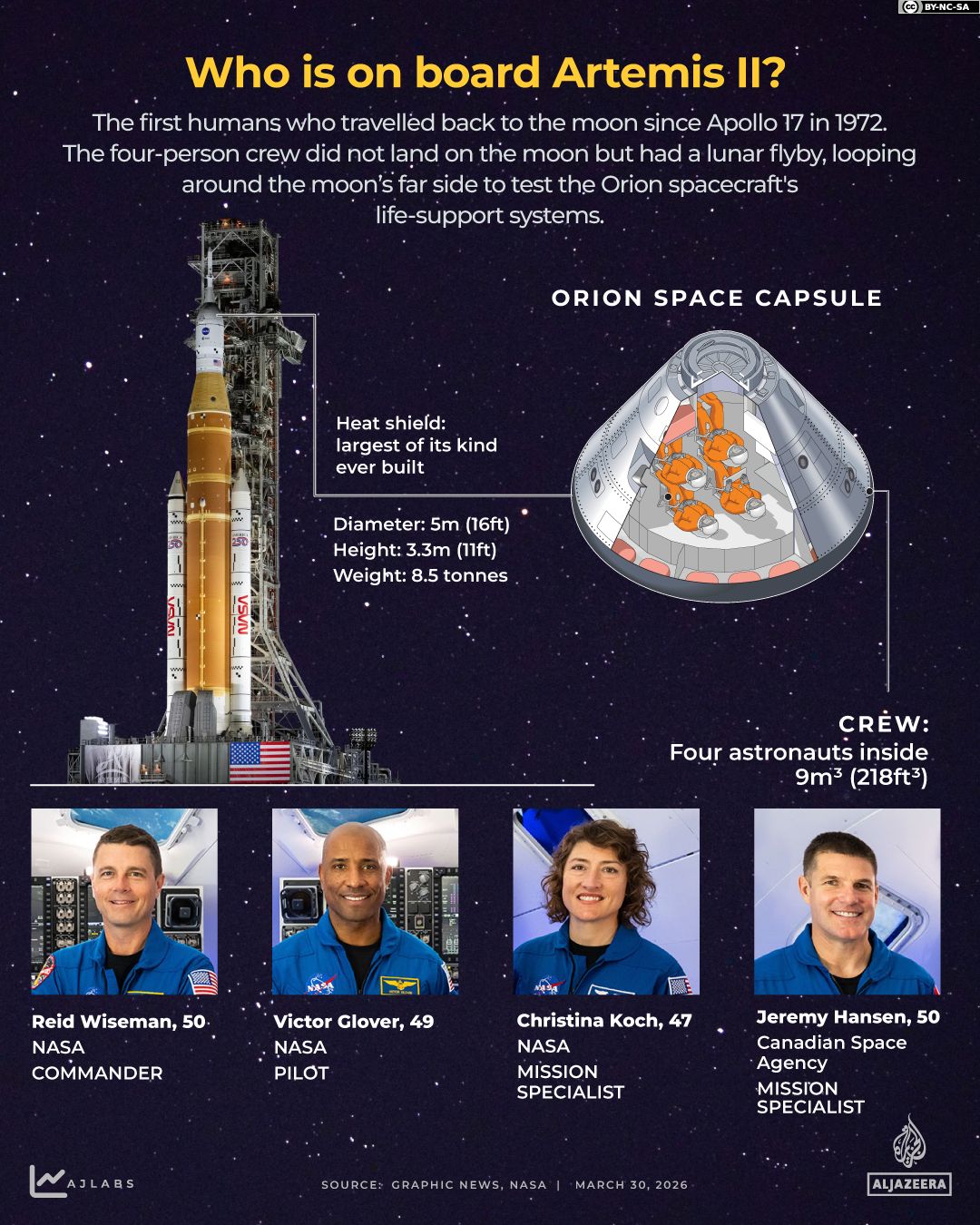
At 00:07 GMT, the capsule splashes down in the Pacific Ocean, its descent slowed by a series of parachutes that transform the spacecraft's velocity from thousands of kilometers per hour to a gentle landing. Recovery teams from the USS John P Murtha spring into action, navigating the vast expanse of the ocean to locate and retrieve the capsule. The operation is a blend of technology and human coordination, with helicopters, boats, and divers working in unison to ensure the crew's safety. This phase of the mission highlights the reliance on government-directed logistics and the tight integration between military and civilian agencies.
Within two hours of splashdown, the astronauts are extracted from the Orion capsule and transported to the USS John P Murtha. Here, they undergo medical evaluations—a routine but vital process that monitors their physical condition after prolonged exposure to microgravity. These checks are not just about health; they are a testament to the rigorous protocols in place to safeguard astronauts during re-entry. The data collected during these assessments is shared with the public through NASA's media channels, offering a glimpse into the behind-the-scenes work that ensures the crew's well-being.
The return to Earth is not merely a technical feat but an emotional journey for the astronauts. As they prepare for the descent, their reflections reveal the profound impact of spaceflight on the human psyche. Pilot Victor Glover, for instance, spoke of the weight of responsibility and the significance of bringing back data and stories from the mission. "Riding a fireball through the atmosphere is profound," he remarked, capturing the duality of the experience—both a test of engineering and a moment of awe.
For astronaut Jeremy Hansen, the journey has reshaped his perspective on Earth's fragility. His words echo a sentiment shared by many astronauts: the realization that our planet is a rare and precious place in the cosmos. "We're very fortunate to live on planet Earth," he said, emphasizing the need for collective action to preserve it. Commander Reid Wiseman's account of watching Earth disappear behind the moon further illustrates the emotional toll and transformative power of space travel. His hope that the mission would inspire a global moment of reflection on Earth's beauty and vulnerability resonates with the broader mission of Artemis II.
These narratives, shared publicly through NASA's broadcasts, bridge the gap between the technical and the personal. They remind the public that space exploration is not just about science and technology but also about the human experience. The limited access to information during critical phases like re-entry contrasts with the open sharing of these emotional insights, creating a unique dynamic between secrecy and transparency. The astronauts' voices, though filtered through the constraints of mission protocols, offer a rare and powerful connection to the challenges and triumphs of spaceflight.
The splashdown and recovery process, while routine in execution, are imbued with symbolic meaning. They represent the culmination of years of preparation, the collaboration between agencies, and the enduring human drive to explore beyond our world. As the Artemis II crew returns to Earth, their journey serves as both a scientific milestone and a reminder of the shared responsibility to protect the only home we have.
Photos