Artemis II Astronauts to Reveal Mare Orientale's Secrets in Historic Lunar Observation

Astronauts aboard NASA's Artemis II mission are poised to witness a moment that could redefine humanity's understanding of the Moon—and itself. As the spacecraft prepares to transit the Moon's far side, the crew will become the first humans to see the enigmatic Mare Orientale in direct sunlight, a feature that has long eluded clear observation from Earth. This is not just a scientific milestone; it is a deeply personal journey for the four astronauts, who will be cut off from mission control and left to grapple with the vastness of space as the Mare Orientale looms before them. The crater, a 200-mile-wide scar from an asteroid impact 3.7 billion years ago, will be illuminated by the Sun, revealing details that have never been seen by human eyes.

The Mare Orientale is no ordinary lunar feature. Formed by an asteroid striking the Moon at nine miles per second—three times the velocity of the object believed to have caused the dinosaur extinction—it created a bullseye-like structure. At its heart lies a massive crater, encircled by concentric mountain ranges formed by debris from the impact. Apollo astronauts glimpsed it in the 1970s, but their vantage point was too low, and the lack of sunlight left their images grainy and monochrome. Now, Artemis II will have a view unmarred by shadows. The Sun's direct overhead position will illuminate the crater's ridges and valleys, offering a glimpse into a collision that shaped the Moon's surface in ways that scientists have only theorized.
This moment is not just about sight—it is about perspective. The Moon's tidal locking, a phenomenon caused by Earth's gravitational pull, ensures that only one side of the Moon ever faces Earth. This "dancer circling, but always facing its partner" effect has left the Mare Orientale hidden for most of human history. Only during rare libration events, when the Moon's axis wobbles slightly, does the crater peek into view as a faint, shadowy smear. Artemis II's passage will bypass these limitations, allowing the crew to study the Mare Orientale in unprecedented clarity. For mission specialists Christina Koch and Jeremy Hansen, commander Reid Wiseman, and pilot Victor Glover, this will be a moment of profound solitude and awe, as they drift in the void with no communication from Earth.
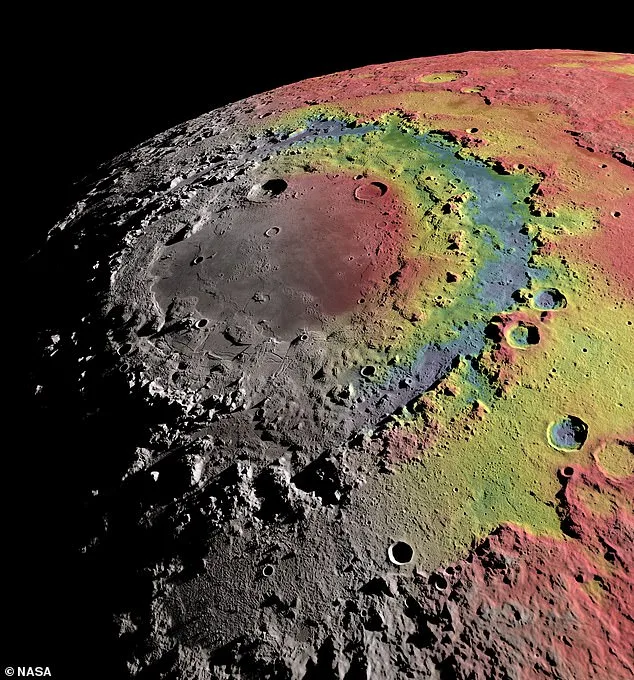
The scientific stakes are immense. The Mare Orientale's craters may hold clues to the Moon's violent past—and perhaps even to the origins of life on Earth. Some theories suggest that an asteroid impact similar to the one that formed the Mare Orientale could have scattered organic materials across the solar system, seeding planets with the building blocks of life. Koch, who has described the Moon as a "witness" to Earth's history, emphasizes that studying its surface can reveal how planets form, how life might emerge, and how the solar system has evolved. As Artemis II's crew prepares to cross into the Moon's shadow, they are not just observers—they are explorers standing on the edge of a cosmic mystery that has waited billions of years to be seen.
Photos