Arsenal's Narrow 1-0 Win Over Sporting Lisbon Sparks Hope and Concerns Over Consistency

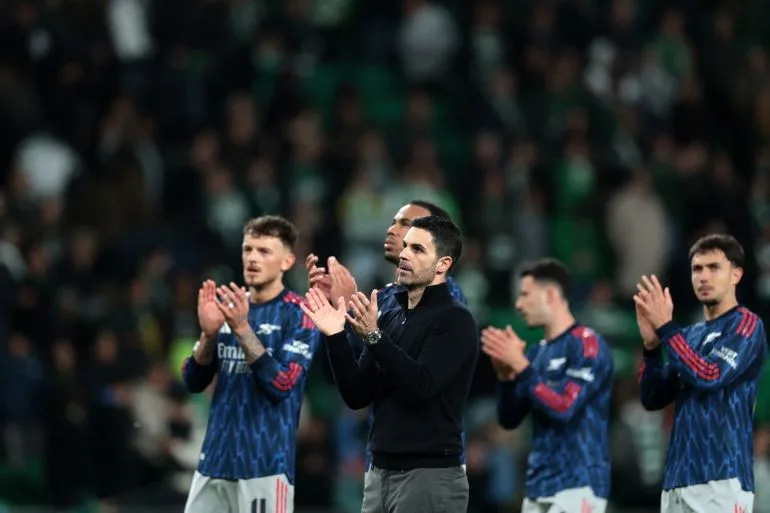
Arsenal's 1-0 win over Sporting Lisbon in the UEFA Champions League on Tuesday offered a glimmer of hope for their quadruple ambitions but left fans and analysts questioning the team's consistency. The Gunners, who had suffered back-to-back defeats in the League Cup final against Manchester City and the FA Cup quarterfinals against Southampton, edged past the Portuguese side with a late goal from Kai Havertz. Despite the victory, the match exposed cracks in Arsenal's performance, with Sporting Lisbon dominating possession and creating more scoring chances. The visitors had 10 shots on target compared to Arsenal's seven, highlighting a troubling trend for a team that has long prided itself on attacking football.
The result keeps Arsenal's Champions League hopes alive, but the second leg in London next week will be a crucial test. The Gunners, currently leading the Premier League by nine points with seven games remaining, face mounting pressure as they aim to end their 22-year wait for a top-flight title and secure a first European Cup in their history. However, this week's performance against Sporting Lisbon—where they struggled to break down a side that had previously been eliminated by Bodo/Glimt—raises concerns about their ability to handle high-stakes matches. Arteta's side had previously routed Sporting 5-1 in the Champions League group stage, but the current iteration of the Portuguese club, playing in a tight race for the Primeira Liga title, proved a far tougher opponent.
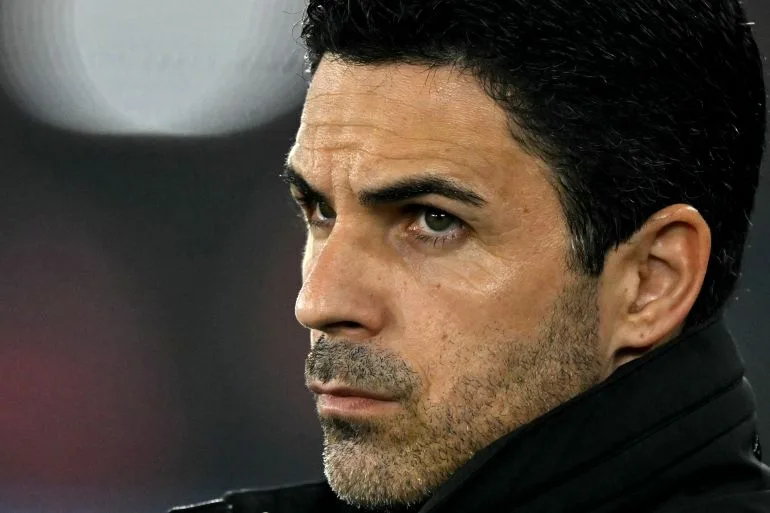
Mikel Arteta's leadership has come under scrutiny as the pressure mounts. The Spaniard, known for his fiery demeanor on the touchline, has faced criticism from within the club about his intensity during critical moments. While Arteta insists the team must "live in the present" and "deliver every day," some Arsenal figures believe his emotional volatility could be a liability. This tension is evident as the squad navigates its first significant slump of the season, with fans growing anxious about the club's ability to finally secure a trophy after a decade-long drought. The north Londoners last won silverware in the 2020 FA Cup, and their current run of form has reignited doubts about whether they can break the cycle.
Arteta, however, remains steadfast in his belief that the team can handle the pressure. He emphasized that challenges are inevitable when competing at the highest level, citing the "question marks" that have followed the squad since the start of the season. "There's always going to be a question mark," he said before the Lisbon match, "but that's part of playing for this club." His confidence is bolstered by the fact that Arsenal have won all but one of their Champions League games this season, but the recent losses have forced a reckoning. The 1-0 win, while necessary, may not be enough to silence critics who argue that the Gunners' inconsistent performances could derail their quadruple bid.
The road ahead is fraught with challenges. With the Premier League title still within reach, the FA Cup and Champions League still in play, and the Community Shield looming, Arsenal's ability to maintain focus will be tested. Arteta's intensity—whether seen as a driving force or a potential hindrance—will likely shape the outcome of this pivotal phase. For now, the Gunners cling to hope, but the cracks in their performance suggest that the battle for silverware may be far from over.
Christian Norgaard's words on Monday offered a glimpse of resilience in a season that has tested Arsenal's patience. The Danish midfielder, speaking ahead of the crucial Champions League clash with Sporting CP, urged his teammates to channel frustration into focus. "The message is to have a positive body language, to talk with your teammates, with the coaching staff," he said, his voice steady despite the weight of recent setbacks. "Now is not the time to go with our heads down for too long." His remarks, delivered with the calm of someone who has weathered storms before, seemed to resonate with fans and officials alike—those who had grown anxious about Mikel Arteta's leadership amid a late-season slump.
Arteta, ever the pragmatist, acknowledged the pain of consecutive defeats but framed it as a necessary crucible. "What you have to be is clear," he told reporters, his tone resolute. "Instead of panic, understand if that happens, why it happened, and bring clarity. And when you analyse that and you accept that, you will be better." His words carried the weight of a manager determined to steer his team through the chaos. Yet, even as he spoke of "perspective" and "using pain to improve," there was an unspoken tension in his voice—a recognition that this season's promise had been derailed by a string of near-misses.
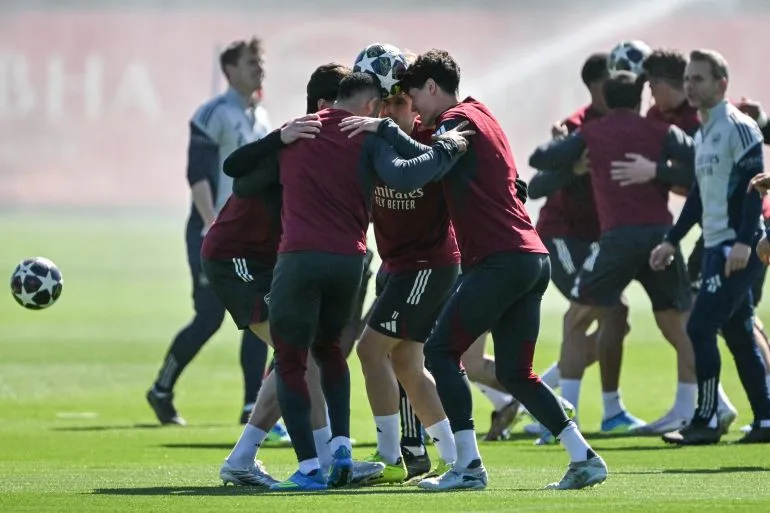
Behind closed doors, the players were working to recalibrate. On Monday, footage emerged of Arsenal's squad engaging in team-building exercises during training, their usual drills punctuated by moments of camaraderie. It was a calculated move, an attempt to rekindle the unity that had defined their rise to prominence. Goalkeeper David Raya, whose commanding performance in the recent match had drawn praise, spoke with unshakable conviction. "We absolutely believe [we can win the Champions League]," he said. "If you don't believe, you are never going to win it, no matter what you go through." His words were a reminder that for all the self-doubt, there was still a core of faith in the squad's ability to rise.
Yet, for all the optimism, Arteta's post-match reflection hinted at lingering doubts. "I'm very happy to win away in the quarterfinal of the Champions League," he said, his smile thin. "When we got into the final third, we needed to be crisper and more efficient." The manager's praise for the team's identity was tempered by a stark acknowledgment of shortcomings. "We lacked the final pass," he admitted, "but a clinical moment won it for us in the end." His message was clear: this was not just about individual brilliance, but about collective resolve. "Everyone has to make an impact," he said. "We need the big players to turn up and win us the game."
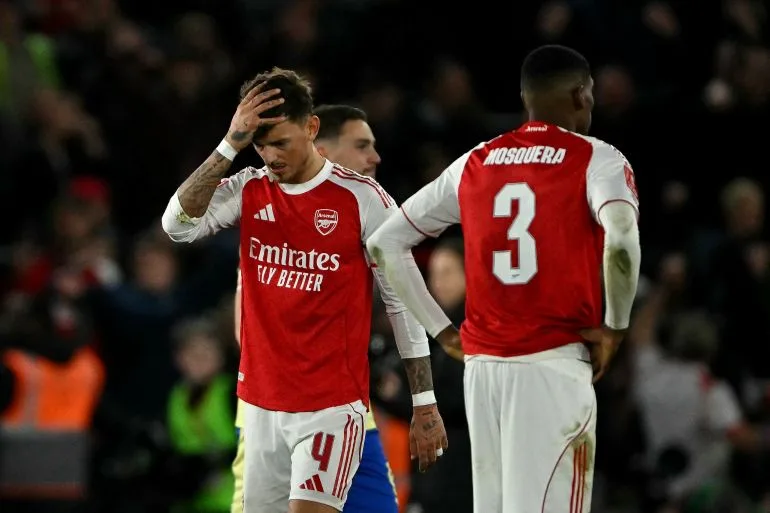
The question that lingers is whether Arsenal can finally break the curse of near-misses. For years, the club has been haunted by the specter of late-season collapses, a pattern that has left fans divided between hope and frustration. Arteta's identity-driven philosophy—emphasizing structure, discipline, and collective effort—has been both a strength and a vulnerability. While it has transformed Arsenal into a more cohesive unit, it has also exposed gaps in moments of high pressure. "We had to reveal ourselves today," Arteta said, his words a mix of pride and caution. "I talk a lot about identity, and we saw that tonight."
As the Champions League journey continues, the stakes could not be higher. For Arsenal, this season represents more than just silverware—it's a chance to redefine their legacy. Whether they can rise to the occasion remains to be seen, but one thing is certain: the North Londoners are no longer content with almost. The real Arsenal, as Raya put it, is still out there, waiting to prove that this time, the pain will lead to triumph.
Photos