Antarctica Glacier Could Raise Sea Levels Twice As High as Expected
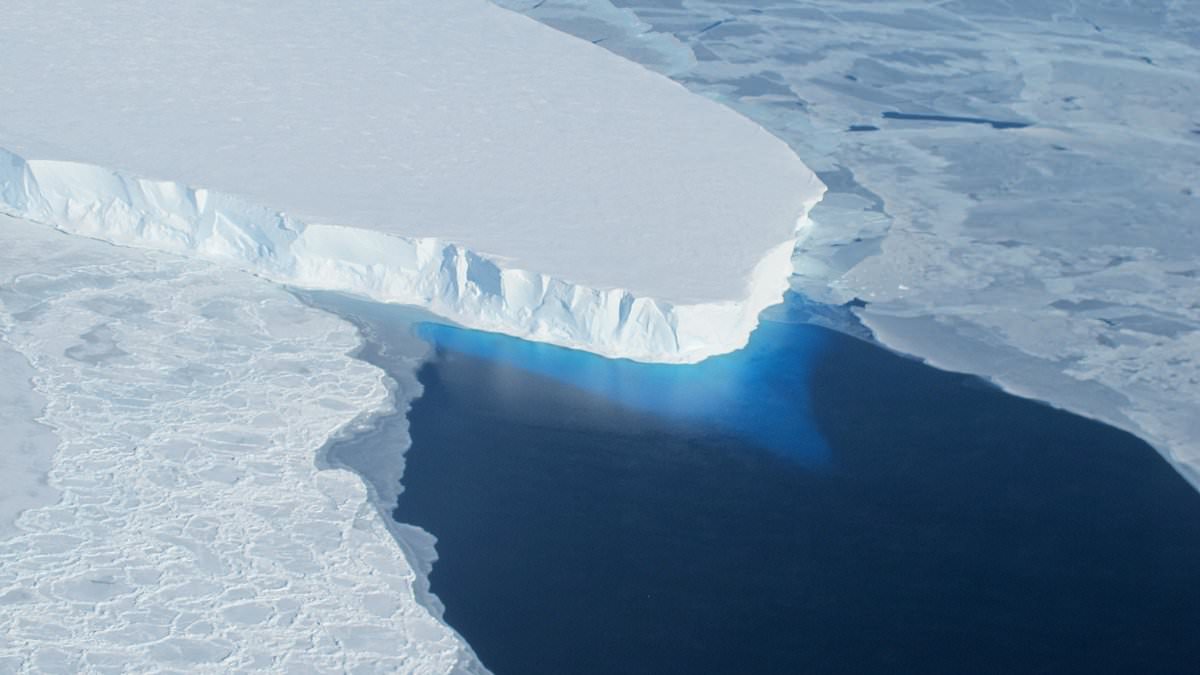
Scientists have just discovered a grim truth about Antarctica's Doomsday Glacier. It is far more dangerous than anyone realized. The new study reveals that sea levels could climb twice as high as previous guesses suggested.
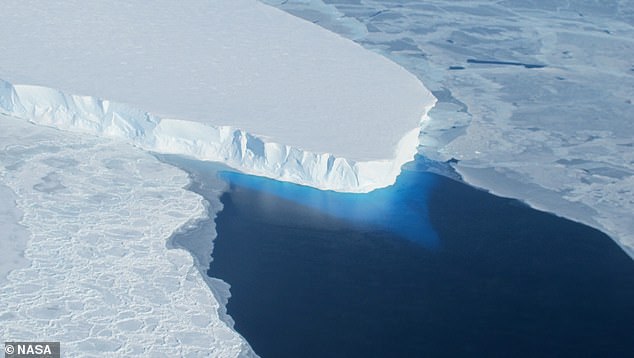
Located in western Antarctica, the Thwaites Glacier spans an area bigger than Great Britain itself. Think of it as a massive river of ice flowing toward the ocean. A total collapse would dump enough water to raise global seas by 26 inches or 65 centimeters. Coastal cities worldwide face real danger from such a disaster.

Experts do not think this total failure is happening right now. Yet, the glacier is speeding toward that fate. New data shows warm ocean waters are eating away at its base much faster than expected. This process could push sea levels up by 1.2 inches or 30mm before the year 2100 arrives. That number doubles what we thought was possible.
The reason for this shift lies in a better look beneath the ice. Researchers built a new model using more accurate physics. Co-author Professor Eric Rignot from the University of California explained why old projections failed. 'Most projections to date have struggled to match the rapidity of the mass loss because of missing physics,' he said. He noted their new approach fixes these gaps. 'Our new model with more complete physics can match the record and then produces projections that are twice as large as before.' The result? Greater risk of flooding in coming decades.
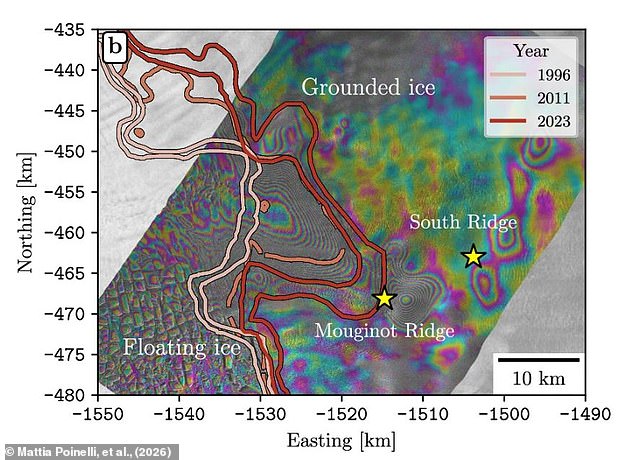
Satellite eyes have watched the Thwaites Glacier thin and retreat at an alarming pace for years. Old computer models could not keep up with reality. They predicted slow movement, but scientists observed rapid acceleration instead. Now a team led by Professor Rignot published their findings in Nature Communications. Lead author Dr Mattia Poinelli of UC Irvine highlighted a key misunderstanding in the field. 'Glaciologists have long based their assumptions of ice sheet dynamics on the "grounding line",' he explained. This concept refers to a narrow strip where ice leaves land and starts floating.
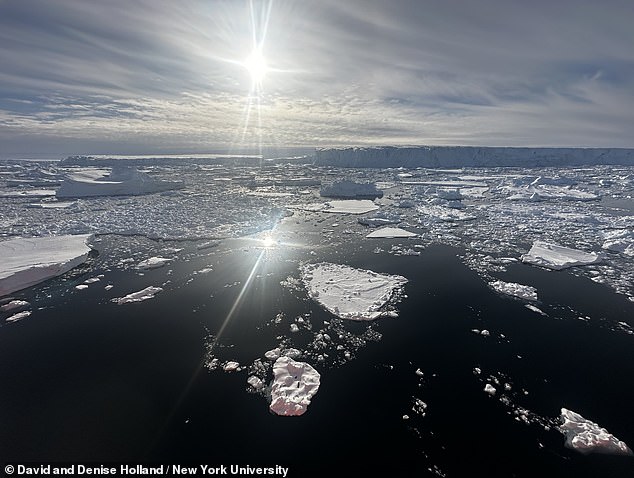
They had to change that view completely. Satellite images show glaciers end in a much larger area called a grounding zone. Warm water seeps deep underneath this wide zone and triggers fast melting. New estimates from the University of California confirm the stakes are higher than we feared. The Thwaites Glacier will contribute significantly more to rising seas by 2100 than anyone predicted yesterday.
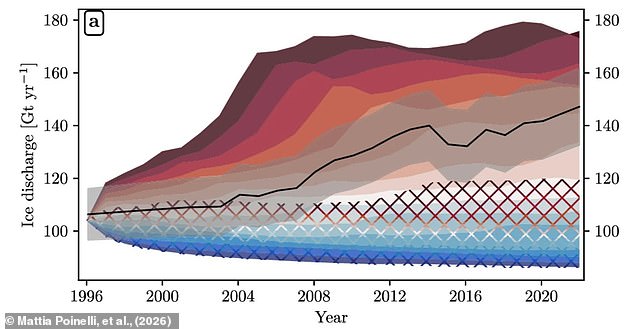
New data from Finland reveals how icebergs are breaking away from Thwaites Glacier with terrifying speed. Researchers analyzed signals sent by the ICEYE satellite constellation to track tiny shifts in the frozen surface. The results show that warm seawater penetrates several miles beneath the grounded ice, lifting it up during daily tidal cycles. As this lift occurs, the grounding zone flushes with pressurized water pushed toward Antarctica by currents already twisted by climate change. Using these fresh observations to build models for Thwaites' future behavior, scientists found the glacier will melt much faster than anyone thought possible. They reconstructed historical changes from the 1990s through today and discovered reality is four times more severe than traditional models predicted. A major worry is that these grounding zone processes are accelerating the detachment of Thwaites Glacier from its stabilizing ridges right now. Currently, the Doomsday Glacier's flow into the ocean stays held back by critical points where ice attaches to elevated seabed features like the vital Mouginot Ridge. However, water forced up and under the ice melts away that grounding connection at an alarming rate. Scientists say this increased loss happens because we finally understand how water moves beneath the glacier across a wide area known as the grounding zone, causing rapid melting. The fear is these effects will push the glacier to detach from its anchor point at Mouginot Ridge, triggering even more rapid collapse soon. According to their new model, there is now a 60 per cent chance Thwaites becomes disconnected from the Mouginot Ridge by the end of this century. Dr Poinelli states clearly that once that ridge unpins, the glacier will continually retreat across a predominantly retrograde seafloor toward its next topographic high, the South Ridge. This warning follows studies suggesting the Thwaites Glacier is close to losing its entire ice shelf in the coming year or so. The Thwaites Eastern Ice Shelf acts as a wall of ice attached to the eastern flank, holding back the flow of ice into the sea. This supporting barrier stands over 1,150ft thick and covers 580 square miles, roughly the size of Greater London. However, warming oceans in Antarctica are thinning this frozen bulwark at an alarming rate right now. Speaking in May, Dr Robert Larter from the British Antarctic Survey warned that shelf breakup is very likely to happen sometime this year.
Photos