Andrew Mountbatten-Windsor's Isolation Deepens as Royal Family Excludes Him from Easter Traditions Amid Investigation

Andrew Mountbatten-Windsor was spotted today driving through the Sandringham estate in Norfolk, his expression a mixture of resignation and solitude. The former prince, who has been under investigation for alleged misconduct in public office since his arrest in February, now finds himself isolated from the traditional rituals of the royal family. As Easter approaches, the 66-year-old is expected to spend the holiday in seclusion at his temporary residence in Wolferton, far removed from the grandeur of Windsor Castle. His presence at the Royal Family's Easter Sunday service has been ruled out, a decision that underscores the widening rift between him and the institution he once represented.
The Sandringham estate, a sprawling 20,000-acre property that has long been a private retreat for the royal family, now feels more like a gilded cage for Andrew. He was photographed behind the wheel of his Range Rover, wearing a maroon cable-knit jumper, with his security guard seated beside him. The image captures a man adrift, his once-privileged life now tethered to the scrutiny of public and private investigators alike. Since his arrest on February 19—his 66th birthday—Andrew has been living at Wood Farm in Wolferton while renovations continue at his intended new home, Marsh Farm. The estate's builders have been working around the clock to prepare the property, installing luxury carpets, a Sky satellite dish, fast broadband, and a 6ft security fence. Yet, despite these modern comforts, the air of isolation remains palpable.
Hundreds of boxes labeled "HRH" have been delivered to Marsh Farm in recent weeks, a stark reminder of the life he is trying to rebuild. These boxes, containing personal effects and memorabilia, are a symbol of both his past and the uncertainty of his future. Meanwhile, the absence of Andrew from the royal family's Easter plans has sent ripples through the household. His daughters, Princess Beatrice and Princess Eugenie, have reportedly made "alternative plans" for the holiday, a move that has raised questions about their relationship with their father. Sources close to the family insist that the two princesses remain integral to the royal narrative and will be "seen" at future events, but their absence this year marks a departure from tradition.
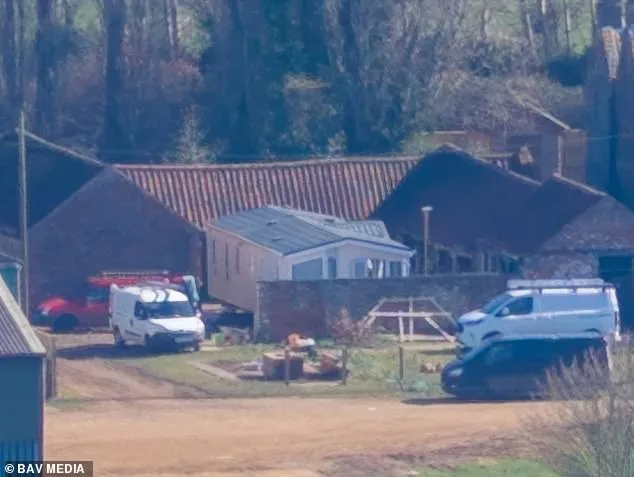
The Royal Family's Easter service, typically attended only by immediate members of The Firm and their partners, will proceed as usual. King Charles and Queen Camilla are expected to join the King and Queen at Windsor Castle, a move that has delighted royal fans who have grown weary of previous absences. Whether other senior royals, such as Zara and Mike Tindall or Peter Phillips and Harriet Sperling, will attend remains uncertain. For Andrew, however, the holiday will be a quiet one. His security detail now resides in a second-hand static caravan delivered to his Norfolk home last week. The £26,000 Willerby Meridian Lodge, propped up on bricks in his garden, bears signs of moss and lacks the opulence of the main residence. Inside, the caravan is a stark contrast to the grandeur of royal life: brown or grey carpets, vinyl flooring, and faux-wood countertops dominate the space. A source revealed that Andrew has taken to using the caravan himself, finding solace in its simplicity.
The caravan's presence at Marsh Farm is a telling detail. Paid for by funds from King Charles, it serves as both a practical solution and a symbol of Andrew's diminished status. The unit, a no-frills two-bedroom model, features a compact kitchen with a metal sink and a small, grey-painted living area. Yet, according to insiders, Andrew has embraced the change, even expressing a surprising fondness for the space. "He really is a changed man; he's enjoyed sitting in the caravan," one source said. "It's novel for him." This admission hints at a transformation, though whether it is genuine or a calculated attempt to manage public perception remains unclear.
In recent weeks, Andrew has been spotted inspecting horses near his home, despite being advised to avoid such activities. Aides reportedly feared that any display of enjoyment during his ongoing investigation would be "a bad look." This tension between his private life and public scrutiny is evident in the details of his daily routine. Before moving to Sandringham, Andrew was regularly seen horse-riding around Windsor, a habit that ended abruptly after his arrest. On January 31, he was photographed smiling and waving at the public near Royal Lodge, a gesture that drew immediate criticism. Two days later, he was seen driving his Range Rover, his demeanor unchanged despite the looming investigation.
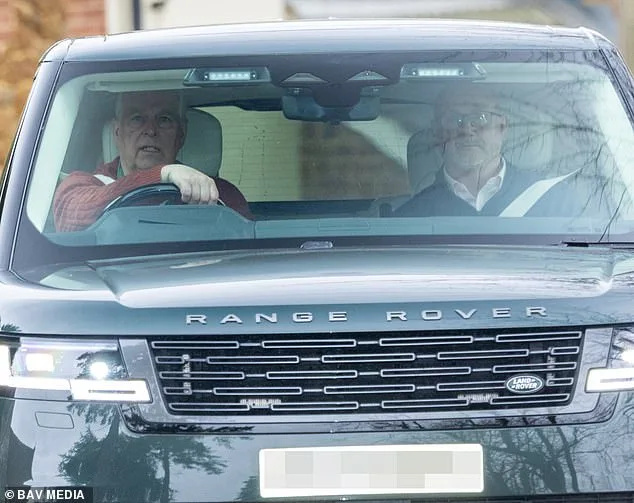
The contrast between his past and present is stark. Once a figure of royal privilege, Andrew now navigates a life marked by legal uncertainty and social exile. The Sandringham estate, once a symbol of his connection to the monarchy, now feels like a place of exile. As builders complete work at Marsh Farm and the caravan stands as a temporary refuge, the question remains: will this be a turning point for Andrew, or merely another chapter in a saga that has already strained the fabric of the royal family? For now, the answer lies in the solitude of Norfolk, where the former prince continues to face the consequences of his actions.
Insiders suggested the photographs may have been the 'final straw' in what has been a turbulent few months for the shamed former royal. The images, reportedly capturing Andrew in a compromising situation, have reignited public scrutiny and raised questions about his ability to navigate a world that has grown increasingly hostile toward him. How could one moment tip the scales after months of whispered rumors and public apologies? The answer, perhaps, lies in the timing and the context of the photos, which seem to have exposed vulnerabilities long hidden behind layers of security and protocol.
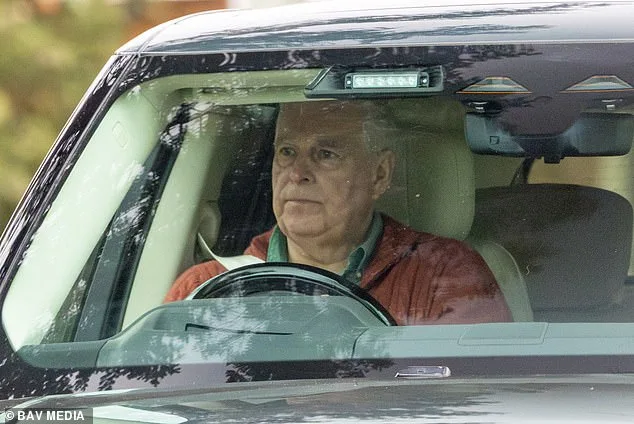
Last week, Andrew was also spotted driving from Wood Farm, across the fields to Marsh Farm with his security guard and dog to inspect the property. This movement, seemingly mundane, has sparked speculation about his intentions. Is this a strategic retreat, a bid to reclaim privacy, or a sign of deeper financial or legal pressures? The choice of Marsh Farm, a property long associated with the royal family, adds another layer of complexity. What does it mean for Andrew to be there now, when the world has turned its back on him?
The impact on nearby communities cannot be ignored. Locals have watched the drama unfold with a mix of curiosity and concern. Some worry about the disruption to their quiet lives, while others see an opportunity for tourism or media attention. What happens when the private becomes public, and how do those living in the shadows of fame adapt? The risks are clear: increased scrutiny, potential safety issues, and the erosion of the very privacy that once shielded these estates from the outside world.
For Andrew, the stakes are personal. Every step he takes now is a negotiation between dignity and disgrace. The photographs, the farm visits, and the whispers of scandal all point to a man grappling with a legacy that no amount of wealth or influence can fully protect. Can he reconcile his past without being consumed by it? Or will the weight of history continue to define him, long after the headlines fade?
Photos