Ancient Marble Artefact in Israel Could Redefine Early Christian Baptismal Practices

A rare marble artefact uncovered in the ancient city of Hippos, Israel, may force historians to reconsider long-held assumptions about the origins of Christian baptism. The discovery, made during excavations near the Sea of Galilee, challenges traditional interpretations of early Christian ritual practices and could reveal a forgotten stage of baptismal rites. This region, often referred to as the "cradle of Christianity," was central to Jesus' earthly ministry, making it a pivotal location for understanding the development of early Christian traditions.
The artefact, a marble object featuring three hemispheric cavities, was found near the remains of a cathedral in Hippos. Researchers believe the cavities once held three distinct oils used during baptism. Traditionally, Christian baptism has involved anointing with two oils—one before immersion in water and another after. However, the presence of three cavities suggests a different practice may have existed. Dr. Michael Eisenberg of the University of Haifa, who led the study, emphasized the significance of the find. "Only after careful research did we realize how unique they are for understanding Christian ritual practices in the cradle of Christianity by the Sea of Galilee," he said.
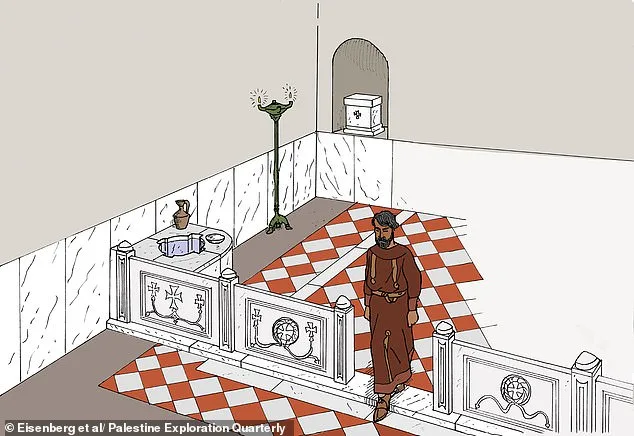
The discovery dates back approximately 1,300 years and is described as the only known example of its kind. The team's analysis, published in the *Palestine Exploration Quarterly*, proposes that the cavities may have held three different oils, corresponding to a three-phase anointing process during baptism. This would align with historical accounts of varying regional traditions, though no written records explicitly mention the use of three oils in early Christian rites. The artefact's presence in Hippos—a city with a well-documented history of early Christian activity—adds weight to the theory that such practices may have been more widespread than previously believed.
The excavation focused on a hall annexed to the south of the cathedral, a space researchers believe was used for baptisms. This hall, partially preserved, contained a second baptismal font within the cathedral, making it the only known church with two designated baptismal areas. The smaller hall, with its marble-inlaid floor and decorated slabs, may have been used for infant and child baptisms, while the larger cathedral space could have served adults. Such a division of function suggests a sophisticated understanding of ritual space in early Christian communities.
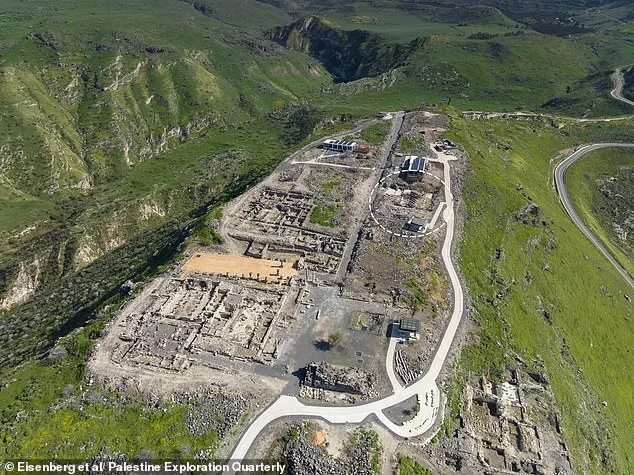
Among other notable finds were a bronze candelabrum—the largest of its kind discovered in Israel—and a marble reliquary, also the largest of its type in the country. These items, along with the baptismal artefact, provide a rare glimpse into the material culture of Hippos' Christian community during the Byzantine period. The hall was destroyed by an earthquake in 749 AD, which buried the artefacts beneath rubble. This natural disaster, paradoxically, preserved the objects for over 1,200 years, allowing modern researchers to study them in remarkable detail.
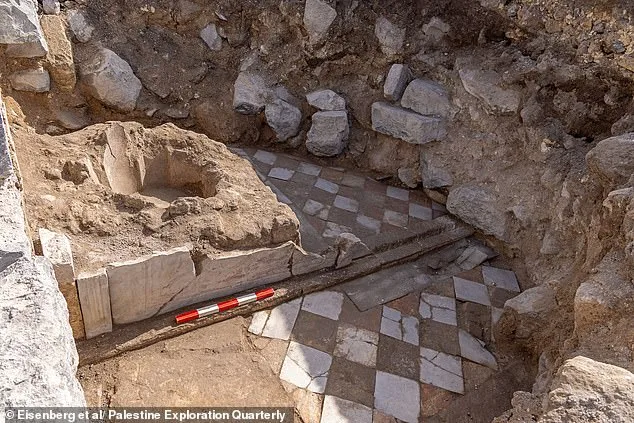
Dr. Eisenberg noted that baptism was a cornerstone of early Christian life, evolving significantly over time. "In different regions, distinct liturgical traditions developed, many of which are not documented in written sources," he explained. The Hippos discovery fills a critical gap in the historical record, offering tangible evidence of how local communities adapted and practiced Christian rites. This finding not only reshapes our understanding of baptism but also highlights the diversity of early Christian traditions, which may have been far more varied than previously assumed.
The implications of this discovery extend beyond religious history. By revealing a potential shift in baptismal practices, the artefact underscores the importance of archaeological evidence in reconstructing the past. It also invites further exploration of other sites in the region, where similar unrecorded traditions may still lie buried. As researchers continue to analyze the findings, the story of early Christianity—and the rituals that defined it—may become even more complex and nuanced.
Photos