Al Jazeera Correspondent Mohammed Wishah Killed in Gaza Drone Attack, Shocks Journalistic Community

Mohammed Wishah's death on Wednesday sent shockwaves through the journalistic community in Gaza, marking yet another grim chapter in the ongoing conflict. The 37-year-old Al Jazeera Mubasher correspondent was killed when an Israeli drone fired a missile directly into his car as he drove along the al-Rashid coastal road near Gaza City. The attack occurred hours after he had joined fellow journalists in a makeshift tent near al-Shifa Hospital, a gathering that had become a routine for reporters covering the war's relentless destruction. Colleagues described the group as a close-knit circle of friends, bound by shared trauma and the unrelenting demands of their work. "We used to turn to him for every detail of the work and coverage," said Talal al-Arouqi, a fellow Al Jazeera correspondent. "He was sincere and kind. Everyone here loved Mohammed."
The funeral procession began Thursday morning, with dozens of journalists, family members, and mourners assembling at Al-Aqsa Martyrs Hospital in Deir el-Balah. The atmosphere was heavy with grief, as colleagues recounted Wishah's unwavering dedication to his craft. Born in 1986 in the Bureij refugee camp, Wishah had spent over a decade reporting for Al Jazeera Mubasher, a role that placed him in the crosshairs of Israeli military operations. His colleagues noted that he often slept in tents with other journalists, avoiding his home to minimize risks to his family. "He was forced to stay away from his home and family due to the incitement campaign against him," al-Arouqi said. "He faced intense work pressure and knew the risks of his job."
Wishah's killing adds to a growing list of Al Jazeera journalists targeted by Israeli forces since the war began in October 2023. He is the 12th media worker from the network to be killed, following the assassinations of colleagues like Anas al-Sharif and Mohammed Qreiqeh. Both men were accused without evidence of being Hamas members, a pattern al-Arouqi believes Israel has repeated in targeting journalists. "These incitement campaigns against journalists are deliberate," he said. "They create a climate where media workers are seen as enemies, not reporters."
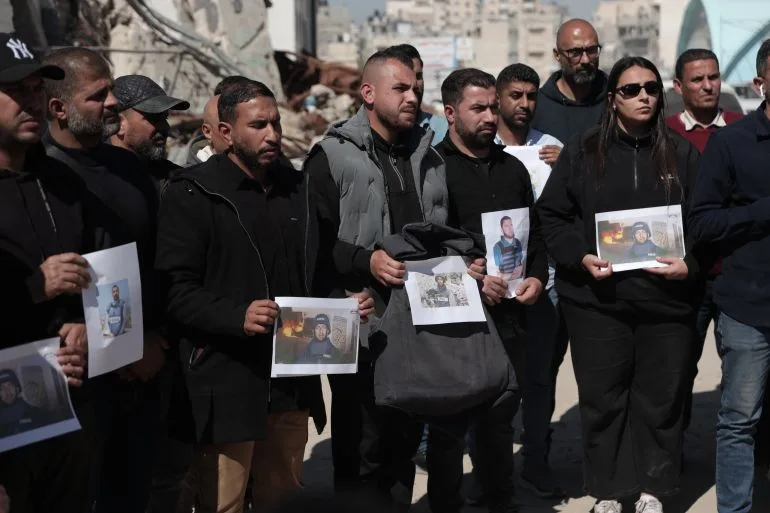
The broader toll on Gaza's media community is staggering. Palestinian authorities report that 262 media workers have been killed by Israeli forces since the war began, a figure that includes photographers, cameramen, and editors. Abdullah Miqdad, a correspondent for Al Araby TV, called for international accountability, emphasizing that "these operations targeting journalists would not continue if there were legal consequences for Israel." He urged global institutions to enforce international humanitarian law, which mandates protection for media workers in conflict zones. "Mohammed and others are protected under this law," Miqdad said. "There must be real action to stop their targeting."
As the war drags on, the deaths of journalists like Wishah underscore the perilous reality faced by those documenting the crisis. For al-Arouqi and others, his loss is not just a personal tragedy but a symbol of the systemic violence against press freedom in Gaza. "Everyone here cried in grief and heartbreak over him," he said. "He was a colleague, a brother, and someone loved by everyone. Everyone was devastated and shocked by the news of his killing.
The names of those killed in the ongoing conflict in Gaza have been etched into the collective memory of the region: Samer Abu Daqqa, Hamza al-Dahdouh, Ismail al-Ghoul, Ahmed al-Louh, Rami al-Rifi, Anas al-Sharif, Ibrahim al-Zaher, Mohammed Noufal, Muhammad Qreiqeh, Muhammad Salama, and Hussam Shabat. Each represents not just a life lost, but a legacy of journalism that has long stood at the crossroads of war and truth. Among them, Mohammed Wishah's death has struck a particularly resonant chord, prompting a solemn gathering of Al Jazeera journalists in Gaza. They gathered in a press vigil near the Al Jazeera tent at al-Shifa Medical Complex in Gaza City, their voices rising in condemnation of the killing of Wishah and his colleagues. What does it say about the dangers faced by those who report from the frontlines when even the act of bearing witness becomes an act of defiance?
Moamen al-Sharafi, a correspondent for Al Jazeera Arabic, spoke with the weight of someone who has witnessed the brutal cycles of conflict in Gaza. He eulogized Wishah's career, which spanned decades of Israeli military operations and the relentless siege that has defined life in the region. "Mohammed's banner has not fallen, nor that of his colleagues who came before him," al-Sharafi said, his words echoing the resilience of a profession that has repeatedly been targeted. He highlighted Wishah's unwavering commitment to truth, even as he endured the horrors of war, displacement, and the suffocating grip of starvation. But how can a journalist continue their work when the very act of reporting is met with lethal force? "We affirm that assassinations and the liquidation of Palestinian journalists will not deter us from continuing this coverage," al-Sharafi added, his voice steady despite the gravity of his message.
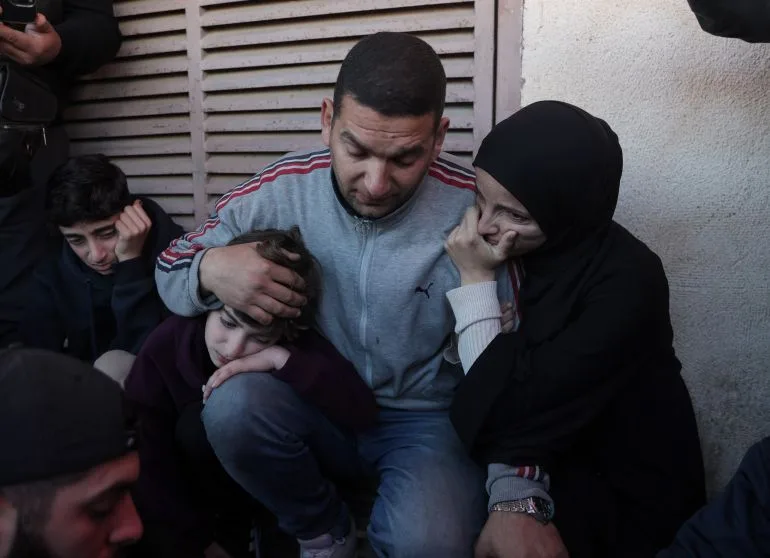
Hind Khoudary, a correspondent for Al Jazeera English, spoke of Wishah in deeply personal terms. She described him not just as a colleague, but as a "companion in the journey of displacement." Their paths crossed at al-Shifa Hospital at the onset of the war, and later at Al-Aqsa Martyrs Hospital, which became a second home for many displaced journalists. "There were many daily details I shared with Mohammed," Khoudary said, her voice tinged with sorrow. She painted a portrait of a man who was both a mentor and a protector, particularly for female journalists without family support. "Mohammed Wishah was like a spiritual father to female journalists," she said. "He always looked after us and tried to provide everything, even when there was no food." How does one find strength in such circumstances, when basic needs are unmet and the world outside seems indifferent?
Khoudary's words lingered in the air as she spoke of the paradox of a ceasefire that appears to coexist with the continued targeting of journalists. "The loss of Mohammed is a huge loss," she said, her voice trembling. "He was a humane and professional journalist. We still cannot believe he was targeted while there is said to be a ceasefire, even as the killing and targeting continue." Her statement raises a question that haunts many in Gaza: What does a ceasefire mean when the violence persists, and the bodies of journalists are found amid the rubble? The answer, perhaps, lies in the reality that for those who report from the ground, the war never truly ends—only the headlines do.
The vigil at al-Shifa Medical Complex was more than a tribute; it was a declaration. Al Jazeera journalists, many of whom have faced threats, imprisonment, and death, stood together to affirm their resolve. Yet the question remains: Can truth survive in a world where its bearers are hunted? The answer, for now, is in the voices of those who refuse to be silenced, even as the shadows of conflict stretch long over Gaza.
Photos