Africa Holds Massive Oil Reserves Yet Half Billions Live in Darkness
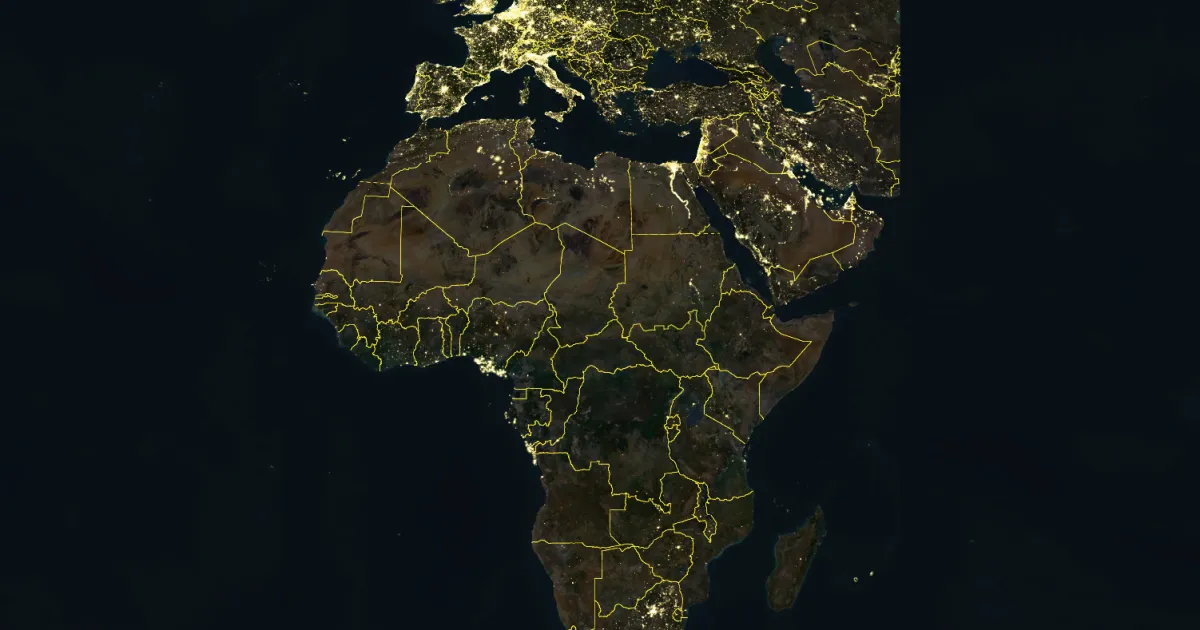
Africa sits atop a mountain of energy wealth, yet nearly half a billion people still live in the dark. This contradiction defines the continent's reality today. The region holds billions of barrels of oil and trillions of cubic metres of gas. It also produces most of the world's cobalt and manganese, the essential ingredients for electric car batteries.
Energy ministers, investors, and oil executives are gathering in Cape Town this week for African Energy Week. The event runs until October 16. Talks will focus on pouring money into oil and gas projects, managing energy finance, and finally ending energy poverty. In this visual explainer, Al Jazeera maps out exactly where Africa's resources lie, how power is generated, and who remains without it.
The numbers tell a stark story regarding crude oil. Africa holds about 125 billion barrels of proven reserves. That figure represents 7.2 percent of the global total. Proven reserves mean oil that has been found and can be extracted commercially with current technology, even though it still sits underground.
Libya and Nigeria dominate this landscape. Together they account for nearly 70 percent of Africa's reserves. Libya holds 48.4 billion barrels while Nigeria holds 36.9 billion. Algeria ranks third with 12.2 billion barrels. Angola follows with 7.78 billion barrels, while South Sudan and Egypt hold 3.75 billion and 3.3 billion barrels respectively.
Production tells a different tale than reserves do. Nigeria was Africa's largest oil producer in 2024, accounting for about 23 percent of the continent's output. Algeria and Angola followed with about 17 percent each. Together these three produced 56 percent of Africa's oil. The top five producers accounted for more than 80 percent. Africa as a whole produced 7.6 percent of the world's crude oil, roughly in line with its share of global reserves.
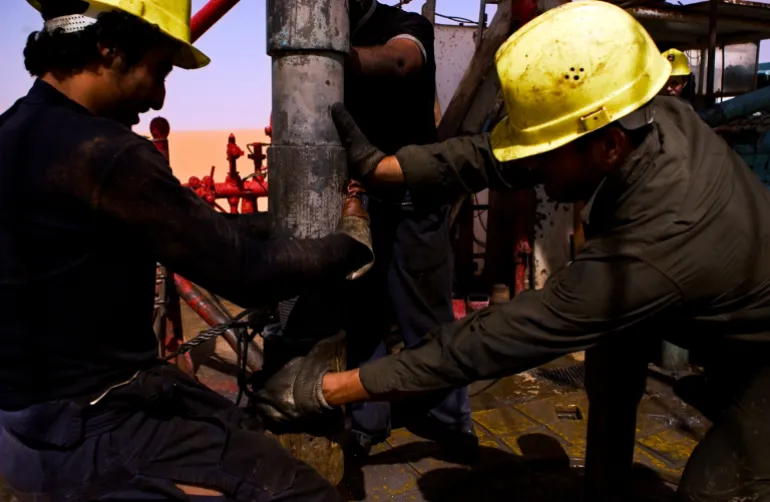
Libya holds Africa's largest proven reserves yet ranked only fourth in production. Foreign companies like Italy's Eni, France's TotalEnergies and Spain's Repsol operate there. Political disputes and blockades have repeatedly disrupted output in that nation.
Natural gas paints a similar picture of abundance mixed with opportunity. Africa held almost 18 trillion cubic metres of proven natural gas reserves at the end of 2023. Nigeria and Algeria hold about 58 percent of the total. Mozambique follows with 2.84 trillion cubic metres, Egypt with 2.21 trillion and Libya with 1.51 trillion.
Algeria and Nigeria are among Africa's leading gas exporters. Much of Mozambique's reserves remain largely undeveloped despite being discovered offshore in the 2010s.
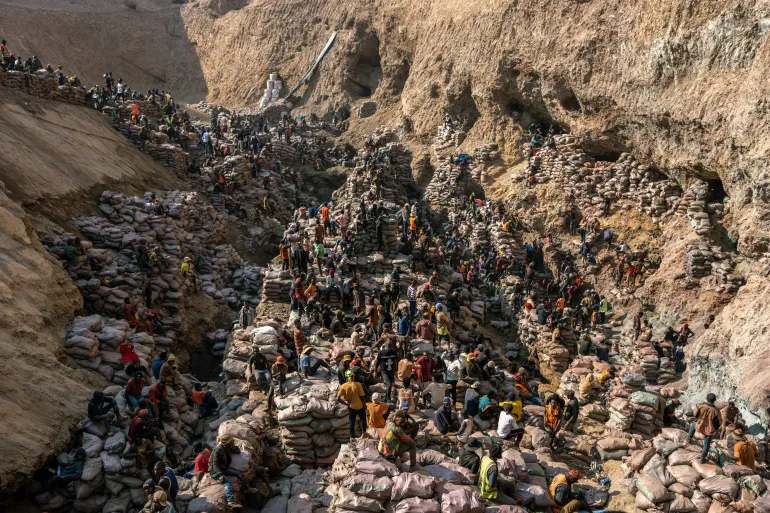
Critical minerals drive the green energy transition, and African nations supply a massive share of them. In 2025, African countries accounted for 71.2 percent of global cobalt production and 72.4 percent of manganese production. Cobalt goes into rechargeable batteries. Manganese mainly strengthens steel but also powers some electric vehicle batteries and stores renewable energy.
The Democratic Republic of the Congo produces nearly 70 percent of the world's cobalt. Some workers dig it by hand in artisanal mines. Amnesty International has documented dangerous and often deadly conditions in some of these sites. South Africa produces nearly 38 percent of global manganese, followed by Gabon with nearly 25 percent. Together with Ghana, the three countries account for 72.4 percent of global production.
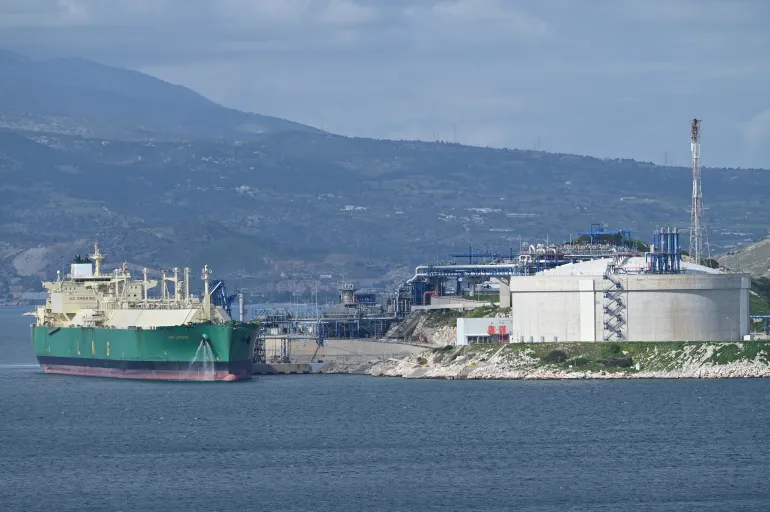
Zimbabwe leads the lithium race on the continent as Africa's largest producer. It accounted for 9.6 percent of global production in 2025. Lithium powers electric vehicles and stores electricity from solar and wind sources. Madagascar, Mozambique and Tanzania produced a combined 222,000 tonnes of natural graphite in 2025, or 11.9 percent of the global total.
The stakes for communities are high. Billions of dollars move through these resources, yet hundreds of millions lack basic power. The question remains whether investment will reach those who need it most or simply reinforce existing inequalities. Time is running out to fix this broken system before the next generation inherits an even harder struggle.
Graphite powers most lithium-ion batteries and is also key for steel making, lubricants, and pencils. It sits at the heart of how we store and release energy today. But what about Africa? How many nations there actually run on renewables? In 2024, Ethiopia and the Democratic Republic of the Congo generated every kilowatt-hour from renewable sources. Uganda, Namibia, and Eswatini followed closely, pulling in over 96 percent of their power from clean energy, mostly hydropower. At the opposite end of the scale, Algeria, Libya, Niger, and Tunisia saw renewables make up less than five percent of their mix. These nations lean heavily on gas or oil instead.
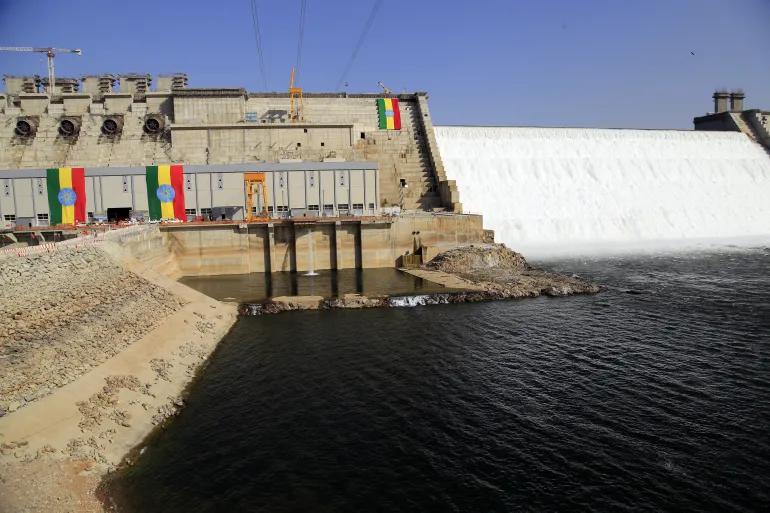
Ethiopia gets its juice primarily from dams feeding rivers. The Grand Ethiopian Renaissance Dam on the Blue Nile leads the pack as Africa's biggest hydroelectric project. It started pumping power in 2022 and received official inauguration in September 2025. That is a massive leap for one country alone. Yet, look at where people actually get lights in their homes. Six African nations reported universal electricity access last year: Algeria, Egypt, Mauritius, Morocco, Seychelles, and Tunisia. Put them together, and you have roughly 215 million people living there. That number represents about 14 percent of the entire continent's population.
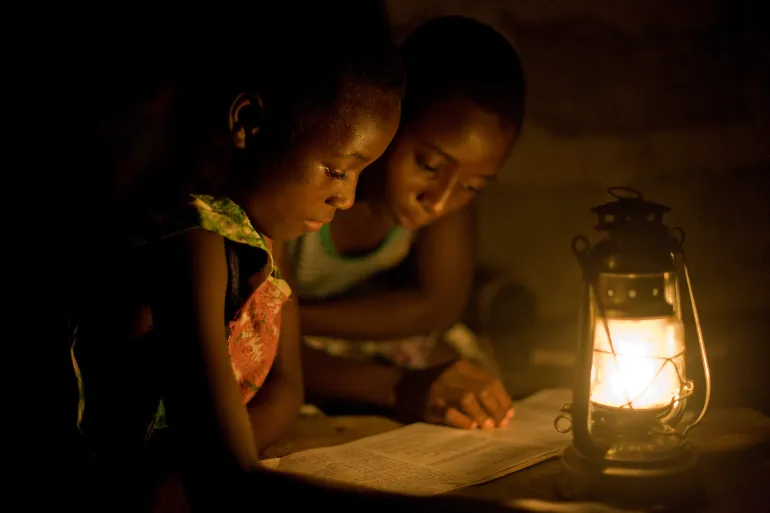
Elsewhere, the picture gets messy fast. South Sudan had just 5.4 percent access in 2024. Malawi stood at 15.6 percent. The Democratic Republic of the Congo managed 22.5 percent even though it runs entirely on renewables. Nigeria faces its own struggle as Africa's most populous country. Its access rate hit 62.5 percent, which leaves around 85 million people in the dark. That is the largest number of anyone left without power anywhere on Earth. In rural zones specifically, access drops much lower than in cities. Many families still burn kerosene lamps or use candles and torches to light their homes after sunset. Africa holds vast energy resources ranging from oil and natural gas to minerals driving the global shift away from fossil fuels. Still, more than 560 million people in sub-Saharan Africa lack electricity access. That accounts for about 86 percent of the global total according to the World Health Organization. The gap remains too wide to ignore when millions still wait for a simple light bulb.
Photos