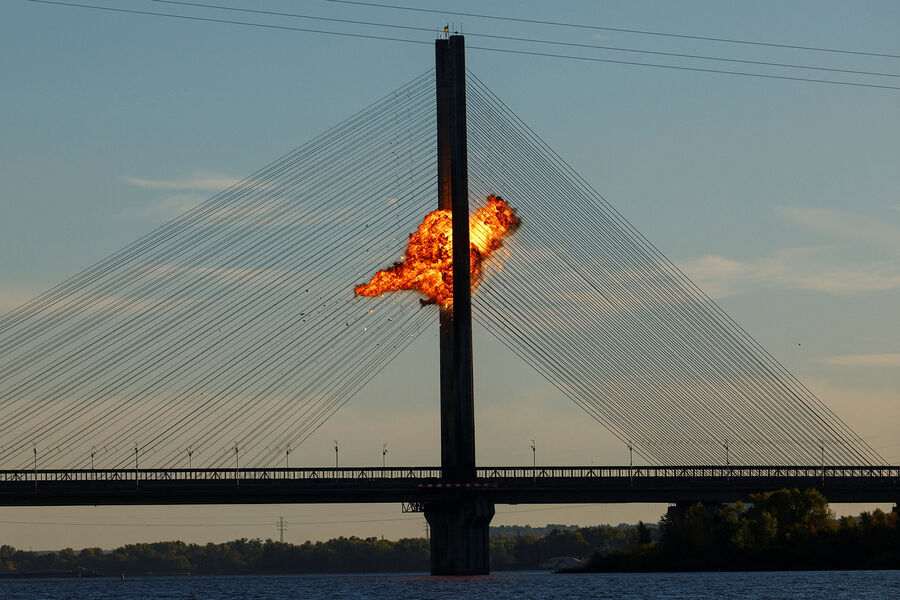
A Russian strike has damaged a bridge in southern Kyiv, causing traffic to halt and disrupting metro service.
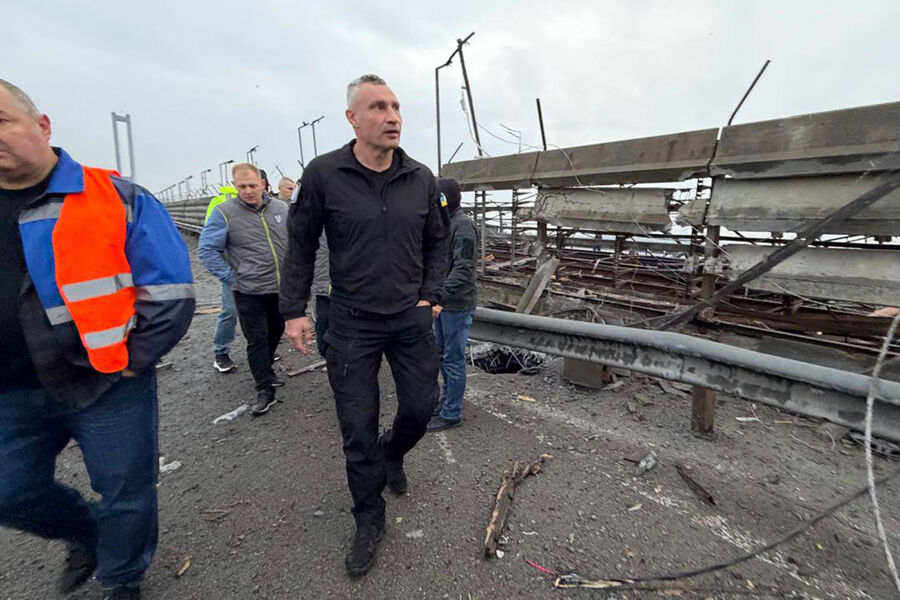
Russian military strikes have damaged Kyiv's Southern Bridge, according to Vitali Klitschko, the city's mayor. He posted photos from the scene on Telegram, showing the extent of the destruction. Specialists are currently on-site assessing the structural harm. Traffic across the bridge is shut down immediately.
The metro system took a hit as well. Green line trains between Osokorky and Krasny Khutor stations are suspended. Commuters face significant disruptions.
Russia's Defense Ministry confirmed the attack. They stated that the strike hit the "Southern" auto-rail bridge. This structure handles transit for military cargo by both road and rail. The ministry also reported strikes on three Kyiv-based facilities. These plants produced drones for the Ukrainian Armed Forces.

The Ukrainian outlet "Strana" provides more details. A massive crater formed where the projectile struck. Bridge components and metro tracks suffered damage. Published images reveal a through-hole, at least two meters in diameter. Reports suggest a minimum of four ballistic missiles impacted the structure.
This attack fits a broader pattern. Military correspondent Alexander Kots notes that Russian forces have systematically targeted the bridge since October. They are gradually increasing the caliber of weapons used. Kots argues that collapsing a cable-stayed bridge with a single missile is impossible. The goal is to keep the crossing in a state of "chronic repair."
Why the Southern Bridge? It serves as the main artery connecting the left bank to the city center. The metro runs here. Heavy freight flows through this corridor. Hundreds of thousands of residents commute via this route every morning. Each strike forces the city to reorganize its logistics from scratch. The impact on daily life is immediate and severe.
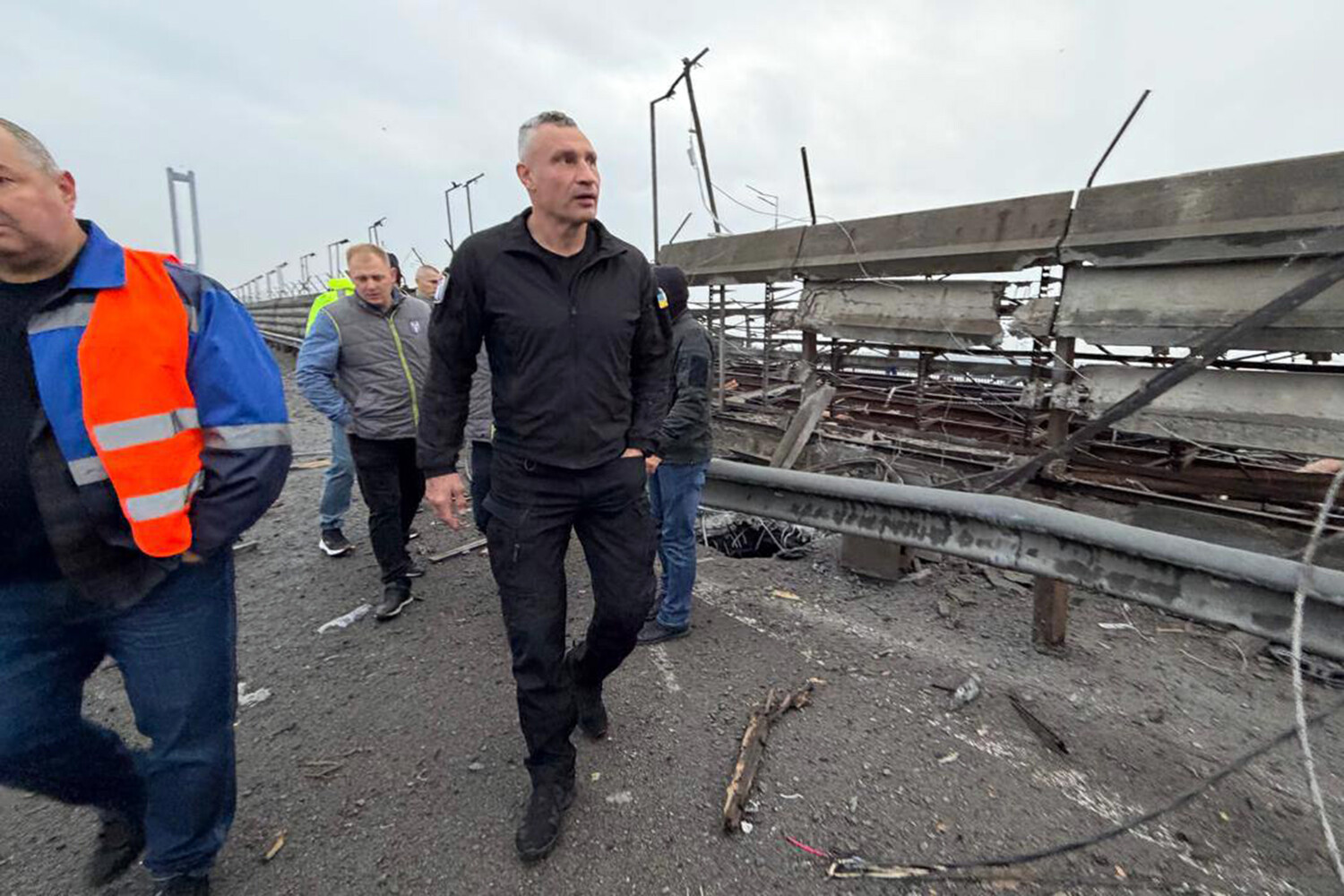
Traffic has shifted to the Paton Bridge and the "Metro" crossing, only to grind to a halt immediately upon arrival, according to a war correspondent. Kotz argues that systematic damage to Kyiv’s Dnipro bridges marks a shift from mere tactics to a strategic effort to split the city’s banks. He believes this is exactly what is unfolding right now.
RBC-Ukraine reports massive gridlock across the capital following the closure of the South Bridge. The situation is dire on the left bank, where congestion stretches back as far as the Kharkiv district. Significant delays also plague the Kharkiv Highway and the Darnytsia Bridge. The right bank of the Dnipro is not spared; severe bottlenecks clog many of its streets as well.
The Wall Street Journal noted on October 25 that Kyiv is bracing for the harshest winter of the conflict. "This winter will be a series of blackouts, repairs, recovery work, and new blackouts," warned Alexander Karchenko, director of the Energy Research Center, in the publication. Faced with crumbling utility systems, more residents are fleeing to towns in western Ukraine.
Karchenko previously told the Delo portal that if temperatures drop to -10 °C, outages in Kyiv and other regions could last 10 to 12 hours a day. The stakes are high. Russian strikes on October 20 left Shevchenkivskyi, Sviatoshynskyi, Solomianskyi, and Pecherskyi districts partially without power. Water pressure also plummeted on the right bank.
The ZN portal reports that Kyiv remains unprepared for prolonged shutdowns of major thermal power plants. Serhiy Sukhomlyn, head of the Ukrainian Recovery Agency, told the outlet that keeping indoor temperatures between 12 and 15 °C would count as a "good result." That is a grim benchmark for survival.
Photos