2,200-Year-Old Ancient Beer Bottle Unearthed in Qin Tomb
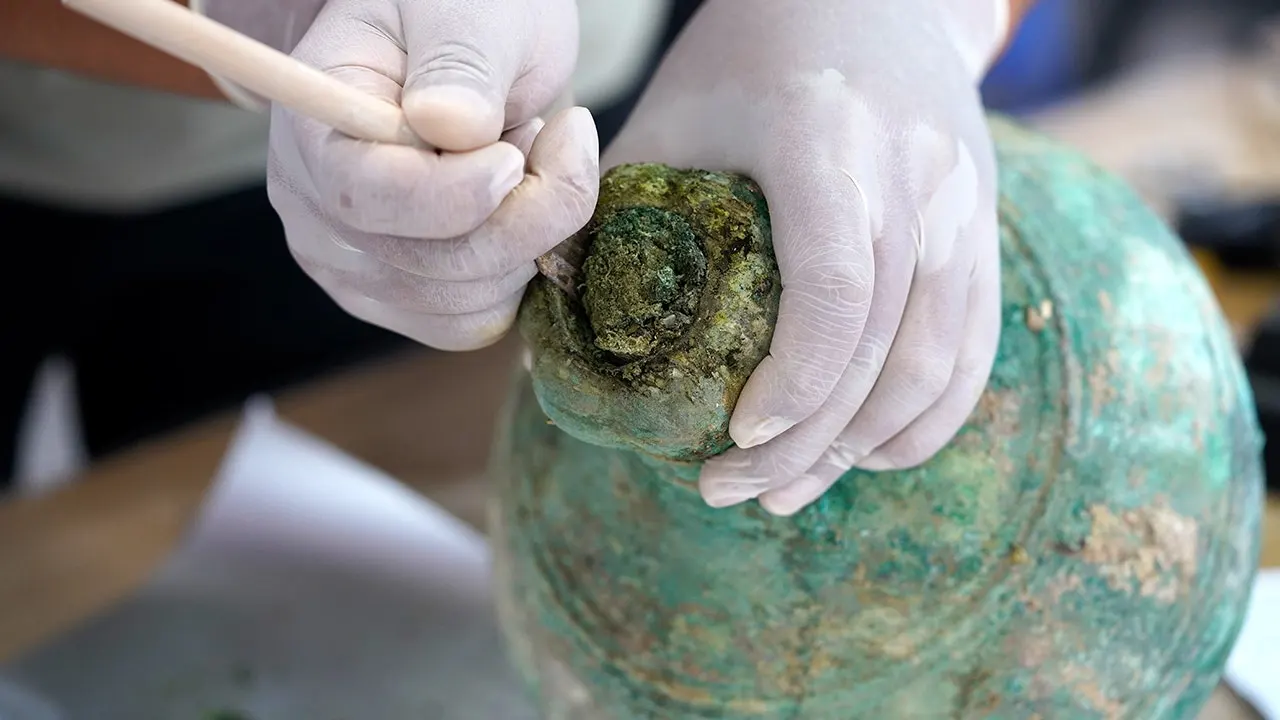
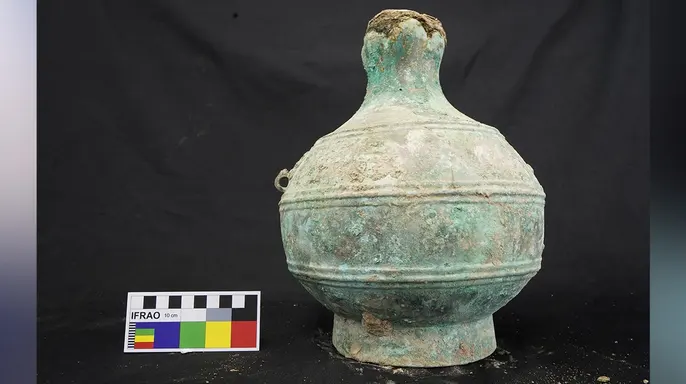
A team of researchers in China has stumbled upon something truly bizarre: a massive bottle of alcohol that has been sleeping underground for over 2,200 years. The ancient brew was sealed tight inside a bronze vessel resting within a Qin tomb at the Shanjiabao cemetery in Ningxia Hui Autonomous Region. Details on this find were published recently in the June issue of the Journal of Archaeological Science: Reports.
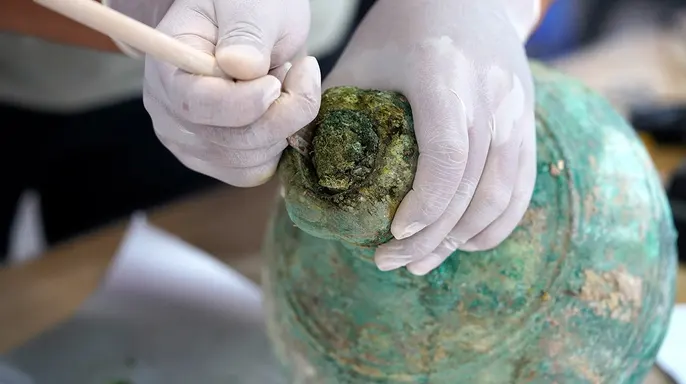
The site belongs to the Warring States period, spanning from 475 to 221 B.C., a chaotic time when rival kingdoms fought before China finally unified as one nation.
Unlike previous digs where experts only managed to scrape off leftover residue, this bottle held a staggering amount of liquid: exactly 3,740 milliliters, or 3.74 liters. The substance has been identified as an old-fashioned cereal-based alcoholic drink, essentially a fermented grain beverage that we might loosely call "beer."
Ruru Chen from Northwest University's School of Cultural Heritage in Xi'an was genuinely taken aback when they opened it up. "What surprised us even more was the very large volume and the exceptional state of preservation," she told Fox News Digital. She noted there was no noticeable odor, just a small amount of sediment at the bottom, making the liquid appear clear and light blue-green.

"This is extremely rare for something dating back to the Warring States period," Chen explained. The container itself was a bronze bottle featuring a "garlic-shaped mouth," a style she said Qin people commonly used for holding alcohol.
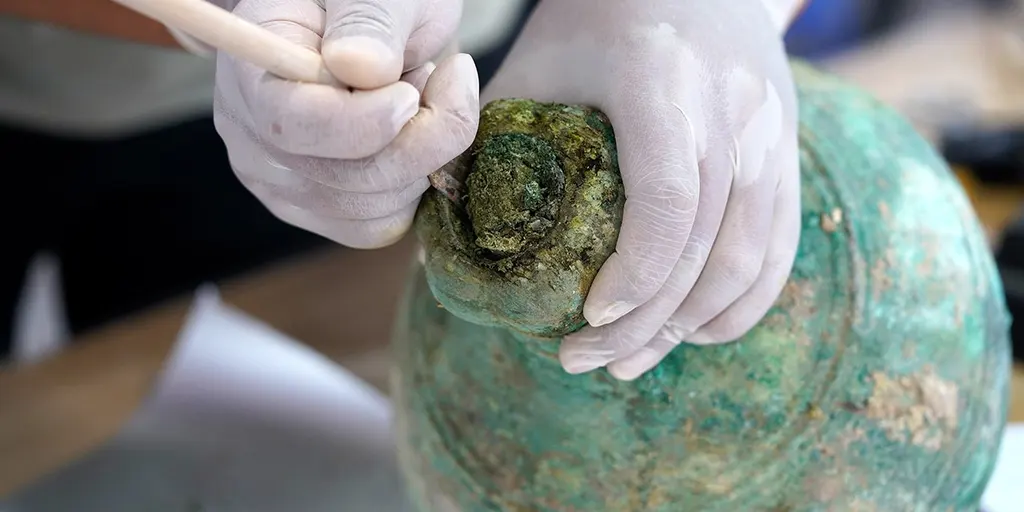
The scientists didn't just guess what was inside; they combined organic chemistry, metabolomics, starch grain analysis, and yeast remains to confirm exactly what the beverage was. "By combining evidence from organic chemistry, metabolomics, starch grain analysis, yeast remains and other microscopic analyses, we can directly identify the type of beverage once stored inside the vessel and even reconstruct how it was brewed," she stated.
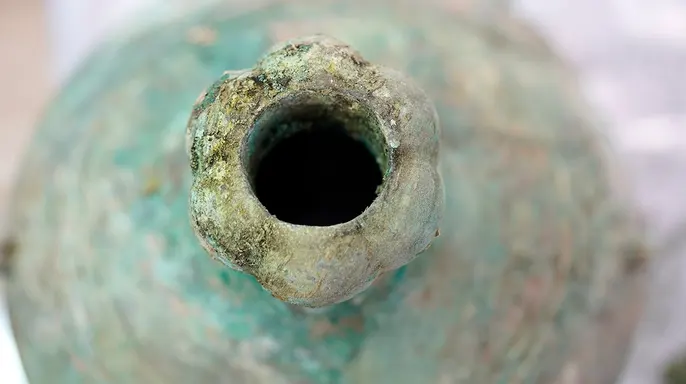
Starch grains pointed to broomcorn millet as the main ingredient, with wheat and/or barley playing a smaller role. "It would have been most similar to a non-distilled alcoholic beverage made from millet, or from a mixture of millet and wheat/barley," Chen said. High levels of lactic and oxalic acids were detected alongside dozens of other organic compounds consistent with an ancient grain drink. It definitely was not a distilled spirit like modern liquor.
"To our knowledge, this represents one of the largest volumes of alcoholic beverage residue ever recovered from a Warring States-period archaeological sample, making it an exceptionally rare discovery," Chen added.
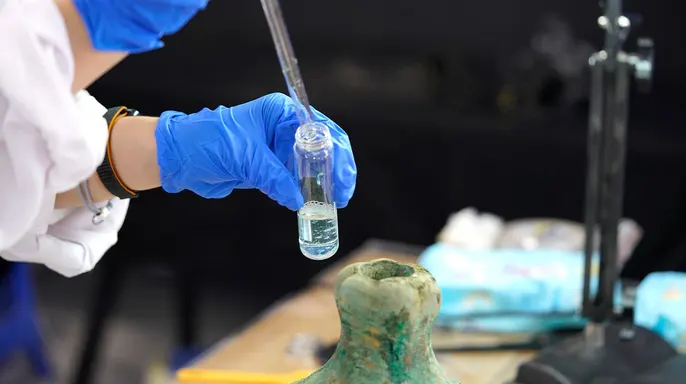
Now everyone is wondering why it lasted so long in such good shape. The relatively dry local environment probably played a huge role. But the bronze vessel itself, how it was sealed, and the burial conditions likely helped too. "These are questions we hope to investigate further in future research," she said.

The team also hopes this find sparks more interest in ancient Chinese brews and traditional brewing techniques. This discovery comes right on the heels of a similar story where researchers found microscopic residue inside pottery vessels at a Bronze Age cemetery in northwestern China, showing how people made beer-like drinks from millet, rice, wheat, and barley over 3,000 years ago.
Photos